Apple Intelligence & Personalized Health Tracking: The Future?
October 12, 2026 · 3 min read
···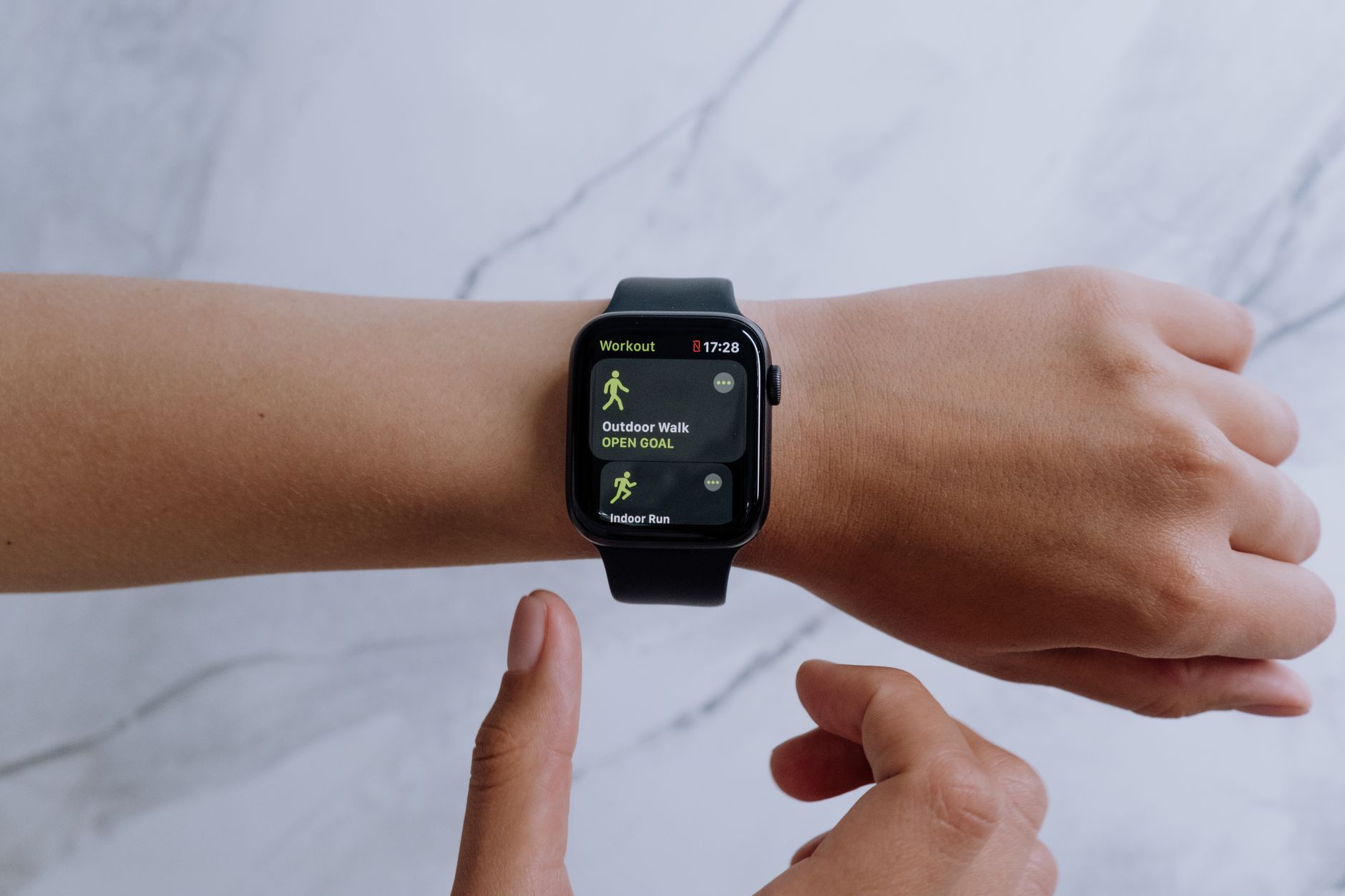
Photo by cottonbro studio on Pexels
- Apple Intelligence is the future of personalized health.
- Transforms raw data into actionable, predictive insights.
- Leverages new Health Sensing System in Apple Watch.
- Focus shifts from treatment to proactive prevention.
Key Takeaways
- Apple Intelligence integrates AI across devices to provide personalized, predictive health insights, moving beyond simple data logging.
- The new Health Sensing System in Apple Watch Series 12 and Ultra 4 is crucial for enhanced accuracy in heart rate and HRV data.
- A redesigned Health app, launching late 2026, will offer AI guidance, readiness scores, and direct lab testing options.
- Privacy is maintained through on-device processing and Private Cloud Compute, with informed consent for health research.
The true revolution of Apple Intelligence in health isn't just better data collection, but its ability to make health predictions so accurate that it will shift the focus of healthcare from treatment to proactive prevention for millions.
What is Apple Intelligence?
Apple Intelligence is an integrated AI system designed to process and interpret user data across Apple devices. It leverages the new Health Sensing System in Apple Watch Series 12 and Ultra 4, which provides the most accurate heart rate sensing in a wearable.
This system enables features like a 'readiness experience' and AI guidance for longer-term health metrics. Crucially, Apple Intelligence emphasizes privacy through on-device processing and Private Cloud Compute for sensitive health requests.
Many believe Apple Intelligence is simply an upgrade to existing fitness tracking, when in reality, its core innovation is moving from descriptive data ('you walked 10,000 steps') to prescriptive and predictive insights ('your readiness score suggests a rest day to prevent overtraining').
How Apple Intelligence Could Transform Health Tracking
Apple Intelligence fundamentally shifts health tracking from raw data collection to sophisticated interpretation and personalized recommendations. It integrates various biometric data points, including heart rate variability (HRV), steps, and activity, to create a holistic view of user health.
The redesigned Health app, scheduled for late 2026, will serve as the primary interface for these AI-driven insights. This contrasts sharply with traditional trackers that often present raw numbers without actionable context or personalized guidance.
AI in Health & Fitness Market Outlook
20.6%
Annual Growth Rate (CAGR)
market.us
Personalized Fitness: Workouts and Recovery
Apple Intelligence will tailor fitness routines and optimize performance based on individual biometric data. The 'readiness experience' informs users about their body's capacity for activity, suggesting appropriate workout intensity or recommending rest.
Adaptive workout suggestions will leverage real-time body metrics and historical data. HRV readings, specifically requiring an Apple Watch Series 12 or Ultra 4, are critical for optimizing recovery and preventing overtraining, maximizing performance gains.
Apple Watch Health Sensing Accuracy
1,000 steps
Step Tracking Test Validation
Apple
Proactive Health: Risk Prediction and Early Detection
Beyond fitness, Apple Intelligence extends to proactive health management. The redesigned Health app will add AI guidance to longer-term health metrics, helping users understand trends and potential risks. It will enable users to arrange lab testing directly through the app and offer new features like Health Age and movement evaluations.
An Insights tab will surface timely health information with summaries that update throughout the day across heart, sleep, and readiness metrics.
Addressing Concerns: Privacy, Data Security, and Accuracy
Apple addresses privacy by processing many Apple Intelligence features on-device, with Private Cloud Compute handling more complex requests securely. Health data collected for research studies is subject to informed consent and review by an institutional review board.
Apple Watch Series 12 and Ultra 4 boast the most accurate heart rate sensing in a wearable, and their step-tracking accuracy is widely recognized as high, supported by numerous independent tests. This commitment to accuracy and privacy is foundational for user trust.
The Road Ahead: Challenges and Opportunities
The full potential of Apple Intelligence in health hinges on widespread user adoption and careful regulatory alignment. While some components are available via watchOS 27, key features like the redesigned Health app and expanded personalized content are scheduled for later in 2026, initially in the U.S.
The full potential of Apple Intelligence in health hinges on widespread user adoption and careful regulatory alignment. While some components are available via watchOS 27, key features like the redesigned Health app and expanded personalized content are scheduled for later in 2026, initially in the U.S.
Why This Matters
Apple Intelligence is not merely an incremental update; it represents a fundamental shift in how individuals interact with their health data. By transforming raw biometric information into actionable, predictive insights, it empowers users to move from reactive treatment to proactive prevention.
This will profoundly impact those seeking highly personalized guidance, particularly individuals with chronic conditions or specific performance goals. Conversely, traditional, generalized fitness apps and 'one-size-fits-all' wellness programs will struggle to compete with this depth of personalization.
The long-term implications are a healthcare landscape where personal devices play a central role in early detection and sustained wellness, fundamentally reshaping how millions manage their health daily.
What Reddit is saying
r/AppleWatch users are intrigued by new health features, but r/AppleWatch and r/AppleWatchFitness express frustration over accessibility and regional restrictions. Other subreddits are more neutral, discussing privacy and potential product competition.
Health age / Longevity with iOS 27.2 only needs Apple intelligence phone - no watch required.
Read full discussion →Yeah the Ultra 4’s is scarily accurate too, been able to predict I was getting ill before I got ill, and then I did and I was like “well I shouldn’t be surprised” 🤣 pretty frickin cool.
Read full discussion →Readiness score on watch Readiness app and in Apple Fitness app on phone does not require a phone with Apple Intelligence.
Read full discussion →Do you not use iCloud then, either? Or any cloud services? I understand that “AI” conjures up privacy concerns, and it’s right to be cautious.
Read full discussion →Curated from 8 active threads across r/AppleWatch, r/apple, r/gadgets, r/AppleWatchFitness
What people are saying on X
Scepticism slightly outweighs support, with most pro views focusing on AI's potential in health and its increased accessibility, while sceptical views center on privacy, data security, and the potential for AI errors.
The discussion around AI in healthcare and Apple Intelligence reveals strong support for its potential to revolutionize health tracking and patient understanding, with some emphasizing the accessibility of AI development. However, concerns are raised regarding data privacy, security implications of AI agents, and the potential for AI to mislead or replace human judgment in medical contexts. There's also debate on whether AI's existential risks are overblown, distracting from practical safety issues.
Seeing the conversation behind an AI-generated health answer could give clinicians valuable context about what a patient asked, understood, and may be concerned about. #healthcare #digitalhealth
AI agents with broad filesystem permissions turn ordinary app boundaries into evidence-preservation questions, so least privilege and auditable consent should be first-class—not an afterthought. ......
no i'm like 100% for ai in healthcare it's like the one thing where it's actually helped people · BernieAsksAI · @BernieAsksAI16h · Antis Be like: 1:39 AM · Sep 23, 2026· · 1.1M · Views · 250 · 2.3K ·...
I wanted each of them to explain where the other side was wrong. If you’ve watched the last few months of AI news wondering what you’re actually supposed to believe, this conversation is for you....
Curated from 18 recent posts using deliberate viewpoint balancing
Further Reading
Official announcement detailing Apple's new AI-driven health features.
Deep dive into the hardware innovations enabling advanced health tracking.
Comprehensive overview of the upcoming changes to the Health app interface and functionality.
Analysis of the broader trend of AI integration in wearable technology for health.
Apple's official statement on privacy and data handling for Apple Intelligence.
Sources
- 1.Apple advances health and fitness capabilities using Apple Intelligence - Apple
- 2.Introducing Apple Watch Series 12, with the all-new Health Sensing System - Apple
- 3.iOS 27 Apple Health App Redesign: Every New Feature Coming in 2026 - MacRumors
- 4.Apple's AI Health Redesign: What's Coming and When It Arrives | MindStudio
- 5.Apple Intelligence health features turn Watch data into more personal guidance - AppleMagazine
- 6.Siri AI, a profoundly more capable and personal assistant, is here - Apple
- 7.Apple Legal - Legal - Apple Intelligence & Privacy- Apple
- 8.AI-Powered Wearables in 2026: Advancing Personalized, Preventive Healthcare
- 9.AI In Fitness And Wellness Market Size | CAGR of 20.6%
Rate this article
Your feedback helps surface the best content
Related articles
Have a question? Get your own article.
Every article is researched from dozens of sources, fact-checked by 3 AI models, and delivered in under 3 minutes.
Triple-Verified — 3 corrections applied across 3 verification stages applied