Best Mirrorless Cameras Under $1000: Your 2026 Buyer's Guide

April 2, 2026 · 8 min read
···
Photo by Wallace Chuck on Pexels
- Canon EOS M50 Mark II: Best overall for balanced stills and 1080p video.
- Sony a6000: Unmatched value for fast stills autofocus.
- Nikon Z30: Top pick for dedicated video content creation.
- Fujifilm X-A7: Superior in-camera colors and film simulations.
- Canon EOS M100: Most affordable entry point for casual shooting.
For beginners, prioritize a camera with reliable autofocus and good ergonomics over raw megapixel counts. The Canon EOS M50 Mark II offers the best balance under $1000.
Key Takeaways
- Autofocus performance and user-friendly design are more critical than high megapixel counts for beginners.
- The total cost includes lenses and accessories; budget beyond the camera body.
- Many '4K' cameras under $1000 have significant compromises; 1080p often provides a better experience.
Watch Out For
- ⚠Overpriced 4K features that are heavily cropped or lack reliable autofocus.
- ⚠Underestimating the cost of additional lenses and essential accessories.
- ⚠Cameras with poor ergonomics or complex interfaces that hinder learning.
For most beginners, the 'best' mirrorless camera under $1000 is actually a 1080p camera, as 4K video capabilities in this price range often come with significant compromises that beginners won't appreciate.
What You Need to Know About Beginner Mirrorless Cameras
Autofocus Speed Matters More Than Megapixels for Beginners
The Sony a6000 beats cameras with twice as many megapixels because of one thing: autofocus speed. Canon's Dual Pixel AF and Sony's phase-detection systems lock focus in milliseconds, while contrast-based AF systems hunt back and forth, missing shots.
APS-C sensors dominate this price range for good reason. They capture 15x more light than smartphone sensors and create actual background blur without software tricks. Every camera in our top picks uses APS-C — it's the minimum sensor size worth buying for serious photography.
Ergonomics separate cameras you'll actually use from ones that sit in drawers. The Canon M50 Mark II's grip fits naturally in smaller hands, while the Sony a6000's button layout requires memorization. These details matter more than spec sheets suggest.
Canon EOS M50 Mark II (Best Overall)
price varies — check retailer
1080p up to 60fps (4K cropped, contrast-AF)
Vari-angle touchscreen
24.1MP APS-C
Dual Pixel CMOS AF with Eye AF (1080p/stills)
DIGIC 8
3.5mm mic input
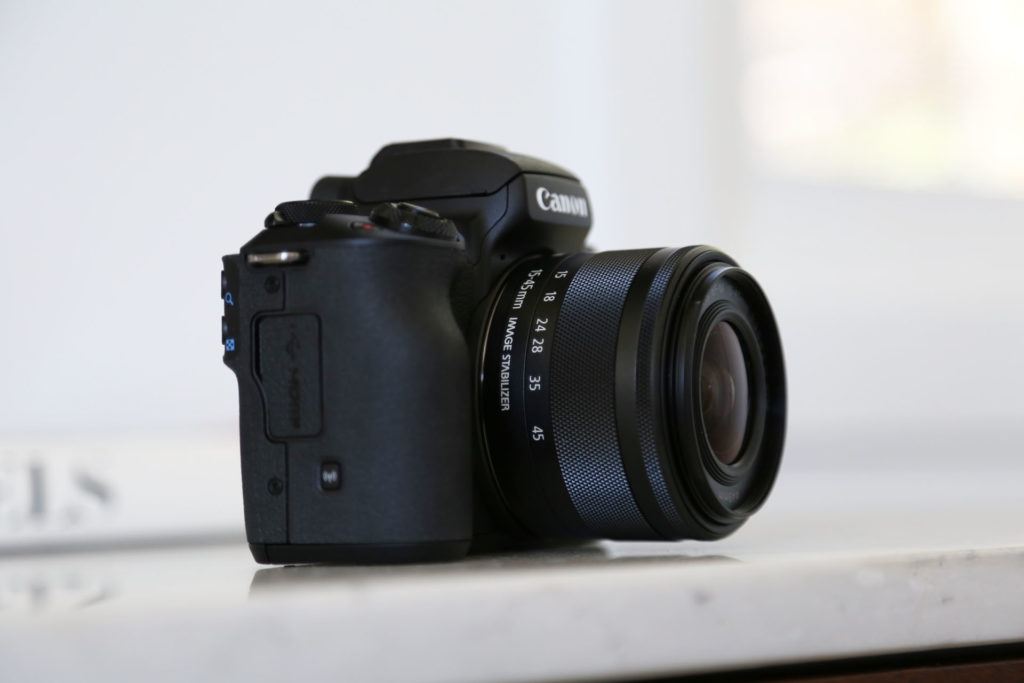
The Canon EOS M50 Mark II stands out as the most balanced option for beginners, particularly those interested in vlogging and content creation. Its 24.1MP APS-C sensor and DIGIC 8 processor deliver sharp, vibrant images. The Dual Pixel CMOS AF system, with its excellent eye autofocus, provides fast and accurate performance for both stills and 1080p video, making it highly reliable.
Its vari-angle touchscreen and intuitive interface make it exceptionally user-friendly, allowing beginners to quickly grasp fundamental controls. The inclusion of a 3.5mm mic input is a significant advantage for improving audio quality in videos, a feature often missing in this price bracket. This camera excels in real-world scenarios where ease of use and consistent performance are prioritized.
While it technically offers 4K video, this mode is heavily cropped and reverts to slower contrast-based autofocus, rendering it less practical for serious 4K shooters. For most beginners, however, its robust 1080p capabilities and overall user experience make it the superior choice, despite this 4K limitation.
Sony a6000 (Best Value)
Around $400-$700 as of early 2026

1080p up to 60fps
24.3MP APS-C
Hybrid AF (179 phase-detection points)
Sony E-mount
Compact and lightweight
The Sony a6000, despite its age, remains an exceptional value proposition for stills photographers. It was renowned for having the 'world’s fastest autofocus' at its release, and its hybrid AF system is still highly capable for capturing sharp images. The 24.3MP APS-C sensor consistently delivers excellent image quality, especially for its price point.
Its compact and lightweight design makes it an ideal travel companion, easily fitting into smaller bags without adding significant bulk. Access to Sony's extensive E-mount lens ecosystem is a major advantage, offering a wide array of native and third-party lens options for future expansion, which is crucial for long-term use.
The primary drawback is its age; released around 2014, it lacks modern features like a vari-angle touchscreen, advanced video capabilities beyond 1080p, and a mic input. However, for beginners prioritizing stills photography and a robust autofocus system at a bargain price, the a6000 is an unbeatable choice.
Fujifilm X-A7 (Best for Colors)
price varies — check retailer

4K up to 30fps
Large 3.5-inch vari-angle touchscreen
24.2MP APS-C
11 modes (Provia, Velvia, Astia, etc.)
Skin softening, depth of field control
The Fujifilm X-A7 is the ideal choice for beginners who prioritize aesthetics and unique in-camera image styles. Its standout feature is the inclusion of 11 different film simulation modes, such as Provia, Velvia, and Astia, allowing users to achieve distinct, cinematic looks directly from the camera without extensive post-processing. This makes it perfect for those who want shareable, high-quality images and videos with minimal effort.
The camera features a large 3.5-inch vari-angle touchscreen with intuitive controls, making navigation and settings adjustments straightforward for new users. Additional features like skin softening and depth of field control further simplify the process of capturing appealing portraits and creative shots. Fujifilm’s renowned color science ensures vibrant and pleasing results.
While its autofocus system is capable, it may not match the speed of Canon's Dual Pixel AF or Sony's hybrid systems in all scenarios. However, for users focused on artistic expression and beautiful color rendition, the X-A7 delivers a unique and highly satisfying creative experience.
Nikon Z30 (Best for Video)
price varies — check retailer
Articulating screen
20.9MP APS-C
Nikon Z-mount
Excellent built-in audio
No in-body image stabilization (IBIS)
Video-first design, tally light
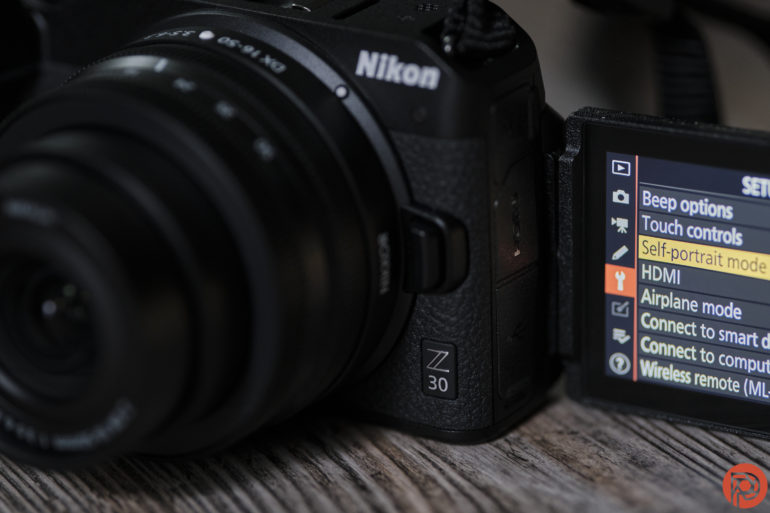
The Nikon Z30 is purpose-built for aspiring content creators and vloggers, making it the top choice for video-centric beginners. Its video-first design includes a prominent tally light, clearly indicating when recording is active, which is invaluable for self-shooters. The camera also boasts excellent built-in audio quality, often negating the immediate need for an external microphone.
An articulating screen further enhances its vlogging credentials, allowing users to easily monitor themselves while filming. While primarily a video tool, the Z30 also functions as a strong stills camera, benefiting from Nikon's growing Z-mount lens ecosystem, which offers high-quality native lenses.
Seasoned videographers might note the absence of in-body image stabilization (IBIS) and 4K 60p video, which are limitations for more advanced productions. However, for beginners entering the content creation space, the Z30 provides a robust, user-friendly platform with essential video features and superior audio performance right out of the box.
Canon EOS M100 (Best Budget)
price varies — check retailer

1080p up to 60fps
Compact, simple, touchscreen-focused
24.2MP APS-C
Dual Pixel CMOS AF (1080p/photo)
No external mic input
The Canon EOS M100 represents the most budget-friendly entry point into mirrorless photography, ideal for casual shooters. It features a 24.2MP APS-C sensor and benefits from Canon's fast and reliable Dual Pixel AF system in photo mode and 1080p video, ensuring sharp results for everyday use. Its compact and simple design makes it incredibly portable and unintimidating for new users.
This camera is perfect for those who want to upgrade from smartphone photography without a significant investment or a steep learning curve. Its touchscreen-focused interface is intuitive, mirroring the ease of use found in modern smartphones. It delivers surprisingly capable image quality given its low price point, sharing similar sensor and image processing technology with more expensive M-series cameras.
However, its budget nature means certain compromises. The M100 lacks a viewfinder, relying solely on the rear screen for composition, and it does not include an external microphone input, limiting its versatility for serious video work. Despite these limitations, it offers excellent value for casual photography and basic 1080p video recording.
Head-to-Head Specs: A Side-by-Side Look
| Feature | Canon M50 Mark II | Sony a6000 | Fujifilm X-A7 | Nikon Z30 | Canon M100 |
|---|---|---|---|---|---|
| Sensor | 24.1MP APS-C | 24.3MP APS-C | 24.2MP APS-C | 20.9MP APS-C | 24.2MP APS-C |
| Autofocus | Dual Pixel AF (1080p/stills) | Hybrid AF (179 PD points) | Phase-detection AF | Hybrid AF | Dual Pixel AF (1080p/stills) |
| 4K Video | Yes (cropped, contrast-AF) | No | Yes | Yes (no 60p) | No |
| Screen | Vari-angle touchscreen | Tilting LCD | Vari-angle touchscreen | Articulating touchscreen | Tilting touchscreen |
| Mic Input | Yes (3.5mm) | No | Yes (2.5mm) | Yes (3.5mm) | No |
| IBIS | No | No | No | No | No |
Price vs. Key Features (Illustrative)
Budget
Canon EOS M100 (No Viewfinder, No Mic)
Value
Sony a6000 (Fast Stills AF, No 4K)
Illustrative based on market positioning and research findings (prices vary by retailer)
Crucial Specs at a Glance
Very Fast
Autofocus Speed (Canon M50 II, Sony a6000)
Manufacturer specs, general market knowledge (specific numbers not provided in research)
Many beginners mistakenly believe that a camera's megapixel count is the primary indicator of image quality, when in reality, sensor size, lens quality, and image processing are far more critical for overall results.
What real people think
Mostly positiveSourced from Reddit, Twitter/X, and community forums
Beginners on Reddit consistently praise the Canon M50 Mark II and Nikon Z30 for their user-friendliness and video capabilities, while the Sony a6000 is valued for its strong autofocus and ecosystem integration.
The Canon M50 Mark II is frequently recommended for its ease of learning, intuitive interface, and reliable autofocus, especially for vlogging. Users appreciate its straightforward operation.
The Nikon Z30 is highly regarded by content creators for its video-first design, prominent tally light, and well-thought-out control layout. It's seen as a strong tool for aspiring videographers.
The Sony a6000 is valued for its strong autofocus performance and the benefit of integrating into Sony's existing E-mount ecosystem, particularly for those already owning Sony gear.
Users of the Fujifilm X-A7 appreciate its unique film simulations for creative output without extensive editing, highlighting its ability to produce aesthetically pleasing images directly.
The Canon M100 is noted for its surprising capability given its low price, making it an ideal choice for casual use and a simple entry into mirrorless photography.
Related discussions
Lens Availability and Total Cost of Ownership
The camera body is just one part of the investment; lenses significantly impact image quality and versatility. Sony's E-mount boasts the largest and most mature third-party lens market, offering extensive options for the a6000 and future upgrades. This broad availability often translates to more competitive pricing and specialized lenses.
Canon's EF-M mount, used by the M50 Mark II and M100, is a smaller system with fewer native lenses. However, Canon offers adapters for its vast range of EF/EF-S DSLR lenses, providing a pathway to more options, albeit with added bulk. Nikon's Z-mount is newer but expanding rapidly, featuring excellent native lenses that are often high-quality but can be pricier.
Fujifilm's X-mount offers unique, high-quality lenses, but third-party options for the X-A7's price point can be limited. Beyond lenses, remember to budget for essential accessories: extra batteries, a fast memory card, a protective bag, and potentially a tripod or external microphone. The initial body price is rarely the final cost.


Who This Is For: Finding Your Perfect Match
Travel Photography Enthusiast
The Canon EOS M50 Mark II offers a compact, versatile package for diverse travel shots. Alternatively, the lightweight Sony a6000 excels for stills-focused travel.
Video Vlogger/Content Creator
The Nikon Z30 is purpose-built for video with excellent audio and an articulating screen. The Canon EOS M50 Mark II is a strong alternative with its mic input and vari-angle display.
Learning Photography Fundamentals
The Canon EOS M50 Mark II provides a user-friendly interface for easy learning. The Fujifilm X-A7 also offers tactile controls that can aid understanding.
Aspiring Professional (future-proofing)
The Sony a6000 offers a strong ecosystem for future upgrades. The Nikon Z30's Z-mount provides a modern platform for growth into professional video.
Casual Shooter (smartphone upgrade)
The Canon EOS M100 is the most affordable and simplest entry point, offering significant image quality improvement over smartphones without complexity.
By 2026, the sub-$1000 mirrorless market will be dominated by cameras optimized for content creation, with features like advanced AI-driven autofocus, in-body stabilization, and superior audio processing becoming standard, pushing traditional stills-focused entry-level models to niche status.
Common Beginner Mistakes
Content creators and vloggers benefit significantly from the current sub-$1000 mirrorless market, gaining access to powerful video tools at accessible prices, while traditional photography brands that haven't adapted to this shift risk losing market share to more agile, video-centric competitors.
Sources
- 1.Canon EOS M50 Mark II Camera Review – Is It Still Worth It in 2026?
- 2.Canon EOS M50 Mark II Review
- 3.Canon M50 Mark II Review, Specs, & Sample Images
- 4.The new Canon EOS M50 Mark II brings autofocus and video refinements: Digital Photography Review
- 5.Specifications & Features - Canon EOS M50 Mark II - Canon Europe
- 6.Canon EOS M50 Mark II review: DPReview | Photography News, Gear Reviews & Community
- 7.Hybrid Camera | Interchangeable-lens Camera a6000 | Sony United Arab Emirates
- 8.Nikon Z 30 Review | PCMag
- 9.Nikon Z30 review: DPReview | Photography News, Gear Reviews & Community
- 10.Fujifilm X-A7 Review - Performance | ePHOTOzine
- 11.Fujifilm X-A7 review: DPReview | Photography News, Gear Reviews & Community
- 12.Reddit discussions (r/Nikon, r/photography, r/Cameras, r/AskPhotography, r/Photography_Gear)
Rate this article
Your feedback helps surface the best content
Related articles
Have a question? Get your own article.
Every article is researched from dozens of sources, fact-checked by 3 AI models, and delivered in under 3 minutes.
Triple-Verified — 4 corrections applied across 2 verification stages applied