Best Small Pianos for Kids: Quality & Value for a 6-Year-Old

May 5, 2026 · 6 min read
···
Photo by Mikhail Nilov on Pexels
- Costzon 61-Key: Unbeatable value for true hammer-action keys.
- Donner DEP-10: Excellent 88-key foundation with professional sound.
- Korg B2SP: Premium, complete package for serious long-term learning.
- Yamaha P-45: Trusted 88-key runner-up, teacher-approved reliability.
What is the best small piano for a 6-year-old that balances quality, reviews, and value?
Key Takeaways
- True hammer-action weighted keys are crucial for developing proper finger strength and technique.
- A high-quality 61-key digital piano can be a superior starting point for a young beginner than a cheap, unweighted 88-key model.
- Established brands like Yamaha and Korg offer teacher-approved 88-key options for long-term commitment.
Watch Out For
- ⚠Avoid 'semi-weighted' or 'lightly weighted' keys, which do not replicate an acoustic piano's feel.
- ⚠Many 61-key models are glorified toys; ensure any compact option features genuine hammer-action.
- ⚠Some piano teachers may insist on 88 keys from the outset, potentially requiring an earlier upgrade.
What You Need to Know: Choosing a Piano for a 6-Year-Old
Most Parents Buy the Wrong Piano for Their 6-Year-Old
The biggest mistake parents make? Choosing unweighted keys to save money. These toy-like keyboards teach terrible habits that take months to unlearn on a real piano. True hammer-action weighted keys are non-negotiable for a 6-year-old beginner — they build proper finger strength and mimic the resistance of an acoustic piano.
Many parents think 'semi-weighted' keys are a reasonable compromise. They're not. Without genuine resistance, children develop lazy finger technique that crumbles the moment they touch a real piano. A 61-key instrument with authentic weighted action beats an 88-key toy keyboard every time.
The Importance of Weighted Keys

While many piano teachers advocate for 88-key instruments from day one, a high-quality 61-key digital piano with true hammer-action weighted keys is a superior starting point for a 6-year-old than a cheap, unweighted 88-key model, and can delay the need for a full-size upgrade by 1-2 years.
What real people think
DividedSourced from Reddit, Twitter/X, and community forums
The community is divided on key count for beginners, with teachers strongly advocating for 88 keys, while parents often prioritize budget and the 'weighted feel' over immediate full size. There's a clear consensus against unweighted, toy-like instruments.
“Never buy a 61 keys even if ur a beginner. NEVER ... I would do a full size weighted keyboard. As a teacher, no problem! especially if you're looking for lessons, most teachers I know won't accept less than 88 keys.”
Reddit (r/piano)“The best cheap digital piano that doesn't feel like a toy. I was shocked how playable this thing is for the price. The keys are hammer-action (not just semi-weighted).”
7 Best Beginner Keyboard Pianos🎹 in 2026 (Tested & Ranked)
Many piano teachers insist on 88 weighted keys for formal lessons, viewing 61-key models as insufficient even for beginners.
Parents often struggle with finding durable pianos that can withstand child use, with many cheap options failing quickly.
The Costzon 61-Key is praised as 'the best cheap digital piano that doesn't feel like a toy,' surprising reviewers with its hammer-action keys for the price.
Some parents choose 61-key models to test a child's interest, planning to upgrade if commitment grows, but acknowledge potential teacher resistance.
Established brands like Yamaha are frequently recommended for their reliability and teacher acceptance, even if they come at a higher price point.
What Reddit is saying
r/piano and r/pianolearning enforce 88-key weighted requirements while r/DigitalPiano entertains smaller models for portability; remaining threads focus on logistics.
Never buy a 61 keys even if ur a beginner. NEVER ... I would do a full size weighted keyboard. As a piano teacher, students Quickly grow out of the smaller, non weighted ones which sound awful as well
Read full discussion →I am an absolute beginner with a recent primal need to start making some music. I initially looked at the 61 keys model as portability is important…
Read full discussion →no problem! especially if you're looking for lessons, most teachers I know won't accept less than 88 keys. like the other commenter, I started with a Casio, but it was full size. Costco migh
Read full discussion →A Roland FP-10 might be everything your daughter will need for these next few years. ... The Casio PX S1000 might be an option, 88 weighted keys but it's pretty compact and it will take batteries
Read full discussion →Curated from 8 active threads across r/piano, r/DigitalPiano, r/pianolearning, r/synthesizers
Digital Piano Setup for Kids
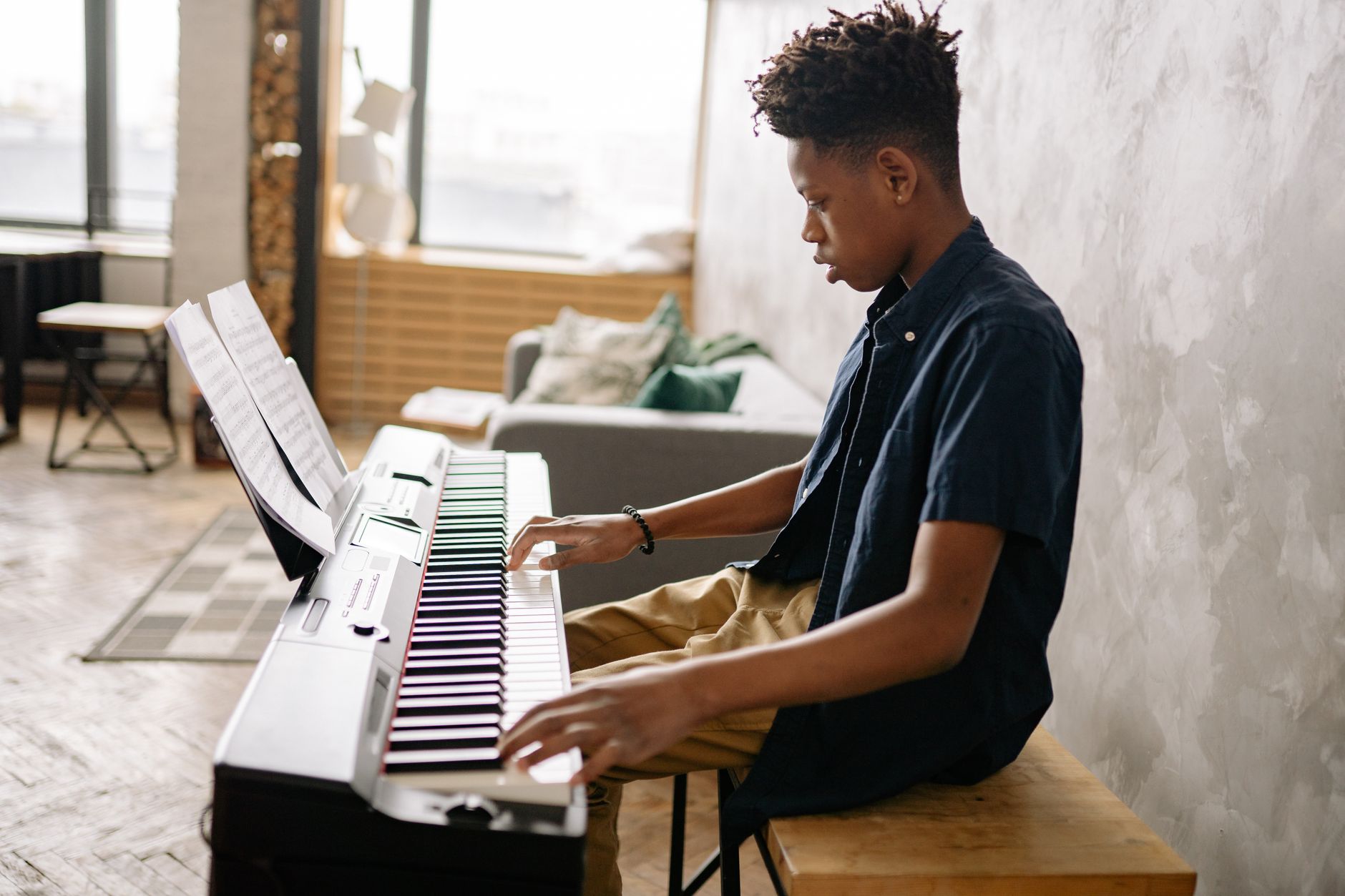
Most parents mistakenly believe that 'semi-weighted' or 'lightly weighted' keys are sufficient for a beginner, when in fact, true hammer-action weighted keys are critical for developing the finger strength and technique required for an acoustic piano.
Best Overall Value: Donner DEP-10
price varies — check retailer
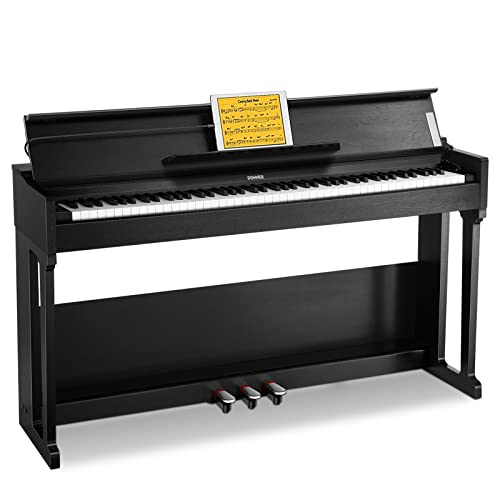
<6ms
88
Weighted
192kHz sampling, 110dB SNR
Lesson modes, app connectivity
The Donner DEP-10 stands out as an exceptional value for parents seeking a full 88-key digital piano. It delivers a realistic weighted key feel, crucial for proper technique, without the premium price tag. This makes it an ideal choice for a 6-year-old ready to commit to a full-size instrument from day one.
Its sound engine is remarkably sophisticated for its class, boasting a 192kHz professional audio sampling rate and 110dB SNR. This ensures a rich, clear sound output that responds convincingly to touch, avoiding the artificial feel common in cheaper models. The sub-6ms latency further enhances the playing experience, making it highly responsive for a young learner.
While the DEP-10 provides a robust foundation, it may lack some advanced features found in higher-end Korg or Yamaha models. However, for a beginner, its core strengths—realistic key feel and excellent sound—far outweigh these omissions. It's a durable instrument designed to support a child through their initial years of piano lessons.
Best Budget Option: Costzon 61-Key Kids Piano
price varies — check retailer
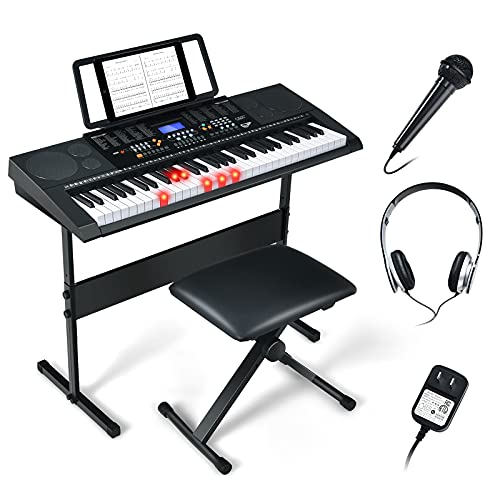
Doesn't feel like a toy
61
Hammer-action weighted
Compact
The Costzon 61-Key Kids Piano is a revelation in the budget category, offering genuine hammer-action weighted keys at an almost unbelievable price point. This directly addresses the most critical factor for a 6-year-old's learning: developing proper finger strength and technique. It feels substantial and responsive, defying expectations for a compact, affordable instrument.
Reviewers consistently praise its playability, noting it 'doesn't feel like a toy,' a rare compliment for keyboards in this segment. For parents unsure about their child's long-term commitment, this piano provides an ideal, low-risk entry point. It allows a child to explore piano with the correct physical feedback, building fundamental skills before a larger investment is made.
The primary compromise is its 61-key count, which means an eventual upgrade will be necessary as a child progresses to more complex pieces. Some piano teachers may also prefer an 88-key instrument from the start. However, for initial exploration and technique building, the Costzon's hammer-action keys deliver unparalleled value.
Best Premium Choice: Korg B2SP
$600

Half-damper support
88
Weighted (Hammer-action implied)
Teacher-approved
Furniture stand, music stand, triple pedal
For parents ready to make a significant investment in their child's musical journey, the Korg B2SP offers a comprehensive and high-quality solution. This 88-key digital piano provides an authentic playing experience from day one, ensuring a seamless transition through years of lessons. Its weighted key action delivers the precise feel required for developing advanced technique.
The B2SP distinguishes itself with a complete package, including a matching furniture stand, a large music stand, and a portable triple pedal unit with half-damper sustain. This integrated setup provides the stability and functionality of an acoustic piano, fostering proper posture and pedal technique from an early age. The robust construction ensures it will withstand years of dedicated practice.
While its $600 price point is higher, the Korg B2SP eliminates the need for early upgrades and is widely accepted by piano teachers. Its excellent sound engine and realistic key feel make it a top-tier choice for serious young students. This is an investment in long-term musical development, providing a full piano experience without compromise.
Runner-Up: Yamaha P-45
The Yamaha P-45 remains a consistently strong contender, offering a reliable 88-key weighted digital piano from a highly trusted brand. It features Yamaha's Graded Hammer Standard (GHS) action, providing a realistic feel that is widely recommended by piano teachers for beginners. The P-45 delivers solid sound quality and a no-frills approach focused on core piano functionality.
While its price varies, it typically represents a good balance of quality and affordability within the 88-key segment. It's a dependable choice for parents who prioritize brand reputation and teacher acceptance, ensuring their child starts with an instrument that meets formal lesson requirements. The P-45 is a workhorse that will serve a young student well for many years.
Key Features Comparison
| Feature | Costzon 61-Key | Donner DEP-10 | Korg B2SP | Yamaha P-45 |
|---|---|---|---|---|
| Key Count | 61 | 88 | 88 | 88 |
| Key Action | Hammer-action weighted | Weighted | Weighted (Hammer-action implied) | Weighted (GHS) |
| Price | Varies | Varies | $600 | Varies |
| Included Stand | No | No | Yes (Furniture) | No |
| Included Pedals | Sustain (basic) | Sustain (basic) | Triple Pedal (half-damper) | Sustain (basic) |
| Sound Sampling Rate | Not specified | 192kHz | Not specified | Not specified |
| Teacher Acceptance | Mixed (due to 61 keys) | High | High | High |
Key Features by Price Tier
192kHz / 110dB SNR
Overall Value Sound (Donner)
Furniture Stand & Triple Pedal
Premium Inclusions (Korg)
Brave research
Key Count Distribution of Recommended Pianos
Manufacturer specifications
Bottom Line
The Smart Investment Strategy
For a 6-year-old taking their first piano steps, authentic key action trumps everything else. The Costzon 61-Key delivers genuine hammer-action weighted keys at an unmatched price — the smartest way to test interest while building real technique. Once commitment is proven, the Donner DEP-10 provides an exceptional 88-key upgrade with professional sound quality.
For families ready to invest long-term from day one, the Korg B2SP delivers a complete, furniture-grade solution that will last through advanced lessons.
Further Reading
Comprehensive guide to digital pianos across various budgets and features.
Expert review and ranking of top beginner pianos, including insights on playability.
Specialized review focusing on digital pianos suitable for children of different age groups.
An in-depth explanation of key action types and their importance for new learners.
Sources
- 1.Best Digital Pianos & Keyboards 2026 (All Price Points)
- 2.7 Best Beginner Keyboard Pianos🎹 in 2026 (Tested & Ranked)
- 3.3 Best Digital Pianos - In Every Price Range - REVIEW | 2026
- 4.8 Best Digital Pianos for Children | Kids 5 to 18 Yrs | REVIEW
- 5.9 Best Digital Piano Reviews for 2026 | Top Pianos Tested
- 6.A Guide to Donner’s Instrument Families: Which Series Fits Your Musica - Donner Music - US
- 7.Donner DDP-100 vs Donner DDP-400 [After Detailed Testing]
- 8.Amazon.com: Donner Wireless in Ear Monitor System with Beltpack Color Screen, Receiver Only, CV-3R : Musical Instruments
- 9.Donner DDP-80 Review — Console Digital Piano for Beginners | 1st Note
- 10.r/piano on Reddit: 61 or 88 keys for a beginner
- 11.r/pianolearning on Reddit: Good beginner piano for kids?
- 12.r/piano on Reddit: Please help! Best electric piano for a young child beginner and tight budget.
- 13.r/synthesizers on Reddit: Child-proof keyboard stand
- 14.r/piano on Reddit: Digital Piano Stand For Kids?
- 15.Weighted Keys vs. Touch-Sensitive Keyboards: What Actually Matters for Beginners? | iPianoLab Blog
- 16.Digital Piano Buying Basics for Families: Weighted Keys Explained - 1023 Jack
Rate this article
Your feedback helps surface the best content
Related articles
Have a question? Get your own article.
Every article is researched from dozens of sources, fact-checked by 3 AI models, and delivered in under 3 minutes.
Triple-Verified — 30 claims checked across 2 verification stages — 30 claims verified