The World's Biggest Boats: A Definitive Ranking by Category

June 26, 2026 · 8 min read
···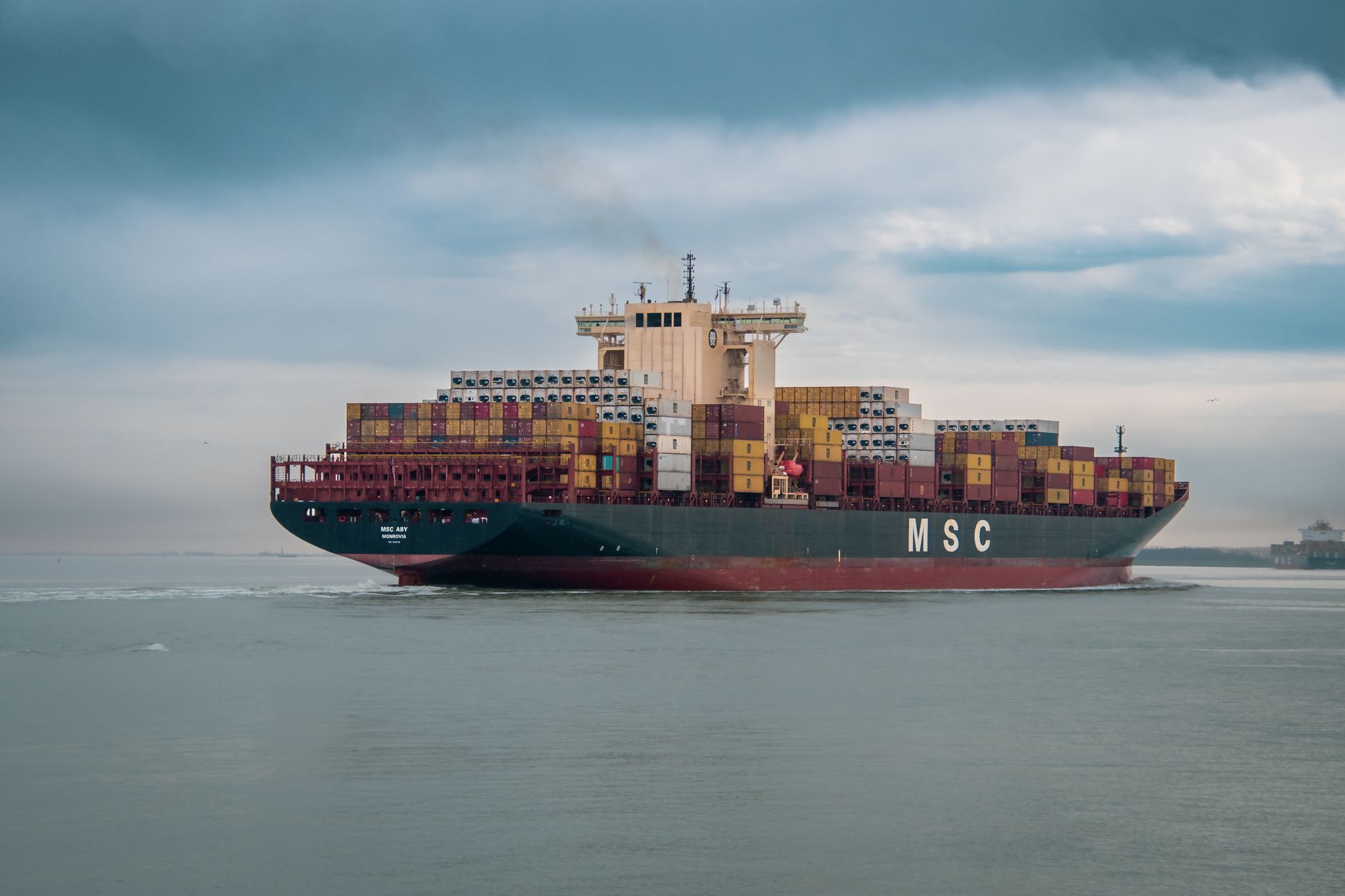
Photo by Fred dendoktoor on Pexels
- Ever Given is the #1 largest ship overall by length.
- Titans like TI-Class ULCC, USS Gerald R. Ford, and Oasis of the Seas dominate their specific domains.
- Size is defined by length, displacement, or capacity, reflecting diverse engineering goals.
- These vessels push the limits of maritime engineering and global logistics.
Quick Verdict: The Unrivaled Giants of the Sea
The Ever Given container ship stands as the undisputed champion for overall length, a staggering 400-meter testament to global trade's scale. Its sheer size, however, is just one facet of maritime gigantism. This ranking delves into the specialized categories where vessels push engineering boundaries for distinct purposes.
From the immense capacity of oil tankers to the strategic might of naval vessels, the luxurious expanse of superyachts, and the self-contained cities of cruise ships, each 'biggest' title reflects unique design philosophies. We explore the TI-Class ULCC, USS Gerald R. Ford, Oasis of the Seas, Azzam, and the Prelude FLNG, showcasing humanity's relentless pursuit of maritime engineering extremes.
Executive Summary: Why Size Matters on the High Seas
The world's largest ships are not merely scaled-up versions of smaller vessels; their immense size is a direct response to specific economic, military, and logistical imperatives. The Ever Given, at 400 meters, exemplifies the drive for economies of scale in container shipping, optimizing global supply chains.
The TI-Class ULCC, measuring 380 meters and capable of carrying over 3 million barrels of crude oil, is critical for global energy transport. The USS Gerald R. Ford, with a displacement exceeding 100,000 tons, projects unparalleled military power across oceans.
The Oasis of the Seas, 362 meters long and accommodating over 6,700 passengers, redefines leisure travel as a floating resort. Azzam, at 180 meters, represents the pinnacle of private luxury and high-performance engineering. Finally, the 488-meter Prelude FLNG showcases the frontier of offshore energy, combining production, liquefaction, and storage at sea.
Each vessel's scale directly dictates its function and global impact.
Giants of the Ocean
What You Need to Know: Scale & Engineering at the Limit
Building and operating the world's largest ships presents monumental engineering challenges that go far beyond simple scaling. The physical limits of ship size are dictated by factors like hull bending stress, which becomes critical for vessels like the Ever Given at its 400-meter length.
Extreme weather conditions exert immense forces, requiring advanced material science and structural design to prevent catastrophic failure.
Propulsion systems must generate colossal power to move these giants. The Oasis of the Seas, for instance, relies on six Wärtsilä 46 engines generating over 96 MW. The Azzam superyacht achieves its impressive 33-knot speed with two General Electric gas turbine engines and two MTU diesel engines, a testament to performance engineering.
Hull design is equally crucial, balancing hydrodynamics for efficiency with structural integrity.
Logistically, these colossal vessels demand specialized infrastructure. Docking and maneuvering require deep harbors, massive tugboats, and precise navigation systems. Maintaining them involves dry docks of unprecedented size and complex logistical chains for parts and crew.
The common misconception that these are just bigger boats is fundamentally wrong; they represent entirely different design philosophies and a constant push against the very limits of what's possible at sea.
The 'biggest' ship isn't always the most impactful; the USS Gerald R. Ford, despite being shorter than a superyacht, represents a far greater projection of power and technological complexity than any cargo vessel.
Comparison Matrix: The Biggest Boats by Category
| Metric | Ever Given | TI-Class ULCC | USS Gerald R. Ford | Oasis of the Seas | Azzam | Prelude FLNG |
|---|---|---|---|---|---|---|
| Length (meters) | 400/500 | 458/500 | 337/500 | 362/500 | 180/500 | 488/500 |
| Displacement (tons) | 200000/600000 | 409400/600000 | 100000/600000 | 226000/600000 | 13136/600000 | 600000/600000 |
| Primary Purpose | 1/6 | 2/6 | 3/6 | 4/6 | 5/6 | 6/6 |
Ever Given: The Global Trade Behemoth
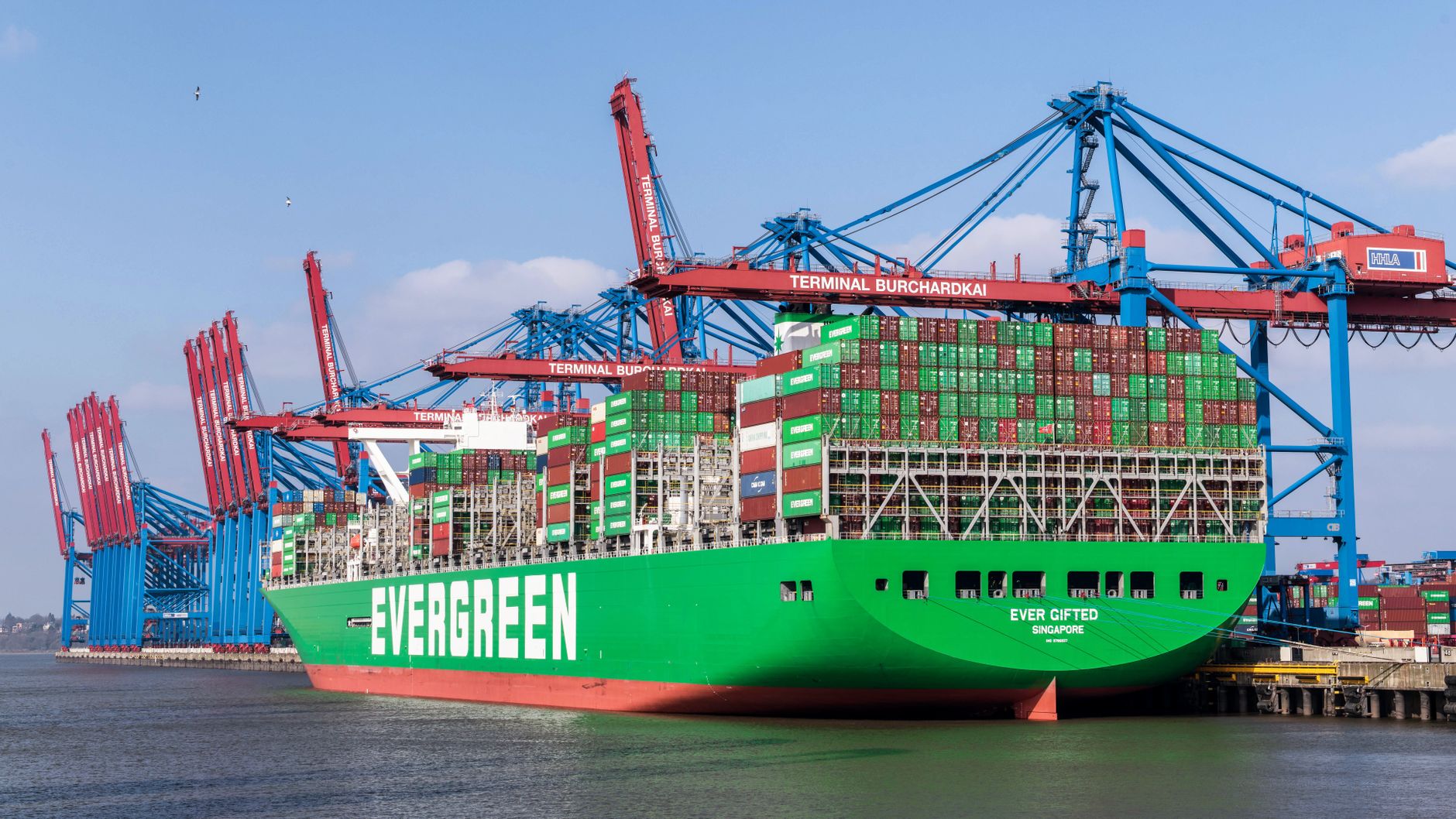
#1 Largest Ship Overall: Ever Given Container Ship
Ever Given Container Ship
The ship's notoriety surged during its 2021 Suez Canal blockade, highlighting its critical role and the fragility of global logistics. The incident underscored the engineering maximum for cargo vessels, not just due to bending stress on the hull but also the limited availability of ports and canals capable of accommodating such giants. Its 200,000-tonne weight further emphasizes the scale of modern maritime transport.
TI-Class ULCC: The Oil Supercarriers

#2 Largest Oil Tanker: TI-Class ULCC
TI-Class ULCC
Designed with double hulls, these vessels prioritize safety and environmental protection, crucial for handling such volatile cargo. The economics of ULCCs are driven by the need to transport oil as efficiently as possible, minimizing per-barrel costs. Their operation is a complex logistical feat, requiring specialized terminals and deep-water ports to load and unload their immense payloads, making them vital arteries in the global energy supply chain.
USS Gerald R. Ford: Naval Power Projection

#3 Largest Naval Vessel: USS Gerald R. Ford
USS Gerald R. Ford
Its advanced features include upgraded weapons systems, improved energy efficiency, and reduced crew requirements compared to previous carrier classes. The Ford-class carriers are equipped with cutting-edge technologies like the Electromagnetic Aircraft Launch System (EMALS) and Advanced Arresting Gear (AAG), enabling faster aircraft launch and recovery. The sheer scale and complexity of the USS Gerald R. Ford underscore its strategic importance as a mobile airbase and a symbol of naval dominance.
Oasis of the Seas: The Floating City

#4 Largest Cruise Ship: Oasis of the Seas
Oasis of the Seas
Its innovative design includes distinct 'neighborhoods,' a central park, multiple pools, and extensive entertainment options, offering an unparalleled leisure experience. The challenges of powering, provisioning, and maneuvering such a massive passenger vessel are immense, requiring sophisticated engineering and logistical planning. A $165 million modernization in 2019 further enhanced its amenities, solidifying its status as a premier destination at sea.
Azzam: The Ultimate Superyacht

#5 Largest Superyacht: Azzam
Azzam
Beyond its length, Azzam is also one of the fastest superyachts, capable of reaching top speeds of 33 knots. This performance is achieved through its powerful propulsion system, featuring two General Electric gas turbine engines. The design emphasizes a sleek, elegant profile, blending opulent interiors with high-performance capabilities, making it a unique marvel in the world of private maritime luxury.
Prelude FLNG: Offshore Energy Giant

#6 Largest Floating Platform: Prelude FLNG
Prelude FLNG
Its primary purpose is the production, liquefaction, and storage of natural gas directly at sea, eliminating the need for extensive onshore infrastructure. The project's estimated cost ranged from $10.8 to $12.6 billion, reflecting the complexity and scale of this frontier offshore engineering marvel. Prelude FLNG represents a significant leap in energy extraction technology, pushing the boundaries of what can be achieved in remote marine environments.
By 2030, we will see the first fully autonomous, crewless cargo vessel exceeding 450 meters in length, driven by economic pressures and advancements in AI navigation, fundamentally reshaping maritime logistics and port infrastructure.
Record-Breaking Numbers
488 meters
Longest Vessel (Prelude FLNG)
600,000 tons
Heaviest Vessel (Prelude FLNG)
4.25 million barrels
Oil Capacity (TI-Class ULCC)
20,000 TEU
Container Capacity (Ever Given)
100,000+ tons
Naval Displacement (USS Gerald R. Ford)
6,700+ passengers
Cruise Ship Capacity (Oasis of the Seas)
Entity Cards & Research Findings
Bottom Line
The Ever Given undeniably leads in overall length, symbolizing the relentless pursuit of scale in global trade. However, the true narrative of maritime giants is one of specialized dominance. Each vessel, from the TI-Class ULCC to the USS Gerald R. Ford, Oasis of the Seas, Azzam, and Prelude FLNG, is a category winner, representing the absolute peak of engineering for its specific purpose.
These ships are not just large; they are purpose-built marvels that redefine what's possible on the high seas, shaping global commerce, defense, and leisure. Expect continued innovation, especially in autonomous cargo vessels, as the industry pushes further against physical and technological limits.
What Reddit is saying
r/maritime and r/engineering pursue technical accuracy on ship specifications while r/worldnews and r/interestingasfuck treat the Ever Given grounding as a cautionary spectacle worthy of scrutiny.
In short, Seawise Giant wasn’t the biggest when first built, but it became the largest after modification. Which still makes Seawise Giant the record holder for the largest ship in the world.
Read full discussion →They're running fairly standard large marine diesels (that can burn heavy fuel oil, to be fair, https://www.wartsila.com/marine/build/engines-and-generating-sets/diesel-engines/wartsila-46f) that
Read full discussion →Cars are not usually shipped on container vessels en masse. ... I brake for nobody" in the back is missing. ... It used to be written on the front, but it fell off. ... There is surely a banana i
Read full discussion →The Seawise Giant was the longest ship ever built, at 1,500ft (450m) and a deadweight tonnage of 564,763t ... For things that are abnormally large. ... Maritime news, issues, and discussion affecting
Read full discussion →Curated from 8 active threads across r/maritime, r/engineering, r/BeAmazed, r/AskReddit
Further Reading
An in-depth look at the scientific principles behind the Suez Canal blockage and the challenges of mega-ship design.
Comprehensive details on the design, capacity, and operational history of the world's largest oil tankers.
Detailed overview of the USS Gerald R. Ford's specifications, capabilities, and strategic role in the U.S. Navy.
Explore the features, design, and impact of one of the largest cruise ships ever built.
Information on the Azzam superyacht, its record-breaking length, speed, and luxury features.
Technical details and operational overview of the Prelude FLNG, a pioneering offshore energy platform.
Sources
- 1.Ever Given - Wikipedia
- 2.container ship Ever Given
- 3.The Ever Given and the physics of big ships clogged the Suez Canal
- 4.Vessel Particulars - EVERGREEN LINE
- 5.List of largest container ships - Wikipedia
- 6.The cost of the Suez Canal blockage
- 7.TI-class supertanker - Wikipedia
- 8.Ultra Large Crude Carrier | Shipping Lanes Wiki | Fandom
- 9.The 15 Largest Oil Tankers in the World – freightcourse
- 10.Oil tanker - Wikipedia
- 11.TI-class supertanker — Grokipedia
- 12.Largest Oil Tankers Ever Built | Zeymarine
- 13.Gerald R. Ford-class aircraft carrier - Wikipedia
- 14.USS Gerald R. Ford | Aircraft Carrier, Size, Crew, Deployments, & Photos | Britannica
- 15.USS Gerald R. Ford - Wikipedia
- 16.Azzam (2013 yacht) - Wikipedia
- 17.AZZAM Yacht - 593ft Lurssen 2013 | YachtBuyer
- 18.Azzam yacht (Lurssen, 180.61m, 2013)
- 19.Azzam: 10 facts about Lürssen's 180m superyacht
- 20.Azzam yacht | 180.61m Lürssen Yachts 2013
- 21.Prelude FLNG - Wikipedia
- 22.Prelude FLNG Project, Australia - World's biggest floating LNG facility
- 23.What you need to know about Shell's Prelude floating LNG — SRO Technology
- 24.Prelude Floating Liquefied Natural Gas Facility - Ship Technology
- 25.Shell Prelude FLNG: Worlds First FLNG Development
- 26.Oasis of the Seas - Wikipedia
- 27.Oasis of the Seas - Cruise Ship Reference case - Wärtsilä
- 28.Oasis of the Seas Ship Stats & Information- Royal Caribbean International Oasis of the Seas Cruises: Travel Weekly
- 29.Oasis of the Seas Specs and Features
- 30.Oasis of the Seas Luxury Cruise Liner, Bahamas - Ship Technology
Rate this article
Your feedback helps surface the best content
Related articles
Have a question? Get your own article.
Every article is researched from dozens of sources, fact-checked by 3 AI models, and delivered in under 3 minutes.
Triple-Verified — 6 corrections applied across 2 verification stages applied