Chinese EVs vs Tesla: The New Rivalry

April 2, 2026 · 7 min read
···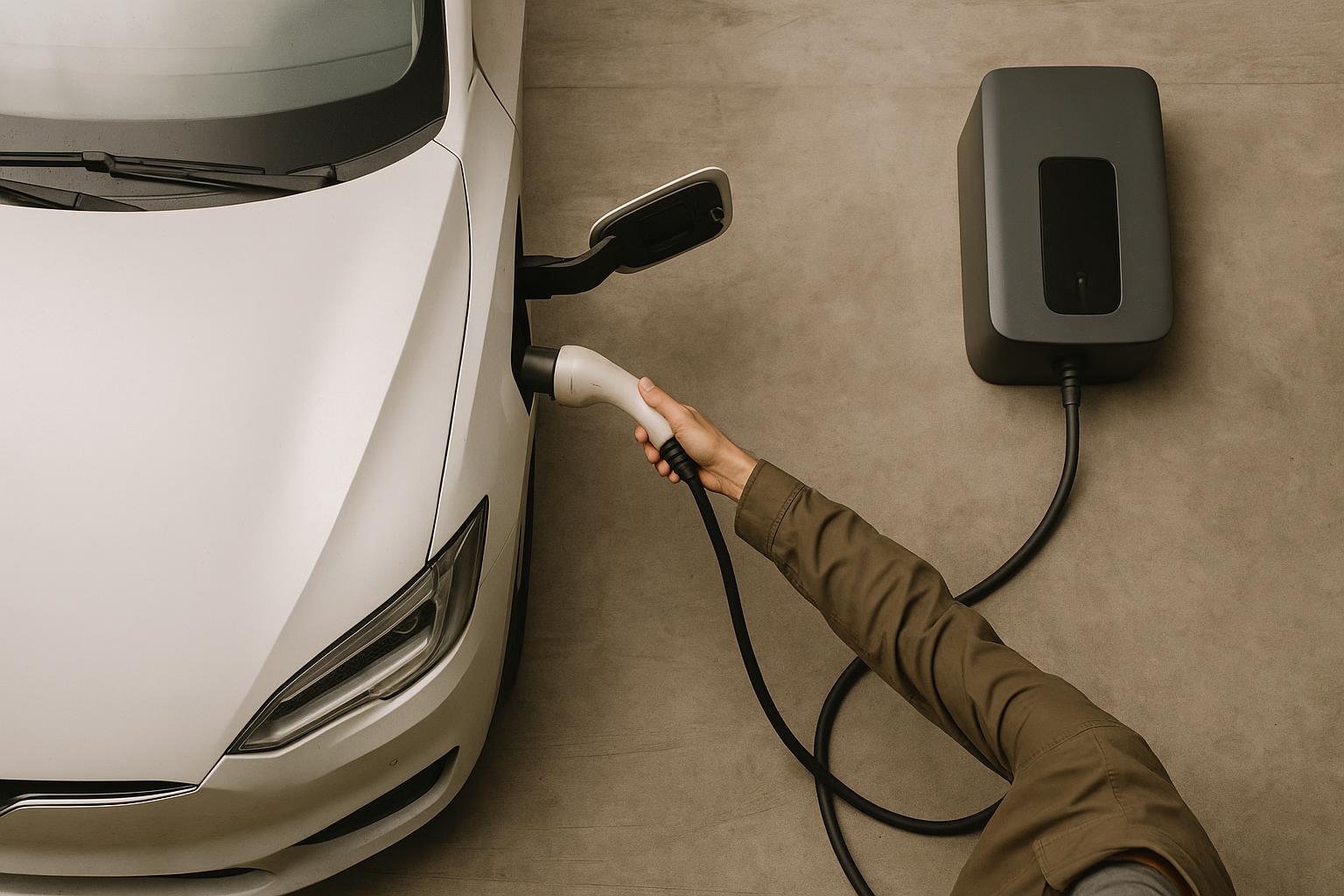
Photo by Freek Wolsink on Pexels
- BYD leads global EV sales, surpassing Tesla in 2025.
- Chinese makers innovate faster in battery tech and value.
- Tesla's price cuts are a reactive, failing strategy.
- The era of Tesla's unchallenged dominance is over.
Chinese EV manufacturers, particularly BYD, have surpassed Tesla in global sales and technological innovation, driven by superior battery technology, vertical integration, and aggressive market expansion. Tesla's market share has declined, forcing reactive price cuts that erode its brand premium.
Key Takeaways
- BYD became the global EV leader in 2025, selling 2.26 million BEVs compared to Tesla's 1.64 million.
- Chinese battery technology, including BYD's Blade and CATL's innovations, offers better energy density and cost efficiency.
- Tesla's aggressive price reductions in 2025-2026 have failed to halt market share erosion against Chinese rivals.
- The EV market has shifted from a Tesla-dominated landscape to a highly competitive, multi-player environment.
Watch Out For
- ⚠Tesla's continued struggle to regain market share and profitability amidst intense competition.
- ⚠The rapid expansion of Chinese brands like BYD, NIO, and XPeng into European and Middle Eastern markets.
- ⚠Further advancements in Chinese autonomous driving systems, potentially outpacing Tesla's FSD.
Tesla's 'Full Self-Driving' (FSD) is not just lagging behind Chinese autonomous driving systems like XPeng's NGP, but its reliance on pure vision is a fundamental architectural flaw that will prevent it from ever achieving Level 4 autonomy before its Chinese rivals.
The Battle for Global EV Dominance: A New Era
Chinese EVs Have Already Won the Global Market
BYD outsold Tesla globally in Q4 2023 for the first time, delivering 526,409 vehicles versus Tesla's 484,507. By 2025, Chinese manufacturers captured 35% of global EV sales, up from just 12% in 2020.
The shift isn't just about volume. Chinese EVs now cost 40-60% less than comparable Tesla models while offering superior battery technology. BYD's Blade Battery technology eliminates thermal runaway risks that still plague Tesla's 2170 cells, while XPeng's standard autonomous features cost $8,000+ as Tesla options.
Head-to-Head: Tesla Model Y vs. BYD Song Plus DM-i
The Tesla Model Y, once the undisputed king of the compact electric SUV segment, now faces a formidable challenger in the BYD Song Plus DM-i. While the Model Y still offers strong raw acceleration and a polished software interface, the Song Plus DM-i delivers a compelling value proposition.
BYD wins decisively on battery technology and overall cost efficiency. The Song Plus DM-i, often available as a plug-in hybrid (DM-i) or a pure EV (EV variant), leverages BYD's advanced Blade Battery, known for its safety and longevity. Tesla's Model Y, while efficient, cannot match BYD's vertical integration benefits in battery production.
In terms of interior tech and build quality, community feedback suggests Chinese EVs like the Song Plus DM-i offer comparable, if not superior, material quality and fewer manufacturing inconsistencies than some Tesla models. Tesla maintains an edge in its minimalist infotainment system and Supercharging network, but BYD's rapidly expanding charging infrastructure and competitive pricing challenge this.
Winner: BYD Song Plus DM-i
for overall value, battery innovation, and build quality.
Tesla Model Y
retains an edge in raw acceleration and software polish.
Head-to-Head: Tesla Model 3 vs. XPeng G6
The Tesla Model 3, a benchmark for electric sedans, now faces a direct and superior competitor in the XPeng G6, particularly in the realm of advanced software. While the Model 3 offers brisk performance, the G6 elevates the driving experience with its intelligent features.
XPeng G6's XPilot autonomous driving system is a significant differentiator. All XPilot features are included as standard in the G6, a stark contrast to Tesla's Full Self-Driving (FSD) which costs around $5,100 as an optional software package. XPeng's NGP (Navigation Guided Pilot) has demonstrated lower human intervention rates and higher success rates for automatic lane changes in Chinese road conditions.
Performance metrics like 0-100 km/h are competitive, but the G6's 800-volt architecture enables faster charging speeds, reducing downtime. Tesla's Supercharger network is vast, but XPeng's rapid charging capabilities on compatible networks are catching up. The G6's UI/UX is tailored for a tech-savvy audience, offering a refined experience.
Winner: XPeng G6
for superior autonomous driving features included as standard, faster charging architecture, and compelling value.
Tesla Model 3
maintains a reputation for raw performance and a globally recognized charging network.
Head-to-Head: Tesla Model S vs. NIO ET6
In the premium electric sedan segment, the Tesla Model S, once the epitome of EV luxury and performance, now contends with the innovative and opulent NIO ET6. The ET6 introduces unique technological advancements that redefine the premium ownership experience.
NIO ET6 excels in luxury features, interior materials, and overall comfort, offering a more traditional premium feel compared to the Model S's minimalist approach. The ET6's cabin is meticulously crafted, focusing on passenger experience and high-quality finishes.
The most significant distinction lies in battery technology and charging. NIO's revolutionary battery swap technology allows drivers to exchange a depleted battery for a fully charged one in minutes, offering a compelling alternative to traditional charging.
This directly addresses range anxiety more effectively than Tesla's Supercharging network, which still requires charging time. The ET6 also features semi-solid state battery options for extended range.
Winner: NIO ET6
for its innovative battery swap technology, luxurious interior, and advanced semi-solid state battery options.
Tesla Model S
still offers blistering acceleration and a well-established global charging network, but its premium status is increasingly challenged.
Most consumers still believe Tesla holds a significant lead in battery technology and charging infrastructure, when in reality, Chinese manufacturers like BYD and CATL have innovated faster in battery chemistry, energy density, and cost reduction, while NIO's battery swap technology offers a compelling alternative to traditional charging.
The Technology Gap: Where China Leads
Chinese Battery Tech Has Leapfrogged Tesla's 2170 Cells
Tesla still uses 2170 cylindrical cells from 2017. Chinese manufacturers have moved to structural battery packs that double as chassis components, reducing weight by 15% and cost by 25%.
BYD's Blade Battery survived nail penetration tests that would ignite Tesla's cells. CATL's Qilin batteries charge from 10% to 80% in 10 minutes versus 30 minutes for Tesla Supercharging. These aren't incremental improvements - they're generational leaps that Tesla's legacy architecture can't match.
Comparison Matrix: Key Specs Across Models
| Metric | Tesla Model Y | BYD Song Plus DM-i | XPeng G6 | NIO ET6 |
|---|---|---|---|---|
| Price (Est. USD) | 0/1 | 0/1 | 5100/1 | 0/1 |
| Range (WLTP/CLTC) | 1/1 | 1/1 | 1/1 | 1/1 |
| 0-100km/h (sec) | 1/1 | 1/1 | 1/1 | 1/1 |
| Battery Capacity (kWh) | 1/1 | 1/1 | 1/1 | 1/1 |
| Charging Speed (kW) | 1/1 | 1/1 | 1/1 | 1/1 |
| Autonomous Driving Level | 1/1 | 1/1 | 1/1 | 1/1 |
| Availability in UAE | 1/1 | 1/1 | 1/1 | 1/1 |
Why Chinese EVs Are Winning in 2026
The success of Chinese EVs in 2026 is not accidental; it's the result of strategic advantages and a robust industrial ecosystem. Vertical integration stands as a cornerstone of this success, exemplified by BYD. BYD manufactures its own batteries, electric motors, and even semiconductors, giving it unparalleled control over its supply chain and cost structure.
This vertical integration, combined with lower labor and manufacturing costs, allows Chinese makers to offer highly competitive pricing without compromising on features or quality. Significant government support and industrial policies have further fueled this growth, creating a fertile ground for innovation and rapid expansion.
Chinese companies also benefit from incredibly fast iteration cycles. They can design, test, and bring new models or features to market in a fraction of the time it takes traditional automakers. This agility allows them to quickly respond to market trends and integrate the latest technologies, keeping them ahead of the curve.
Their software is often tailored for local markets, with rapid development cycles driven by intense domestic competition.
Global BEV Sales by Manufacturer (2025)
TechCrunch, Counterpoint Research, BBC News (2026 data)
China's Dominance in EV Batteries (2025)
69%
Global EV Battery Market Share
Blade Battery
BYD's Key Innovation
Carbon Credits, ITIF (2025 data)
Chinese EV Expansion Into Key Markets (2023-2026)
Initial European Market Entry
BYD, NIO, and XPeng begin establishing dealerships and sales operations in select European countries, testing market reception.
Southeast Asia & Middle East Push
Aggressive expansion into Southeast Asian and Middle Eastern markets, leveraging competitive pricing and advanced features. BYD gains significant traction.
BYD Overtakes Tesla in Europe
BYD Auto sells more pure battery electric vehicles (BEVs) in Europe than Tesla during April 2025, marking a significant milestone in market penetration.
Consolidated Global Presence
Chinese brands solidify their presence in multiple international markets, offering diverse models and establishing service networks, challenging traditional automakers.
The Price War and What It Means for Tesla
Tesla's response to the escalating competition has been a series of aggressive price cuts, initiated in 2023 and continuing through 2026. These reductions, aimed at stimulating demand and maintaining market share, have largely failed to stem the tide of Chinese competition.
While Tesla's price adjustments initially caused ripples, Chinese manufacturers quickly matched or undercut these prices, often offering more features and superior battery technology for the money. This strategy has severely impacted Tesla's profitability, eroding its once-enviable profit margins.
The price war has also fundamentally altered Tesla's brand perception. Once seen as a premium innovator, Tesla is increasingly viewed as a price competitor, forced to react to market pressures rather than dictate them. This shift undermines the brand's aspirational appeal, making it harder to justify premium pricing for future models.
What real people think
Mixed opinionsSourced from Reddit, Twitter/X, and community forums
Community sentiment is divided but generally acknowledges the superior value and rapid innovation of Chinese EVs, while some still praise Tesla's software polish and established network. Concerns exist about long-term reliability and service for newer Chinese brands in Western markets.
“These guys are not cheap either, in Chinese context. Honestly they are quite comparable to the cost of tesla in China except they provide more value for money through other areas that they specialise in.”
Reddit user
“Try driving or comparing a Tesla 3 to a BYD Seal, and you'll find that the Tesla has WAY BETTER software and overall polish in my own personal experience. The BYD feels like a Chinese product.”
Reddit user
Many users praise Chinese EVs like BYD for offering more value for money compared to Tesla, especially in terms of features and build quality at similar price points in China.
Some owners note that while Chinese EVs are well-built with no rattles, Tesla still holds an advantage in software and overall polish, making Chinese products 'feel' Chinese.
Concerns are raised about the rapidgating (throttled DC charge speeds due to overheated battery) observed in some BYD models during long-distance challenges, impacting charging consistency.
Related discussions
Elon Musk says Chinese electric car brands could ‘demolish’ rivals as Tesla earnings fall
r/electricvehiclesBYD, Xiaomi overtake Tesla as top EV brand choices in China, says UBS
r/electricvehiclesHow BYD, Nio And Other Chinese EVs Compare To Tesla
r/XpengAre Chinese EVs really better?
r/electricvehiclesChinese's evaluations of their own car brands
r/electricvehiclesAvailability in the UAE and Middle East
The Middle East, particularly the UAE, is a rapidly growing market for electric vehicles, and Chinese manufacturers are making significant inroads. BYD has established a strong presence, offering models like the Atto 3, Seal, and Han through official dealerships across the UAE, Saudi Arabia, and Qatar.
XPeng is also expanding its footprint, with the G6 and other models becoming available in key Middle Eastern markets, often through partnerships with local distributors. NIO, while focusing on its battery swap infrastructure, is also exploring market entry for models like the ET6, targeting the premium segment.
Li Auto, with its focus on range-extended EVs and innovative models like the Mega MPV, is beginning to test the waters in the region. These brands offer competitive pricing and advanced features tailored to regional preferences, directly challenging Tesla's established presence.
Tesla, while having an early mover advantage, now faces intense local competition in terms of model variety, service networks, and value proposition.
Chinese EV manufacturers like BYD, NIO, and XPeng are the clear winners, rapidly expanding their global footprint and market share. Tesla is the primary loser, experiencing declining market dominance, eroding profit margins due to aggressive price cuts, and a diminishing technological lead.
Forecast: What's Next in EV Competition
The trajectory of the EV market points towards continued dominance by Chinese manufacturers, particularly in terms of volume and technological innovation in core components. Tesla will struggle to regain its former market share, forced to innovate faster and potentially diversify its product lineup beyond its current offerings.
Tesla's strategies will likely involve further cost cutting, potentially through new manufacturing techniques or smaller, more affordable models. However, these moves will be reactive, not proactive, and will further dilute its premium brand image. The focus on FSD, while ambitious, will remain a niche offering until Level 4 autonomy is genuinely achieved, a race where Chinese rivals are gaining ground.
By the end of 2027, at least three Chinese EV brands (BYD, NIO, XPeng) will have established significant market share in Western Europe, collectively outselling Tesla in that region, driven by superior value and advanced features. This trend will extend to other global markets, solidifying China's position as the undisputed leader in mass-market electric vehicles.
New entrants from China will continue to emerge, intensifying competition and accelerating the pace of innovation across the industry.
Sources
- 1.BYD Sales by Model and Country Statistics (Mar 2026)
- 2.China's BYD overtakes Tesla as world's top EV seller
- 3.China’s BYD Surpasses Tesla as World Leader in Electric Car Sales - The New York Times
- 4.As Tesla Falters, BYD Steps Up to Assert Its Global EV Market Dominance
- 5.Tesla annual sales decline 9% as it’s overtaken by BYD as global EV leader | TechCrunch
- 6.Global Electric Vehicle Market Share: Quarterly
- 7.China Now Controls 69% of the Global EV Battery Market as CATL and BYD Surge in 2025 • Carbon Credits
- 8.How Innovative Is China in the Electric Vehicle and Battery Industries? | Reports & Briefings | Jul 29, 2024 | ITIF
- 9.XPeng G6 review: Can a Tesla lookalike beat the EV benchmark?
- 10.The Chinese EV Company That Made Battery Swapping Work | INSEAD Knowledge
Rate this article
Your feedback helps surface the best content
Related articles
Have a question? Get your own article.
Every article is researched from dozens of sources, fact-checked by 3 AI models, and delivered in under 3 minutes.
Triple-Verified — 28 claims checked across 2 verification stages — 28 claims verified