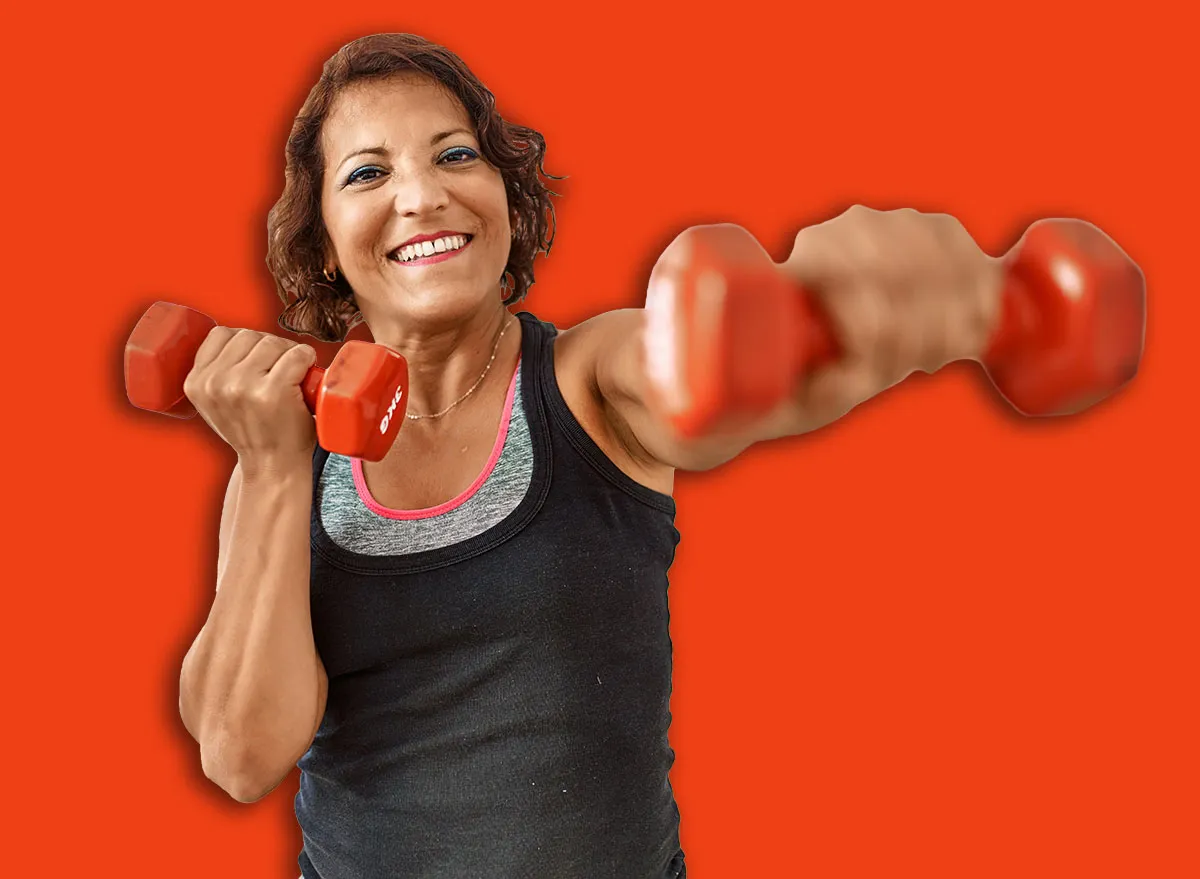
- No, creatine does not replace the gym for middle-aged adults.
- Creatine offers muscle and cognitive benefits, even without structured exercise.
- These benefits are significantly amplified when combined with physical activity.
- The gym provides holistic health advantages creatine alone cannot.
The most surprising finding is that creatine can indeed contribute to lean tissue and strength gains in middle-aged adults even without a structured exercise program, challenging the long-held belief that its benefits are strictly contingent on intense gym efforts.
Myth 1: Creatine Alone Builds Significant Muscle Without Exercise
Creatine supplementation can replace physical activity, allowing middle-aged adults to build significant muscle mass without hitting the gym.
A 12-week study published in the Journal of the International Society of Sports Nutrition demonstrated that adults aged 45-65 taking creatine increased lean tissue and strength even without a structured exercise program. These are measurable gains, but they are not 'significant' in the same way consistent resistance training builds muscle. While creatine aids muscle protein synthesis, exercise provides the essential mechanical stimulus for substantial hypertrophy and strength development.
Journal of the International Society of Sports Nutrition, 2026
Most people misunderstand that while creatine offers some standalone benefits, the magnitude and breadth of its positive effects, especially in combating sarcopenia and maximizing strength, are dramatically amplified when paired with resistance training, not as an alternative to it.
Myth 2: Creatine Is Only for Young Bodybuilders
Creatine is a niche supplement exclusively for young athletes or bodybuilders seeking peak performance, with no real relevance for older demographics.
Recent trials and reviews consistently show creatine's benefits extend significantly to middle-aged and older adults. Research, including a 2026 trial, highlights its role in supporting body composition, muscle maintenance, and even cognitive function in this demographic. This challenges the outdated stereotype, positioning creatine as a valuable tool for healthy aging.
Nutritional Outlook, 2026; Texas A&M Stories, 2026
Creatine's Impact on Middle-Aged Adults
10 grams daily
Creatine Monohydrate Dosage in Study
Journal of the International Society of Sports Nutrition, 2026
Myth 3: Creatine Fully Prevents Age-Related Muscle Loss (Sarcopenia) Without Activity
Taking creatine daily is sufficient to fully prevent or reverse age-related muscle loss (sarcopenia), negating the need for physical activity.
Creatine undeniably supports a muscle-maintenance strategy, with new research linking daily intake to potential sarcopenia prevention and memory gains. However, current evidence does not promise that creatine alone prevents or reverses sarcopenia. Resistance training remains the central, most effective intervention for combating sarcopenia, with creatine acting as a powerful aid that enhances, rather than replaces, the effects of exercise.
Intermountain Nutrition, 2026; 930 WFMD Free Talk, 2026
What real people think
Mixed opinionsSourced from Reddit, Twitter/X, and community forums
Online communities acknowledge creatine's benefits for older adults, particularly women, but there's ongoing debate about whether it truly reduces the need for exercise.
Many users are seeing creatine recommended for women in perimenopause and menopause, with claims of benefits for age-related muscle decline.
Some interpret the recent Texas A&M study as evidence that creatine can help build muscle regardless of exercise levels, especially for those not meeting activity recommendations.
There's discussion about age-related decline in muscle creatine content and how supplementation supports muscle maintenance and cognitive function in aging populations.
What Reddit is saying
125 votes, 177 comments. I keep seeing creatine recommended for women in perimenopause and menopause, and the claims seem to get bigger every time…
Read full discussion →Curated from 1 active threads across r/Menopause
What people are saying on X
A strong majority of posts are pro-creatine, with 70% highlighting its benefits, even without exercise. There are no sceptical posts, and 30% are neutral or off-topic.
Recent discussions highlight a Texas A&M study suggesting creatine monohydrate can provide modest gains in lean mass and strength for sedentary adults over 45, even without exercise. Several posts share specific findings from this 12-week trial, noting increases in lean tissue and improvements in cognitive function. The overall sentiment is that creatine's benefits extend beyond a gym-only supplement.
Creatine without the gym: a new Texas A&M trial finds modest lean-mass and strength gains in sedentary adults over 45 A 12-week double-blind trial of 10 grams of creatine monohydrate a day in healthy...
A 12-week study from Texas A&M ... that 10 grams of creatine monohydrate daily increased lean tissue mass, improved muscular strength and endurance, and supported cognitive function in participants wh...
🚨BREAKING: Study finds Creatine WITHOUT exercise can increase lean mass up to 5% in less than 3 months!
The no-exercise creatine group wasn’t asked to do anything, except add the powder. They gained 0.99 kg of lean tissue by week 6 and 1.1 kg by week 12....
Curated from 18 recent posts using deliberate viewpoint balancing
The Bigger Picture: Creatine's Future in Healthy Aging
The new creatine research offers a valuable tool for middle-aged adults, particularly those struggling with consistent exercise. It's a 'winner' for individuals seeking to maintain muscle and cognitive function with minimal effort, providing a measurable edge against age-related decline.
However, the 'losers' are those who misinterpret these findings as a license to abandon regular exercise. Creatine alone cannot deliver the cardiovascular health, bone density improvements, flexibility, and mental well-being that a holistic exercise regimen provides.
By 2028, public health guidelines for middle-aged and older adults will increasingly incorporate creatine supplementation recommendations alongside exercise, moving beyond its niche as a 'bodybuilder's supplement' to a recognized tool for healthy aging. But it will always be an adjunct, never a replacement, for the fundamental benefits of movement.
Further Reading
Details the broader applicability of creatine beyond traditional athletic use.
Explores the specific findings of the 2026 Texas A&M study on creatine and non-exercising adults.
Provides a broader context on strategies for maintaining muscle as one ages.
Discusses creatine's role in a muscle-maintenance strategy for older adults.
Sources
- 1.Creatine may help build muscle even without exercise, researchers find | ScienceDaily
- 2.Creatine's Muscle and Strength Benefits May Extend to Middle-Aged and Older Adults, Trial Finds | Nutritional Outlook - Supplement, Food & Beverage Manufacturing Trends
- 3.'Does Creatine Supplementation in Middle Aged and Older Adults Have Positive Impacts on Cognition, Lean Body Mass, Bone Health and Markers of Health?' An Interview With Richard B Kreider, PhD
- 4.The effects of creatine in middle-aged and older adults - Study Summary
- 5.This Buzzy Supplement Could Increase Your Strength Without Exercise
- 6.A new study suggests that this supplement could help you build muscle in midlife—without hitting the gym | Fit&Well
- 7.Study finds creatine’s benefits extend beyond the gym – Texas A&M Stories
- 8.Muscle Mass, Strength & Longevity: How to Build and Preserve Muscle After 40 (2026)
- 9.Creatine for Healthy Aging - Intermountain Nutrition
- 10.Creatine for Healthy Aging: Why It Matters After 40 | Woodlands Online Blogs
- 11.Creatine without exercise: Can it still help build muscle?
- 12.Taking daily supplement may help preserve muscle as you age — even without exercise
- 13.Researchers Find Creatine’s Benefits Extend Far Beyond the Gym
- 14.Taking daily supplement may help preserve muscle as you age — even without exercise | 930 WFMD Free Talk
- 15.r/Menopause on Reddit: Creatine in your 50s - actually helpful or just another supplement trend?
Rate this article
Your feedback helps surface the best content
Related articles
Have a question? Get your own article.
Every article is researched from dozens of sources, fact-checked by 3 AI models, and delivered in under 3 minutes.
Triple-Verified — 0 corrections applied across 3 verification stages applied