Donut Lab's Super Battery: Hype or Real Breakthrough?

April 5, 2026 · 10 min read
···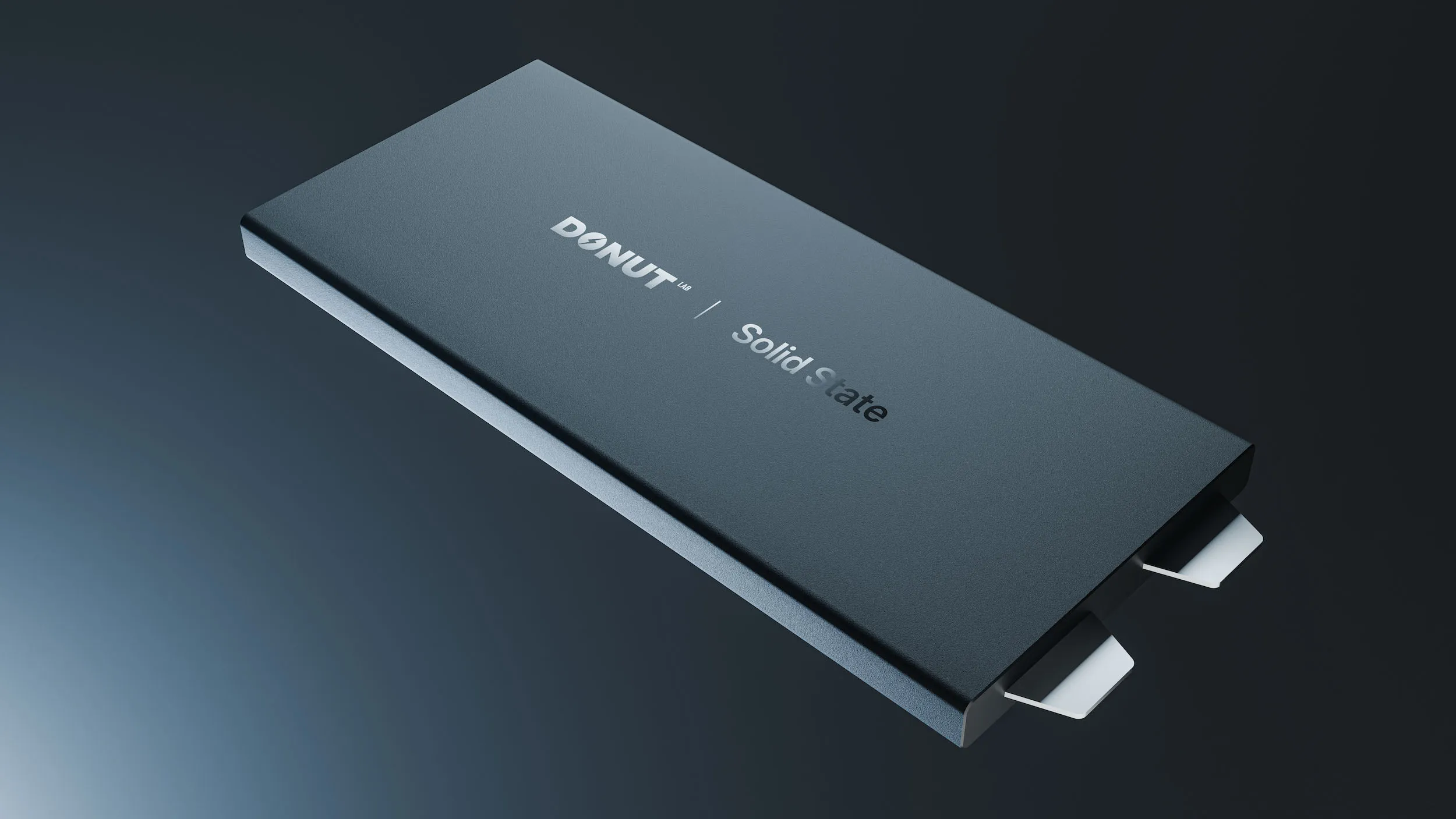
Photo by Pavel Danilyuk on Pexels
- Donut Lab claims 400 Wh/kg energy density—double current lithium-ion best
- Five VTT tests completed but energy density data mysteriously withheld
- Q1 2026 Verge motorcycle production will prove or disprove claims
- Until independent verification emerges, treat as speculative venture
Donut Lab's solid-state battery promises 400 Wh/kg energy density and 5-minute charging, but the strategic withholding of crucial performance data from completed tests raises major red flags about the validity of these breakthrough claims.
Donut Lab's Claims by the Numbers
400 Wh/kg
Claimed Energy Density
5 minutes
Claimed Charging Time
100,000
Claimed Charge Cycles
Q1 2026
Verge Production Target
Donut Lab official announcements
Donut Lab's Bold Claims: A Summary
This past January, Finland-based Donut Lab sparked a worldwide battery controversy at CES 2026 by announcing it had developed the world's first production-ready solid-state battery. The company's extensive list of claims begins with an energy density of 400 Wh/kg—roughly twice the energy density of the best lithium-ion battery currently on the market.
But energy density is just the beginning. Donut Lab also claims their solid-state technology can charge from 0-80% in just 5 minutes and maintain performance for an unprecedented 100,000 charge cycles—roughly 10 times more than current lithium-ion batteries.
The boldest claim of all? Verge Motorcycles' TS Pro and Ultra models will hit the road in Q1 2026 as the first production vehicles powered by this technology, making them a global first. If true, this would represent the most aggressive timeline from battery breakthrough announcement to consumer product in modern history.
These aren't just laboratory curiosities. Donut Lab positions their batteries as "ready for OEM use now," targeting the electric vehicle market where energy density directly translates to range and charging speed determines adoption rates.
The most significant red flag for Donut Lab isn't the ambition of its claims, but the strategic withholding of crucial performance data from its 'completed' VTT tests, which suggests deliberate obfuscation rather than genuine breakthrough.
Decoding the 'Super Battery' Jargon
To understand why Donut Lab's claims matter—and why they're controversial—you need to grasp what these numbers actually mean in the real world.
Energy density of 400 Wh/kg
would be transformative for electric vehicles. Current lithium-ion batteries in premium EVs achieve around 200 Wh/kg at the cell level. Doubling this means an electric car with 300-mile range could achieve 600 miles, or maintain the same range with half the battery weight and cost. 5-minute charging addresses the biggest consumer barrier to EV adoption. While Tesla Superchargers can add 200 miles in 15 minutes under ideal conditions, achieving 80% charge in 5 minutes would make electric vehicles more convenient than gasoline cars for the first time. 100,000 charge cycles represents a fundamental shift in battery economics. Current lithium-ion batteries degrade significantly after 1,000-3,000 cycles. A battery lasting 100,000 cycles could power a vehicle for decades, essentially eliminating battery replacement as a cost factor. Solid-state battery technology replaces the liquid electrolyte in traditional batteries with a solid ceramic or polymer electrolyte. This eliminates many safety risks (no fire or explosion hazard), enables higher energy densities, and theoretically allows much faster charging without battery degradation.
To understand why Donut Lab's claims matter—and why they're controversial—you need to grasp what these numbers actually mean in the real world.
Fact vs. Fiction: What's Actually Verified?
Here's where Donut Lab's story becomes problematic. The company has completed five independent tests with Finland's VTT Technical Research Centre—a legitimate, well-respected testing institution. These tests are real, not fabricated. But here's the critical issue: despite completing five tests specifically designed to validate battery performance, Donut Lab has not released the energy density or cycle life data from any of these tests.
These are precisely the metrics needed to verify their core claims. VTT confirmed the tests occurred but has not independently published the results. At the CES 2026 unveiling in January, no independent testing data was provided to support the 400 Wh/kg claim or the 100,000 cycle durability assertion.
Reddit's battery enthusiast communities have been particularly vocal about this gap. Reddit's battery enthusiast communities have been particularly vocal about this gap. As one user noted in a discussion about the missing data: 'I'd really love to see proof of energy density or battery degradation tests.
I was very skeptical at first, and now I am both skeptical and becoming more and more uninterested. The pattern is telling: announce breakthrough claims, reference legitimate testing institutions, but withhold the actual data that would prove or disprove the claims.
This creates ongoing speculation while avoiding definitive scrutiny.
Many believe that a 'breakthrough' in battery technology means immediate consumer availability, but the reality is that even verified lab successes face a decade-long gauntlet of scaling, cost reduction, and safety validation before reaching mass markets.
The Reality Check: Engineering and Commercial Hurdles
Even if Donut Lab's laboratory results are genuine, the path from lab bench to consumer product is littered with failed battery companies. The challenges are immense and well-documented.
Manufacturing at scale
requires consistent production of millions of cells with identical performance characteristics. Solid-state batteries are notoriously difficult to manufacture because the solid electrolyte interfaces must be perfect—any microscopic gaps or contamination cause failure. Current solid-state production yields are low and costs are prohibitive.
Thermal management
becomes critical at high charging rates. While solid-state batteries are theoretically safer, real-world thermal behavior at 5-minute charging speeds requires extensive validation. Heat buildup can cause expansion, cracking, and performance degradation.
Durability testing
in laboratory conditions rarely translates to real-world performance. Batteries must work across temperature extremes, vibration, humidity, and aging. The gap between claimed 100,000 cycles under controlled conditions and actual performance in a motorcycle bouncing down rough roads can be enormous.
Supply chain and raw material costs
determine commercial viability. Donut Lab has not disclosed their cost per kWh—the critical metric that determines whether their technology can compete with existing lithium-ion batteries that continue to decrease in price. The typical progression is clear: lab breakthrough → prototype demonstration → pilot production → scaled manufacturing → cost reduction → consumer availability. This process typically takes 10-15 years for battery technologies. Donut Lab claims to compress this into 12 months.
Solid-State Battery Development Timeline Comparison
| Company | Technology Focus | Production Timeline | Energy Density Target | Current Status |
|---|---|---|---|---|
| Donut Lab | Solid-state for EVs | Q1 2026 (Production) | 400 Wh/kg | Claims ready, data withheld |
| QuantumScape | Solid-state lithium | 2028-2030 | 3x Tesla density | Pilot production planned |
| Toyota | Solid-state automotive | 2027-2028 | 500 Wh/kg | Prototype testing |
| CATL | Semi-solid state | Late 2026 | 350 Wh/kg | Pre-production samples |
| Samsung SDI | Solid-state | 2027 | 400+ Wh/kg | Development phase |
| BYD | Semi-solid state | 2026 | 300+ Wh/kg | Limited production |
The Competitive Landscape: Who Else Is Chasing Solid-State?
Donut Lab isn't operating in a vacuum. The race for solid-state battery commercialization involves some of the world's largest companies, each with far more resources and longer development timelines.
QuantumScape
has spent over a decade and billions of dollars developing solid-state lithium batteries with targets of three times Tesla's current energy density. Their approach is methodical: extensive testing, peer-reviewed publications, and a cautious 2028-2030 production timeline. QuantumScape has faced its own credibility challenges but has published detailed technical data and partnered with Volkswagen for validation.
Toyota
announced plans for solid-state battery production by 2027-2028, targeting 500 Wh/kg energy density. Toyota's approach emphasizes safety and manufacturability over aggressive timelines, reflecting their experience with hybrid battery systems.
CATL and BYD
, China's battery giants, are pursuing "semi-solid state" technologies as stepping stones to full solid-state batteries. CATL aims for late 2026 production with more conservative 350 Wh/kg targets.
Samsung Electronics
has solid-state research programs targeting similar performance metrics but with 2027 production timelines. The pattern is consistent: every major player pursuing solid-state technology uses multi-year development timelines, publishes technical validation data, and targets production dates 2-4 years after initial breakthroughs. Donut Lab's 12-month timeline from announcement to production is unprecedented. This context makes solid-state battery technology plausible—multiple credible companies are pursuing it with significant investments. But it makes Donut Lab's execution timeline implausible by comparison.
Solid-State Battery Energy Density Claims
Company announcements and industry reports
By the end of Q2 2026, Donut Lab will either fail to deliver Verge motorcycles with the claimed battery specifications, or it will release partial, inconclusive data that further fuels skepticism, effectively confirming its current status as a speculative venture.
What Happens Next: Milestones and Timelines
The beauty of Donut Lab's aggressive timeline is that we won't have to wait long for answers. The Q1 2026 Verge motorcycle production target provides an imminent, definitive test of their claims.
What would constitute proof?
Independent, verifiable performance data from a reputable third party—not just internal tests or marketing claims. This means: • Energy density verification by an independent testing lab with published methodology
What real people think
DividedSourced from Reddit, Twitter/X, and community forums
Reddit's battery and EV communities are split between cautious optimism and outright skepticism, with most waiting for independent verification before making judgments.
Mixed reactions on Donut Lab's latest test releases, with users noting the continued absence of energy density data despite multiple VTT tests
Some users argue the chemistry appears sound and competitive validation suggests solid-state tech is viable, while others point to typical breakthrough-to-failure patterns in battery startups
Consensus that 'all the hype from donut labs is to create investors coming to their doors' but acknowledgment that institutional testing by VTT suggests some underlying technology exists
If Donut Lab's claims were true, early investors would be clear winners while established lithium-ion manufacturers and solid-state competitors like QuantumScape, who are pursuing more measured development paths, would face significant disruption.
Projected Battery Technology Adoption Timeline
Industry analysis and projections
Red Flags to Watch For
The Historical Context: Why Battery Breakthroughs Usually Fail
Donut Lab's pattern—revolutionary claims, legitimate testing institutions, missing crucial data—matches a well-established cycle in battery technology development.
A123 Systems
went public in 2009 with revolutionary lithium-ion claims, saw its stock price nearly double, then filed for bankruptcy in 2012 when manufacturing reality set in. The company's laboratory results were genuine, but scaling and cost challenges proved insurmountable.
Seeo Inc.
claimed solid-state battery breakthroughs in 2012, attracted significant investment, but was quietly acquired by Bosch in 2015 after failing to achieve commercial production. Their technology worked in laboratory conditions but couldn't survive real-world manufacturing requirements.
Sakti3
, backed by General Motors and Dyson, claimed revolutionary solid-state energy densities exceeding 400 Wh/kg in 2015. After years of development and hundreds of millions in investment, the technology never reached commercial viability. The pattern repeats: breakthrough announcements → investor excitement → scaling challenges → quiet exits or pivots to less ambitious technologies. What makes legitimate breakthroughs different is transparency.
Tesla
published detailed technical papers on their battery chemistry innovations.
QuantumScape
releases quarterly technical updates with specific performance data.
CATL
provides detailed specifications and independent validation of their claims. Transparent companies invite scrutiny because they're confident in their results. Opaque companies avoid scrutiny because detailed examination would reveal limitations. Donut Lab's approach—completing tests but withholding results, making revolutionary claims without independent verification—fits the historical pattern of companies that struggle with the transition from laboratory to market.
Battery Startup Success Rates by Development Stage
Battery industry analysis (2015-2025)
Technical Deep Dive: What Makes Solid-State Batteries So Difficult?
Understanding why solid-state batteries are challenging helps evaluate Donut Lab's claims. The technology faces three fundamental hurdles that have stymied development for decades.
Interface stability
is the primary challenge. In solid-state batteries, the solid electrolyte must maintain perfect contact with both electrodes throughout thousands of charge cycles. Any microscopic gaps or cracks cause resistance increases and capacity loss. During charging, lithium metal can form dendrites that penetrate the solid electrolyte, causing short circuits. This interface problem gets worse with cycling. As the battery charges and discharges, materials expand and contract at different rates. Maintaining intimate contact between solid materials through these dimensional changes requires precise engineering of material properties and cell construction.
Manufacturing precision
requirements far exceed lithium-ion batteries. Solid electrolytes must be defect-free across large areas—any pinholes, cracks, or impurities create failure points. Current solid-state manufacturing yields are often below 50%, compared to 95%+ yields for lithium-ion production. The solid electrolyte layers must be extremely thin (micrometers) but perfectly uniform. This requires manufacturing techniques that don't exist at scale. Most solid-state research uses expensive, slow deposition methods that work in laboratories but aren't commercially viable.
Temperature sensitivity
affects real-world performance. Many solid electrolytes have poor conductivity at room temperature, requiring heating for optimal performance. Others become unstable at high temperatures, limiting fast-charging capabilities. Solid-state batteries that work well at 60°C in laboratory conditions may fail at 0°C in actual use. The temperature range required for automotive applications (-40°C to +85°C) eliminates many promising solid electrolyte materials. These aren't theoretical problems—they're practical engineering challenges that have consumed billions of dollars in R&D spending across decades of development. Solving all three simultaneously, as Donut Lab claims, would represent multiple breakthrough-level innovations occurring simultaneously.
Financial Reality Check: What Would Success Actually Look Like?
If Donut Lab's technology were genuine, the financial implications would be staggering—which itself raises questions about the company's approach to commercialization.
Market size calculations
are straightforward. The global lithium-ion battery market will exceed $200 billion by 2030. A technology offering double the energy density with 10x the cycle life would command premium pricing and rapid market adoption. Conservative estimates suggest a 50% market share within a decade would be worth $100+ billion annually.
Patent value
for genuine solid-state breakthrough technology would exceed tens of billions of dollars. Every automotive manufacturer, consumer electronics company, and grid storage developer would need licensing agreements. Tesla, Apple, and others would face existential threats to their battery-dependent business models.
Manufacturing requirements
would demand massive capital investment. Scaling solid-state production to meaningful volumes requires purpose-built facilities, specialized equipment, and supply chain development. Industry estimates suggest $10-50 billion in capital expenditure to achieve automotive-scale production. Yet Donut Lab appears to be operating as a relatively small Finnish company. Their public communications suggest they're seeking investors and partners rather than sitting on a technology worth hundreds of billions of dollars. This disconnect is telling. If the technology were proven, Donut Lab would be fielding acquisition offers from every major battery manufacturer and automotive company globally. The fact that they're promoting investor opportunities rather than managing a bidding war suggests the technology hasn't reached the validation level that would attract serious strategic buyers.
Helsingin Sanomat
reported investor pitches promising "tenfold returns within 18 months"—language typically associated with speculative ventures rather than established breakthrough technologies.
The Stakes: Market Impact if Claims Were True
$200B
Global Battery Market by 2030
2x
Energy Density Advantage Claimed
10x
Cycle Life Improvement Claimed
$100B+
Potential Annual Revenue at Scale
Industry analysis and company claims
The Verge Motorcycle Test Case
Verge Motorcycles represents the most concrete test of Donut Lab's claims. The Finnish electric motorcycle manufacturer has committed to using Donut Lab batteries in their TS Pro and Ultra models, scheduled for Q1 2026 production. This partnership provides several verification opportunities that don't depend on Donut Lab's own testing claims: Real-world performance data from actual customers will be impossible to manipulate.
Motorcycle range, charging times, and battery degradation over time will be measurable by independent users, reviewers, and testing organizations.
Third-party testing
by motorcycle publications and EV reviewers will provide independent validation of energy density, charging speed, and cycle life claims. Publications like Cycle World and ElectricMotorcycleReview have standardized testing protocols.
Regulatory compliance
for production vehicles requires safety and performance validation by independent testing organizations. Motorcycles must meet safety standards that would expose any fundamental flaws in the battery technology.
Supply chain visibility
becomes unavoidable once production begins. Component suppliers, manufacturing partners, and distribution channels create multiple points where actual performance data would become visible to industry observers. The Q1 2026 timeline means verification will occur within months. Either Verge motorcycles will demonstrate the claimed battery performance or they won't. There's no middle ground that allows continued ambiguity. This binary outcome makes the Verge partnership unusually valuable for evaluating breakthrough battery claims. Most battery companies can maintain ambiguity for years through laboratory testing and pilot programs. Donut Lab has created a definitive, near-term test of their technology.
Key Takeaways: Our Verdict on Donut Lab
The Verdict: Breakthrough Claims, Missing Proof
Donut Lab's solid-state battery claims hit all the right technical notes—400 Wh/kg energy density and 5-minute charging are within theoretical limits. But five completed tests with VTT Technical Research Centre and zero released performance data tells the real story.
The Q1 2026 Verge motorcycle production target will provide the definitive test. Until then, the pattern matches too many failed battery startups: legitimate testing institutions, revolutionary claims, and conspicuously missing crucial data. The technology may be real, but the evidence isn't there yet.
Further Reading
Comprehensive technical analysis of Donut Lab's claims and broader solid-state battery development
Detailed examination of what's missing from VTT test reports and why it matters
Active community discussion on latest test results and skepticism around missing data
Compare Donut Lab's approach to established solid-state battery development methodology
Industry overview of commercialization timelines and technical challenges for solid-state batteries
Company's official technical claims and specifications for their solid-state technology
Sources
- 1.What's going on with Donut Lab's so-called super battery?
- 2.This company claims a battery breakthrough. Now they need to prove it.
- 3.Behind the Solid-State Battery Controversy: Is Donut Lab's Tech Real?
- 4.Donut Lab solid-state battery: 5 independent tests in, still no energy density or cycle life data
- 5.Donut Lab Battery Mystery Continues
- 6.DONUT LAB INTRODUCES THE FUTURE OF ELECTRIFICATION AT CES
Rate this article
Your feedback helps surface the best content
Related articles
Have a question? Get your own article.
Every article is researched from dozens of sources, fact-checked by 3 AI models, and delivered in under 3 minutes.
Triple-Verified — 3 corrections applied across 2 verification stages applied