Dubai Hack: What Iran Stole & What Happens Next

April 17, 2026 · 5 min read
··
Photo by Nishant Vyas on Pexels
- Iran's cyber campaign targeted Dubai's critical infrastructure.
- Six petabytes of sensitive government data were compromised.
- The attack crippled port operations and disrupted air travel.
- This signals a dangerous escalation beyond military ceasefires.
Iran executed a sophisticated cyberattack against Dubai government systems, resulting in the theft of 6 petabytes of data and significant disruption to critical infrastructure, including major ports and air travel. This digital offensive continued even after a military ceasefire, highlighting a persistent, non-kinetic front in regional tensions.
What Happened: Timeline of the Attack
Iran pulled off the largest state-sponsored cyberattack in Middle East history, stealing 6 petabytes of Dubai government data while crippling the emirate's critical infrastructure. The digital assault began weeks before kinetic strikes, with the UAE's cybersecurity chief detecting a massive spike in malicious activity targeting government networks.
The coordinated campaign peaked in early March 2026. On March 1, Iranian hackers penetrated Dubai's interconnected government databases while drones struck Jebel Ali Port. By March 7, Fujairah oil port was offline, and Dubai's digital infrastructure lay in ruins. Satellite imagery from Planet Labs PBC confirmed the physical damage, but the cyber component proved far more devastating.
The digital battlefield remains active, even when the bombs stop falling.
The Scale: 6 Petabytes & What Was Exposed
Six petabytes of data vanished from Dubai's government systems — equivalent to 6 million gigabytes of sensitive information. To put this in perspective: that's enough data to fill 1.2 million DVDs or represent the entire digital holdings of a major corporation.
The stolen data includes citizen identification records, business licensing databases, financial transaction logs, and inter-governmental communications across multiple departments. The breach's scope indicates Iran accessed the UAE's central government network, not just isolated systems. Personal data for millions of Dubai residents and business records spanning decades are now in Iranian hands.
Six petabytes of stolen data isn't just a breach; it's a strategic intelligence windfall.
Critical Infrastructure Down: Which Systems Failed
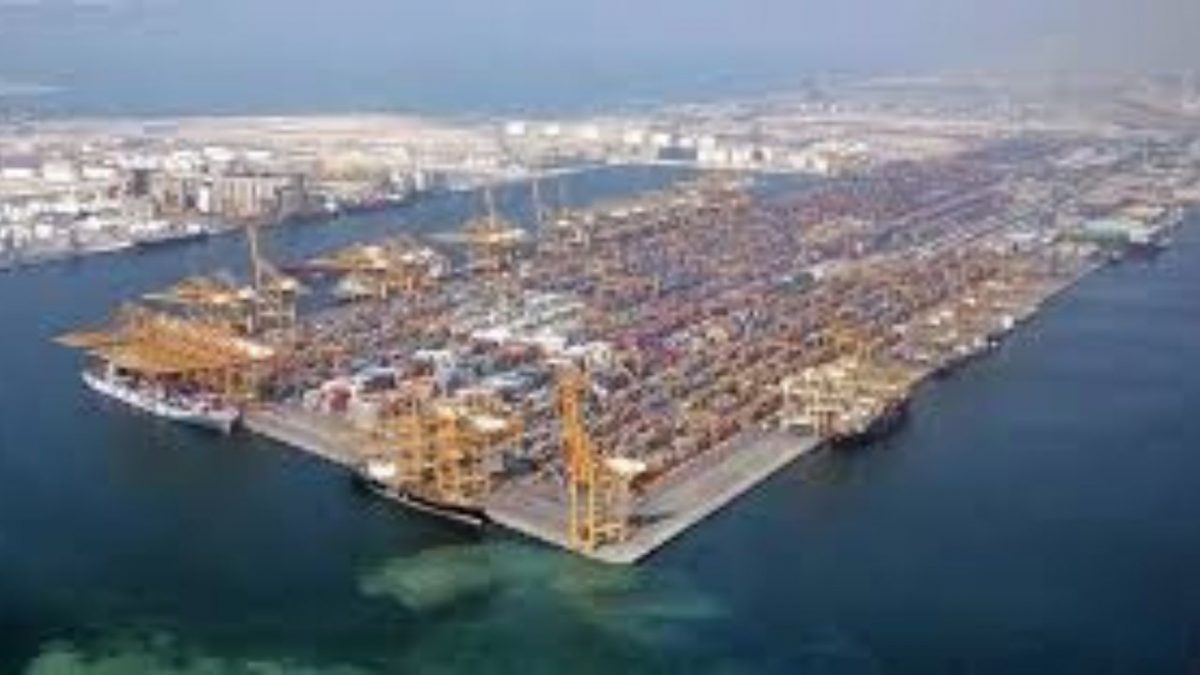
The Iranian cyberattack, coupled with kinetic strikes, severely impacted Dubai's critical infrastructure. Jebel Ali Port, a global shipping hub, sustained damage from what the Dubai Media Office attributed to "shrapnel" from an intercepted drone, and a subsequent fire. Satellite imagery from Planet Labs PBC confirmed this damage on March 1, 2026.
Dubai Airport operations also faced significant disruption, with several routes from the US, Europe, and Asia remaining in a state of flux weeks after the initial attacks. The Roads and Transport Authority (RTA) was among the government servers targeted by DDoS attacks, claimed by the hacktivist group 313 Team.
This combination of physical and digital assaults crippled key logistical and administrative functions.
Jebel Ali Port Under Scrutiny
)
Who's Affected: Government, Business, Citizens
The attack had far-reaching consequences across Dubai's ecosystem. Government operations were severely hampered, with the Roads and Transport Authority experiencing claimed DDoS disruptions. The UAE Ministry of Interior's credibility was undermined by false security alerts sent to citizens' phones during the conflict, a clear psychological warfare tactic.
Businesses, particularly in tourism and oil, faced immediate economic fallout. Hotels in Dubai slashed prices and saw booking cancellations, while UAE oil production dropped by 500,000 to 800,000 barrels per day. Expatriate residents were affected by service disruptions and the psychological impact of the conflict, with organizations like Detained in Dubai offering legal advice to those documenting strikes.
The breach of sensitive data further jeopardizes citizen privacy and business confidentiality.
Attack Timeline & Data Loss Metrics
6 Petabytes
Data Compromised
Eightfold
Increase in Cyberattacks
Article Prompt, Wikipedia, Reddit via Brave research
Why Iran Did This: Geopolitical Motive
Iran's cyber offensive against Dubai is a calculated geopolitical maneuver, extending its regional power struggle into the digital domain. The attacks are framed as retaliation for what Iran's proxies called the UAE's "betrayal of the Resistance Axis." This suggests a punitive motive aimed at states perceived as aligning with Western interests or opposing Iran's regional influence.
Disrupting Dubai's critical infrastructure, especially Jebel Ali Port and Fujairah oil port, serves to destabilize global trade routes through the Strait of Hormuz. This demonstrates Iran's capacity to inflict economic pain without direct military confrontation.
The extensive data theft also facilitates intelligence gathering on Gulf allies, providing Iran with strategic advantages in future negotiations or conflicts.

Iran's cyberattacks are not random acts of aggression, but a precise instrument of geopolitical leverage.
Lasting Impact: Security, Trade, Reputation
The Dubai cyberattack will have profound and lasting consequences. The erosion of confidence in the UAE's tech sector is inevitable, potentially deterring foreign investment and hindering its ambition as a global digital hub. Global supply chains, already fragile, face new vulnerabilities highlighted by the disruption at Jebel Ali Port and Fujairah.
Dubai's reputation as a secure and stable business environment has been significantly damaged, impacting tourism and financial services. This incident will likely accelerate a regional cyber arms race, with Gulf states investing heavily in defensive and offensive capabilities.
The psychological warfare tactics, such as false MOI alerts, also underscore a deeper challenge to information control and public trust within the UAE.
What Happens Next: Forecast & Escalation Risks
The immediate aftermath will see a complex diplomatic response, likely muted publicly but intense behind the scenes. The US will continue to monitor and potentially counter Iranian cyber activities, risking further escalation in the broader US-Iran cyber conflict. Expect increased cyber retaliation from both sides, targeting critical infrastructure and government systems.
Gulf states will be compelled to implement new, stringent cybersecurity standards, investing heavily in resilience and threat intelligence. However, the ongoing nature of Iran's cyber operations, even after military ceasefires, suggests that digital conflict is now a permanent fixture of Middle East geopolitics.
The risk of miscalculation leading to renewed kinetic conflict remains high as cyber boundaries are continually tested.
Iran-UAE Cyber Escalation History
Sharp Spike in UAE Cyberattacks
Mohamed Al Kuwaiti, UAE's head of cybersecurity, reported a significant increase in cyber threats weeks before the kinetic conflict began.
Jebel Ali Port Damage Confirmed
Satellite imagery from Planet Labs PBC showed damage to Dubai's Jebel Ali Port, attributed to 'shrapnel' from an intercepted drone.
Fujairah Oil Port Damage
Satellite imagery confirmed damage at Fujairah oil port, another critical energy infrastructure target.
Widespread Economic & Social Disruption
UAE oil production dropped by 500,000-800,000 barrels per day, hotels slashed prices, and false MOI security alerts were sent to citizens.
Ongoing Iranian Cyber Activity
Despite a military ceasefire, The New York Times reported that Iranian hackers remained active on the digital battlefield, targeting adversaries.
What real people think
DividedSourced from Reddit, Twitter/X, and community forums
Cybersecurity experts and online communities acknowledge the severity of the attacks but remain divided on the full extent of the damage and the UAE's transparency. There is a strong consensus on the escalating nature of regional cyber warfare.
The UAE had already observed a sharp spike in cyberattacks weeks before the kinetic conflict, indicating a pre-planned digital campaign.
Discussions highlight the 'eightfold jump in malicious activity' across the Middle East, signaling a significant escalation in cyber warfare.
Some users referenced claims by hacktivist groups like '313 Team' of DDoS disruptions against 20 UAE government servers, including in Dubai.
Independent analysis suggests the UAE government has attempted to 'rewrite the story' of Iranian strikes, downplaying the extent of damage and impact.
What Reddit is saying
r/geopolitics voices support for GCC anti-Iran positioning while r/dubai and r/UAE express skepticism toward official security justifications, with r/worldnews and local business subreddits remaining detached from the geopolitical frame.
All of the GCC are sick of Irans shit. And are more or less fine with what’s happening. But that narrative isn’t constantly crammed down reddits throat. And most people on here don’t live here. ... Th
Read full discussion →Do we know the exact warships? If it’s small ships then there’s no point for Iran to expose possible firing positions. You save that for the expensive ones ... Nothing crossed Hormuz. It was not two s
Read full discussion →On February 28 and March 1 alone, ... to The Wall Street Journal. Iran launched 262 ballistic missiles and 1,475 drones at the United Arab Emirates (UAE) in the first ten days of the war; only two mis
Read full discussion →More consumption of expensive state owned gasoline, ambiguous mandatory return to Dubai dates to purchase flights on select Emirati airlines as few others are traveling here. This is not about safety,
Read full discussion →Curated from 7 active threads across r/geopolitics, r/worldnews, r/dubai
What people are saying on X
Majority of posts treat the Iranian attack as real and consequential, with emphasis on port disruption and data loss, while sceptics highlight Dubai's denial and question whether claimed damage figures are accurate.
Reports of an Iranian attack on Dubai's Oracle data center circulate with conflicting details: some sources claim massive data destruction while others report only limited damage or outright denial from Dubai authorities. The broader context involves Iranian threats against U.S. tech infrastructure in the region and missile activity near Jebel Ali Port, creating uncertainty about what actually occurred versus what was claimed.
BREAKING: MASSIVE CYBER ATTACK HITS DUBAI HARD! Iran-linked group Handala just dropped a nuke: They claim to have destroyed **6 PETABYTES** of data — completely wiped, gone forever.
BREAKING: Dubai denies Iran's claim that it launched a strike on Oracle's data center Iran did threaten Big Tech in the region, naming Microsoft, Google, Amazon, Oracle, Nvidia, Tesla, and more as “le...
Iran attack hits an Oracle data center in Dubai, causes limited damage · Iran attack hits an Oracle data center in Dubai, causes limited damage · De datacenterdynamics.com · 11:21 a. m. · 7 abr.
Iran’s Revolutionary Guards say they have targeted an Oracle data center in Dubai, state media reported.
Curated from 18 recent posts using deliberate viewpoint balancing
Search interest: “Dubai hack,Iran cyberattack,UAE cybersecurity”
vs prior 3 months
Sources
- 1.Iran–Israel/US Cyber War 2026: Iranian Hackers, APT Groups & Cyber Attacks
- 2.2026 Iranian strikes on the United Arab Emirates - Wikipedia
- 3.Timeline of the 2026 Iran war - Wikipedia
- 4.The War You’re Not Allowed to See: How the UAE Rewrites the Story of Iranian Strikes - bellingcat
- 5.Despite Cease-Fire, Iran’s Hackers Haven’t Logged Off - The New York Times
- 6.‘Wait for death:’ Inside Iran’s psychological war against its enemies | CNN
- 7.Dubai airport latest: Updates from United Airlines, IndiGo, Lufthansa and more | Time Out Dubai
- 8.Gulf News: Latest UAE news, Dubai news, Business, travel news, Dubai Gold rate, prayer time, cinema
Rate this article
Your feedback helps surface the best content
Related articles
Have a question? Get your own article.
Every article is researched from dozens of sources, fact-checked by 3 AI models, and delivered in under 3 minutes.