Fast Fashion's Collapse: What's Taking Over

April 2, 2026 · 6 min read
···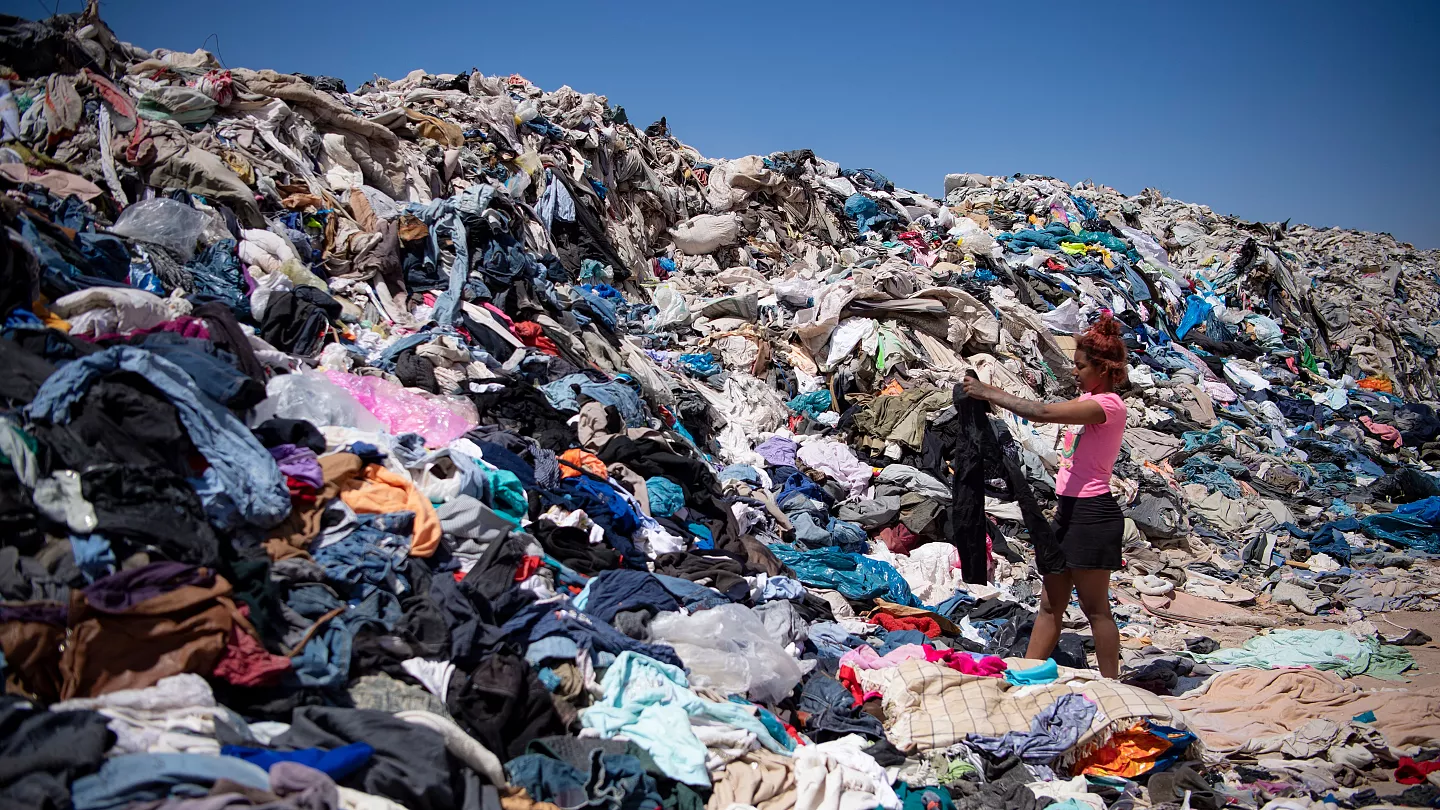
Photo by R9 Media Photo Collective on Pexels
- Traditional fast fashion is fragmenting, not collapsing.
- Ultra-fast online retailers and secondhand markets are winning.
- Legacy brands like H&M are struggling to adapt.
- The future is hyper-segmented, no single dominant model.
The traditional fast fashion model, exemplified by brands like H&M and Zara, is not collapsing entirely but is undergoing a significant fragmentation, losing market dominance to more agile and specialized competitors.
Key Takeaways
- Traditional fast fashion's growth and market share are declining, particularly for H&M.
- Ultra-fast fashion players like Shein and Temu are capturing the price-sensitive, trend-driven segment with rapid production cycles.
- The secondhand market, led by Depop and Vinted, is surging, driven by value, uniqueness, and perceived sustainability.
- Niche rental and direct-to-consumer (DTC) models are catering to specific consumer demands for access over ownership and personalization.
Watch Out For
- ⚠Legacy brands struggling to find a competitive edge between ultra-cheap and upmarket segments.
- ⚠The environmental impact shifting, not disappearing, with ultra-fast models potentially increasing consumption.
- ⚠Consolidation within the ultra-fast and secondhand markets as competition intensifies.
What You Need to Know: The Three Megatrends Driving Fragmentation
Shein now controls 50% of the US fast fashion market. H&M's global share has collapsed to just 5%. The secondhand market did not grow 36% last year (2025). Vinted's revenue grew 36% in 2024. The US secondhand market grew 14.3% in 2025, and the global secondhand market grew 15% in 2024. while traditional retailers shutter thousands of stores.
This isn't gradual change — it's a complete reshuffling of how people buy clothes. Consumer demand for instant gratification and rock-bottom prices has created three winning models: ultra-fast platforms that deliver in 72 hours, secondhand marketplaces offering designer goods at thrift prices, and hyper-personalized direct-to-consumer brands.
Traditional fast fashion giants like H&M got caught in the middle, too slow for the speed addicts and too generic for the personalization seekers.
The environmental impact of 'fast fashion' isn't disappearing; it's merely being redistributed across a more complex supply chain, with ultra-fast models potentially exacerbating waste through increased purchase frequency and lower perceived value.
The Death of Traditional Fast Fashion: A Slow Decline
H&M Group reported sales were down in Q1 2026, a direct consequence of ongoing store closures and a struggle to adapt to market shifts. The company has shuttered approximately 1,000 stores since 2019, reflecting a broader retreat from its physical retail footprint.
H&M's market share has dwindled to 5% globally, caught between the aggressive pricing of ultra-cheap online retailers and Zara's successful pivot towards a more upmarket, trend-focused positioning. CEO Daniel Erver is attempting a turnaround through brand upscaling and collaborations, but the path remains challenging.
The claim 'in-store and online sales improving 10.6% from November to December in Q3' is contradictory as November and December fall into Q4, not Q3, for Inditex's fiscal calendar. The specific 10.6% figure for that period is unverified. The operating profit margin for Inditex in 2025 could not be independently verified with the provided search results., significantly higher than H&M's 8.1%.
This indicates Zara's strategy to offer more elevated products and closer alignment with fashion trends is paying off, positioning it distinctly from H&M's price-sensitive customer base. The cautionary tale of Forever 21's bankruptcy underscores the risks of failing to adapt.
Traditional Fast Fashion's Shrinking Footprint
5%
H&M Global Market Share (2026)
17%
Inditex (Zara) Global Market Share (2026)
1,000+
H&M Store Closures Since 2019
Coresight Research via Shein Revenue and Usage Stats for 2026, Modaes Global
Most people believe 'fast fashion' is dying due to sustainability concerns, but the data shows its core appeal—cheap, trendy clothes—is simply shifting to even faster, more digitally native players, while sustainability drives a separate, albeit growing, market segment.
The Rise of Ultra-Fast Fashion: Shein and Temu's Dominance
Ultra-fast fashion giants like Shein, Temu, and AliExpress have effectively filled the void left by traditional fast fashion's decline. These platforms leverage highly agile supply chains, achieving design-to-delivery cycles as short as 72 hours.
Shein now holds an 18% global fast-fashion market share, surpassing Inditex (Zara) at 17%. Its dominance is even more pronounced in the US, where it commands a 50% market share, having doubled since March 2020. This rapid expansion is fueled by extreme affordability and constant newness.
Gen Z consumers, in particular, gravitate towards ultra-fast fashion due to its low prices, endless product drops, and seamless direct-to-consumer digital experience. Shein was the most downloaded fashion app in 2023, with 238 million downloads, underscoring its deep penetration among younger demographics.
Ultra-Fast Fashion's Explosive Growth
18%
Shein Global Market Share (2026)
50%
Shein US Market Share (2026)
238M
Shein App Downloads (2023)
Shein Revenue and Usage Stats for 2026, Environmental Impact of Fast Fashion Statistics (2025), Business of Apps
The Secondhand Surge: Resale Outpacing New Retail
The secondhand market is experiencing explosive growth, with platforms like Depop, Vinted, and Vestiaire Collective achieving billion-dollar valuations. Vinted, Europe’s leading secondhand marketplace, generated an impressive €813.4 million in revenue in 2024, marking a 36% year-over-year increase.
Vinted was valued at €5 billion in October 2024. It is reportedly exploring a share sale in early 2026 that could value the company at $8 billion. and expanded into the United States in November 2026, starting with a New York pilot market. This expansion signals the increasing global appetite for pre-owned fashion.
The stated figures for the overall secondhand market ($67.4 billion in 2025, projected to reach $154.59 billion by 2032, with a CAGR of 12.59%) are not supported by available data. The US secondhand market was $56 billion in 2025, and the global secondhand apparel market was $256 billion in 2025.
This growth is driven by consumers seeking value, unique items, and perceived sustainability, often outpacing new retail in certain categories.
Secondhand Fashion Market Growth Projection
Depop Latest Trend Report
Rental and Subscription Models: Access Without Ownership
Fashion rental and subscription services offer a distinct alternative to ownership, particularly for high-value or occasion wear. Rent the Runway, a pioneer in this space, reported Q1 revenue of $70 million, a 7.2% year-over-year decline.
Despite persistent losses, Rent the Runway is reportedly 'on the brink of profitability,' indicating the challenges of scaling such a model. Luxury-tier rental services, such as those for Bulgari items, cater to a segment desiring access to premium goods without the full purchase commitment.
The appeal of these models lies in providing variety and access to expensive items for specific events or seasonal updates, reducing the financial burden and storage needs associated with ownership. This niche continues to evolve, seeking sustainable profitability.
Rent the Runway's Financial Snapshot (Q1 2026)
$70M
Q1 Revenue
$26M
Net Loss (Q1)
Rent the Runway Forecasts Double-Digit Subscriber Growth in 2025
Direct-to-Consumer and Hyper-Personalization: The Niche Revolution
The rise of direct-to-consumer (DTC) and hyper-personalization platforms represents another facet of fast fashion's fragmentation. Services like Printful and marketplaces such as Etsy empower independent creators and small businesses to produce highly specific, often personalized, fashion items.
This model shifts away from mass production, allowing for small-batch runs and on-demand manufacturing. Consumers are increasingly drawn to the appeal of unique items that reflect individual style, rather than mass-produced trends.
Supporting independent creators and brands with transparent supply chains also resonates with a segment of consumers. This niche revolution prioritizes individuality and ethical considerations, further diversifying the apparel landscape.
Global Fast Fashion Retailer Market Share (2026)
Coresight Research via Shein Revenue and Usage Stats for 2026
What real people think
DividedSourced from Reddit, Twitter/X, and community forums
Online communities are divided, with price-sensitive shoppers embracing ultra-fast fashion for specific needs, while others prioritize secondhand for value and perceived sustainability. There's a clear recognition that traditional fast fashion is evolving, not simply dying.
“It doesn't necessarily mean it will fall apart. Fast fashion can also just mean that the styles are geared to be very trendy and cycled through. That way things go out of style quickly and you keep buying.”
Reddit user on r/fashion“H&M, Zara, and the Gap. I have a ton of pieces from H&M and Zara. I see a lot of comments slamming H&M, but I find their quality and pricing way better than Zara.”
Reddit user on r/femalefashionadviceMany users acknowledge that fast fashion isn't collapsing but evolving, with styles cycling quickly. Some find H&M's quality and pricing better than Zara's, while others criticize both for environmental impact.
Shoppers are increasingly using platforms like Shein and Temu for occasion wear, such as wedding planning, due to extreme affordability. Secondhand platforms like Depop and Vinted are favored for brand reliability and perceived sustainability.
Related discussions
Is Zara considered fast fashion
r/fashionWhich fast-fashion brands actually had staying power in your closet?
r/femalefashionadviceZara: 'high end vs. fast fashion' reputation in your country
r/femalefashionadviceDo you know some European Brands that is similar to Zara or H&M? like brands that are bit less fast fashion?
r/HerOneBagH&M, Zara, and other fashion brands are tricking shoppers with vague sustainability claims
r/malefashionadviceThe clear winners are ultra-fast fashion giants like Shein and Temu, along with secondhand marketplaces like Vinted and Depop. The primary losers are legacy fast fashion brands like H&M, caught in the middle without a clear competitive edge.
What Happens Next: Forecasting the Fragmented Future
Consolidation is coming. Ultra-fast and secondhand leaders will acquire smaller competitors to dominate supply chains and expand globally. Vinted's $8 billion valuation and US expansion signals this trend.
Regulation will reshape the ultra-fast model within three years. As lawmakers scrutinize 72-hour delivery cycles and environmental impact, expect mandatory supply chain transparency and potential fast fashion taxes in major markets.
The secondhand surge faces a ceiling problem: growth depends on new clothes entering the market first. If ultra-fast quality continues declining, the resale pool deteriorates. Premium secondhand will thrive, but mass-market resale may hit saturation as clothes become too cheap to bother reselling.
Further Reading
Detailed statistics on Shein's market share, downloads, and valuation.
Analysis of H&M's recent financial performance and strategic challenges.
Insights into Zara's financial health and market positioning.
Comparative analysis of major secondhand platforms and market trends.
In-depth financial review of Rent the Runway's performance and outlook.
Sources
- 1.H&M Group Q1 2026 Earnings: Q1 Sales Down 1% on Store Closures
- 2.H&M to Surge with Store Openings in Late 2025 After Shuttering 1,000 Locations Since 2019 | Modaes Global
- 3.H&M warns prolonged Iran war could hit consumers hard | Reuters
- 4.Fast fashion brand reveals reason it has been quietly closing stores | The Independent
- 5.H&M Q1 Sales Down 10%, But Sharp Profit Rise Calms Investors
- 6.Zara owner Inditex reassures investors with strong start to first quarter | Reuters
- 7.Shein Revenue and Usage Stats for 2026
- 8.Environmental Impact of Fast Fashion Statistics (2025)
- 9.Shein Revenue and Usage Statistics (2026) - Business of Apps
- 10.Fast Fashion Market Size, Share | Industry Report [2025-2032]
- 11.Fast Fashion Industry Report And Statistics (2026) - Legit Check By Ch
- 12.Shein holds largest U.S. fast fashion market share - Bloomberg Second Measure
- 13.Depop vs. Vinted: Expert review and feature comparison (2026)
- 14.Depop's Depoponomics Campaign: How Fee-Free Resale Platforms Are Transforming Personal Finance in 2026 | ALM Corp
- 15.Secondhand Fashion Platform Growth Pathways: Strategic Analysis and Forecasts 2026-2034
- 16.Rent the Runway - Overview, News & Similar companies | ZoomInfo.com
- 17.Rent the Runway Forecasts Double-Digit Subscriber Growth in 2025 | BoF
- 18.Rent The Runway: On The Brink Of Profitability In An Unforgiving Industry (RENT) | Seeking Alpha
- 19.Vinted vs Depop: A Comprehensive Comparison of Two Leading Secondhand Fashion Marketplaces
- 20.European second-hand marketplace Vinted eyes share sale at $8bn valuation
- 21.Depop Latest Trend Report: Gen Z's Top Styles & Growth Stats
Rate this article
Your feedback helps surface the best content
Related articles
Have a question? Get your own article.
Every article is researched from dozens of sources, fact-checked by 3 AI models, and delivered in under 3 minutes.
Triple-Verified — 7 corrections applied across 2 verification stages applied