The Fed's Rate Cut Outlook for 2026: Why Market Optimism is Overblown

April 3, 2026 · 6 min read
···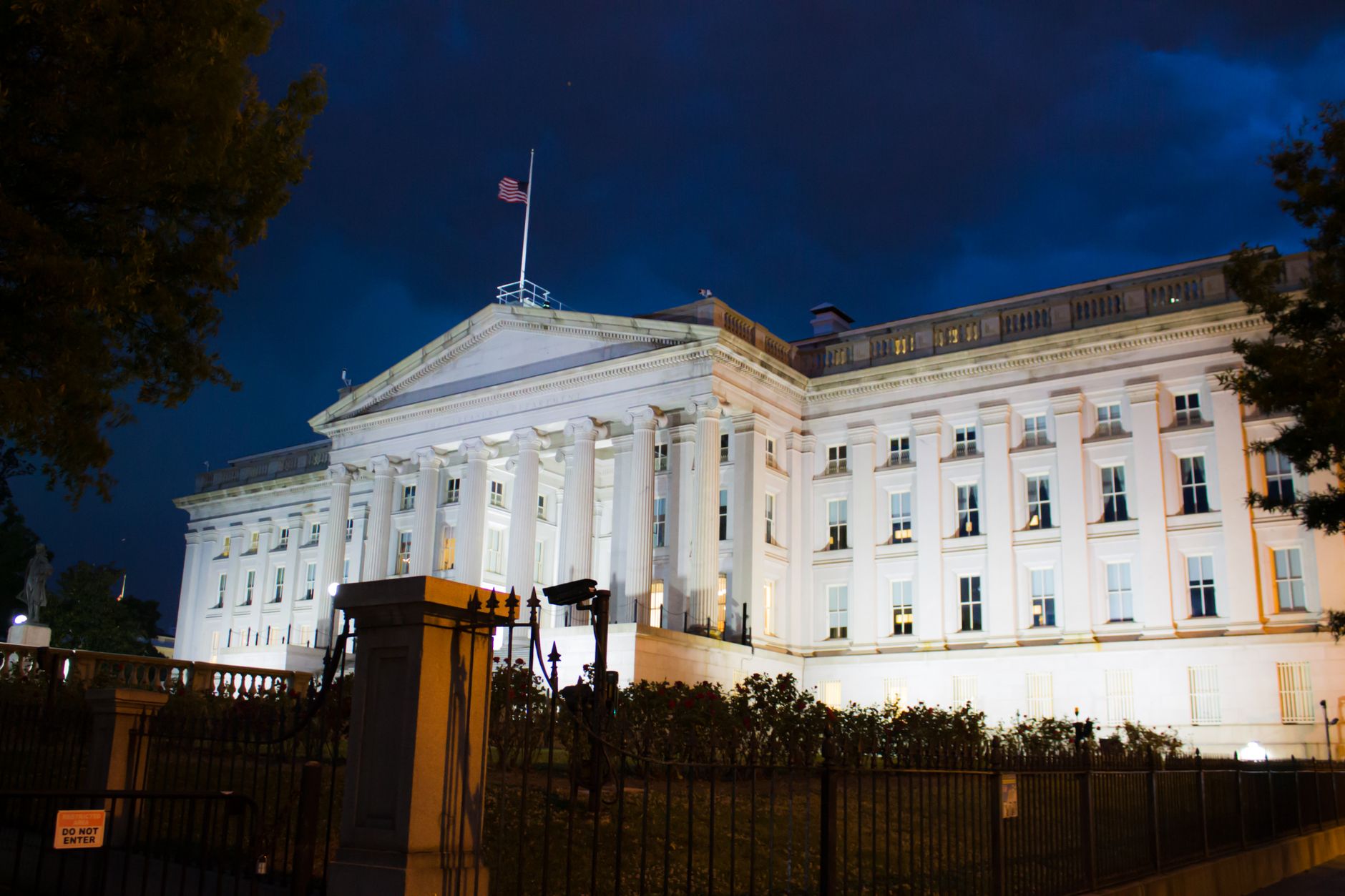
Photo by Thuan Vo on Pexels
- Market expectations for multiple 2026 Fed rate cuts are overhyped.
- The Federal Reserve projects only one cautious 25 basis point cut.
- Persistent inflation, geopolitical risks, and internal divisions drive this stance.
- Higher-for-longer rates remain the underlying reality.
The Federal Reserve will likely execute only one 25 basis point rate cut in 2026, a significantly more cautious approach than current market expectations.
Key Takeaways
- The Fed's own Summary of Economic Projections (SEP) forecasts a single 25bp cut for 2026.
- Stubborn core inflation, currently at 2.5% annually, remains above the Fed's 2% target.
- A resilient, albeit 'sluggish,' labor market does not yet warrant aggressive easing.
- Geopolitical uncertainty, particularly the Iran war, poses an upside risk to inflation.
- Internal FOMC divisions highlight a lack of consensus for rapid policy shifts.
Watch Out For
- ⚠Any re-acceleration of inflation, especially from energy prices.
- ⚠Significant weakening in the labor market that could force the Fed's hand.
- ⚠Further geopolitical shocks impacting global supply chains or commodity prices.
Search interest: “Fed rate cuts 2026, Federal Reserve interest rates, inflation 2026”
vs prior 3 months
The Market's Miscalculation: Why Traders Are Overly Optimistic
Market pricing for Fed rate cuts in 2026 consistently overestimates the central bank's willingness to ease policy. The CME FedWatch Tool, while useful for tracking probabilities, often reflects optionality and hope rather than certainty. The market pricing for 2026 Fed rate cuts should be updated to reflect a much lower probability of multiple cuts, with a high likelihood of rates remaining unchanged in the near term.
This contrasts sharply with the Federal Reserve's own median Summary of Economic Projections (SEP), which forecasts only one 25 basis point cut. Most investors conflate the Fed's 'data-dependent' rhetoric with a willingness to cut aggressively. In reality, 'data-dependent' for this Fed means requiring overwhelming evidence of sustained disinflation and labor market weakness before any significant easing.
The Fed's communication strategy aims to manage expectations, but market participants frequently interpret signals through an optimistic lens. This creates a persistent disconnect, where the market anticipates more easing than the Fed is prepared to deliver, leading to potential disappointment.
In reality, 'data-dependent' for this Fed means requiring overwhelming evidence of sustained disinflation and labor market weakness before any significant easing.
The market's persistent pricing of multiple rate cuts in 2026 is a fundamental misreading of the Fed's true hawkish bias, which prioritizes inflation containment over growth stimulation, even at the risk of a mild recession.
Inflation Trajectory: The Stubborn Reality
Inflation remains the primary obstacle to aggressive rate cuts. Core CPI registered 2.5% annually in recent months—still 50 basis points above the Fed's 2% target. This isn't a temporary overshoot; it's a persistent gap that makes Powell's Fed extremely cautious about easing.
The Fed prioritizes core inflation precisely because it strips out volatile components and reveals underlying price pressures. Even with Powell stating inflation expectations appear 'grounded,' the central bank won't cut aggressively until core inflation moves decisively toward 2%.
Key Economic Indicators (March 2026)
2.5%
Core CPI (Feb 2026, YoY)
1
Fed's 2026 Rate Cut Forecast
US Inflation Rate, Federal Reserve
Labour Market: Not Weak Enough for Aggressive Easing
The labor market's current state, while described as 'sluggish' in terms of job growth, does not yet signal a need for aggressive rate cuts. The Federal Reserve operates under a dual mandate: maximum employment and price stability. A relatively tight labor market, even if showing signs of slowing, can still contribute to inflationary pressures.
Significant weakening in the labor market would be a prerequisite for the Fed to consider more rapid easing. This would typically involve a substantial rise in the unemployment rate or a marked deceleration in wage growth. The current stance suggests the Fed is willing to tolerate some softening in employment conditions to ensure inflation is brought under control.
Without clear evidence of a deteriorating labor market, the Fed will maintain its cautious approach. Their priority remains achieving the 2% inflation target, even if it means a prolonged period of higher rates and a less robust job market.
Market Pricing vs. Fed Guidance: A Disconnect
Market Pricing vs. Fed Guidance: A Critical Disconnect
Traders are betting against the Federal Reserve's own guidance—and they're likely wrong. The Fed's Summary of Economic Projections shows a median forecast of just one 25 basis point cut for 2026. Markets are pricing in double that possibility.
This isn't just a minor disagreement. It represents a fundamental misreading of Fed priorities. The central bank has repeatedly shown it would rather over-tighten than risk another inflation surge. Market optimism about multiple cuts reflects wishful thinking, not economic reality.
Federal Funds Rate: Historical & Projected Path
Federal Reserve, iShares
Risks That Could Further Delay or Prevent Cuts
Several significant risks could force the Federal Reserve to maintain higher rates or even reverse course. Geopolitical shocks, particularly the ongoing Iran war, are a major concern. Fed officials note the potential for this conflict to worsen inflation, even if its impact on economic growth is minimal.
Rising energy prices, a direct consequence of geopolitical instability, can feed into broader inflation, despite Chair Powell's view that inflation expectations are 'grounded.' Unforeseen factors could also lead to inflation re-accelerating, further complicating the Fed's path. Fiscal policy, particularly government spending, also carries inflationary potential.
Internal divisions within the Federal Open Market Committee (FOMC) also present a risk. The three dissents on recent policy decisions indicate a lack of full consensus, suggesting a potential for a more hawkish lean if economic conditions shift. This internal disagreement makes aggressive, unanimous easing unlikely.
By the end of Q1 2027, the federal funds rate will still be above 3.00%, as the Fed's single 2026 cut proves insufficient to meet market demand for easing, leading to a prolonged period of higher-for-longer rates.
What This Means for Savers, Borrowers & Investors
The Fed's cautious approach to rate cuts in 2026 has distinct implications for various financial stakeholders. Savers should expect savings account yields to remain relatively attractive, declining only marginally with a single 25 basis point cut. This environment continues to favor those holding cash or short-term deposits.
Borrowers will likely see mortgage rates and personal loan rates stay elevated. A single 25 basis point reduction offers only minor relief, meaning borrowing costs will remain high for the foreseeable future. This impacts housing affordability and consumer credit significantly.
For investors, the landscape is mixed. Long-term bondholders who bought at peak yields in 2023-2024 will be the clear winners as bond prices slowly appreciate. Growth-oriented tech stocks, which thrive on cheap capital, will be the losers, facing sustained valuation pressure due to higher discount rates. Value stocks and dividend payers might fare better in this environment.
Long-term bondholders who bought at peak yields in 2023-2024 will be the clear winners as bond prices slowly appreciate.
What real people think
DividedSourced from Reddit, Twitter/X, and community forums
Online investor communities, particularly on Reddit, show a 'wait-and-see' approach regarding Fed rate cuts in 2026. There is skepticism about relying solely on the CME FedWatch tool, with a focus on upcoming Q1 2026 economic data as the primary driver for future Fed moves.
“1-2 cuts in 2026 seem reasonable (which is what's priced in today).”
Reddit user (r/stocks)“Stop looking at that crap! 2026 Q1 numbers will be out by next fed meeting, along with monthly reports ending March 31 reflecting war numbers.”
Reddit user (r/economy)Some users believe 1-2 cuts in 2026 are reasonable and already priced in, aligning with market expectations.
Others express skepticism about the FedWatch tool, emphasizing the importance of actual Q1 2026 jobs and inflation numbers.
Related discussions
The Federal Reserve predicts a 25 basis point rate cut in December, with two more cuts expected in 2026.
r/stocksFederal Reserve holds interest rates steady, forecasts 1 rate cut in 2026
r/stocksA Fed rate hike is now more likely in 2026 than a cut. How did we get here?
r/economyMarkets now see the Fed’s next move as a potential rate hike as inflation fears mount
r/stocksWhy does the market seem so confident rate cuts are coming soon?
r/stocksKey Dates to Watch in 2026
The Real Timeline: When Rate Cut Hopes Will Die
The market's rate cut dreams will likely collapse by mid-2026. Q1 2026 economic data—released in April and May—will show whether inflation is truly moderating or remaining sticky above 2%.
FOMC meetings in June and September represent critical inflection points. If the Fed passes on cuts at both meetings due to inflation concerns, market pricing will finally align with reality. By October 2026, traders will abandon hopes for multiple cuts and accept the Fed's cautious, single-cut scenario.
Further Reading
Analysis of the Fed's 2026 rate cut projections and the factors influencing them.
Official minutes from an early 2026 FOMC meeting, detailing policy discussions.
Jerome Powell's comments on inflation expectations and geopolitical impacts.
Detailed report on the latest core CPI data and its implications.
Sources
- 1.Federal Reserve projects only one rate cut for 2026 amid economic uncertainty | Fox Business
- 2.FOMC Minutes, January 27-28, 2026
- 3.Live updates: Interest rates steady, Federal Reserve forecasts 1 rate cut in 2026 | Yahoo Finance
- 4.The outlook for another Fed rate cut in January | RSM US
- 5.Federal Reserve Board - Federal Reserve issues FOMC statement
- 6.Fed Outlook 2026: Rate Forecasts and Fixed Income Strategies | iShares
- 7.Powell sees inflation outlook in check, no need to hike rates because of oil shock | CNBC
- 8.WATCH: Fed Chair Powell holds news briefing after interest rate left unchanged | PBS News
- 9.WATCH: Powell holds news briefing after Fed decision to cut interest rates | PBS News
- 10.Powell says Fed can 'wait and see' how war affects inflation | Reuters
- 11.January 28, 2026 Chair Powell’s Press Conference FINAL Page 1 of 24
- 12.As It Happened: Fed Chair Jerome Powell Says Rates Are in ‘Good Place’ as Iran Oil Shock Clouds Outlook | News | The Harvard Crimson
- 13.CPI inflation report February 2026: CPI rose 2.4% annually in February, as expected | CNBC
- 14.USDL-26-0437 Transmission of material in this release is embargoed until
- 15.CPI Home : U.S. Bureau of Labor Statistics
- 16.r/stocks on Reddit: The Federal Reserve predicts a 25 basis point rate cut in December, with two more cuts expected in 2026.
- 17.r/stocks on Reddit: Federal Reserve holds interest rates steady, forecasts 1 rate cut in 2026
- 18.r/economy on Reddit: A Fed rate hike is now more likely in 2026 than a cut. How did we get here?
- 19.r/stocks on Reddit: Markets now see the Fed’s next move as a potential rate hike as inflation fears mount
- 20.r/stocks on Reddit: Why does the market seem so confident rate cuts are coming soon?
Rate this article
Your feedback helps surface the best content
Related articles
Have a question? Get your own article.
Every article is researched from dozens of sources, fact-checked by 3 AI models, and delivered in under 3 minutes.
Triple-Verified — 4 corrections applied across 3 verification stages applied