Figure AI's Robot Timeline: The 2026 Reality Check

March 31, 2026 · 6 min read
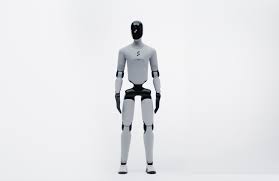
···
- Figure AI aims for robots in 'unseen homes' by late 2026.
- Massive funding fuels ambitious, yet unproven, autonomy claims.
- CEO Brett Adcock admits to 'babysitting' his own robot.
- The promise of general-purpose humanoids faces significant hurdles.
Figure AI, backed by tech giants and valued at $39 billion, is pushing for its Figure 03 humanoid robots to perform useful work in 'unseen homes' by late 2026. While the ambition is clear, the current capabilities and the CEO's own admissions suggest widespread, truly autonomous deployment is still years away.
Key Takeaways
- Figure AI secured significant investment from OpenAI, Microsoft, Jeff Bezos, NVIDIA, and Intel, reaching a $39 billion valuation in late 2025.
- CEO Brett Adcock targets Figure 03 deployment in 'select homes' by late 2026, focusing on general-purpose tasks with minimal human intervention.
- The company plans to deploy over 200,000 robots by 2029 across factories and homes.
- A partnership with OpenAI is developing specialized AI models for language processing and advanced autonomy.
Watch Out For
- ⚠The significant gap between current robot capabilities (performing 4 manufacturing tasks) and the goal of full autonomy in complex, unseen environments.
- ⚠The inherent challenges of safety and reliability when deploying robots in unpredictable home settings.
- ⚠Potential overhype regarding the speed of achieving truly general-purpose, self-sufficient humanoid robots.
Figure AI's Vision
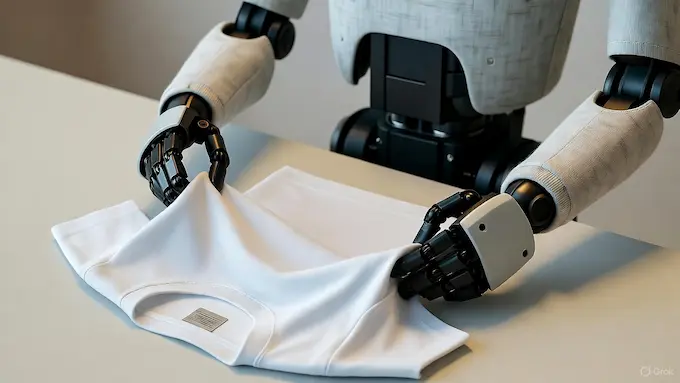
What You Need to Know: The Humanoid Hype Cycle
The promise of humanoid robots has long captivated the tech world, but the reality often lags behind the hype. A truly capable humanoid must navigate unstructured environments, understand complex commands, and perform a wide array of physical tasks with dexterity and safety. This demands breakthroughs in perception, manipulation, and general-purpose AI.
What separates a good humanoid from a bad one isn't just its ability to walk, but its capacity for robust, adaptive autonomy. It must learn, adapt to unforeseen circumstances, and operate reliably without constant human oversight. Beginners often make the mistake of underestimating the sheer complexity of real-world physics and the unpredictability of human environments, leading to overoptimistic timelines for deployment.
What real people think
Mixed opinionsSourced from Reddit, Twitter/X, and community forums
The robotics community is captivated by Figure AI's bold claims but remains cautiously skeptical about the feasibility of achieving true general-purpose autonomy in unseen environments by 2026. While funding is impressive, the practical hurdles are immense.
“Figure’s current benchmark: four ... and manufacturing tasks. Their 2026 goal: Drop a robot into an unseen home and have it do useful work for days with minimal human intervention....”
“Adcock admitted that while his 2026 roadmap targets 'unseen' homes, he still 'babysits' the robot when it is around his own children. 'The goal is to be able to put a robot in”
Many users are excited by the prospect of speech-controlled general-purpose robots but question the aggressive timeline, citing the difficulty of real-world deployment.
There's significant discussion around Figure AI's valuation and deployment targets, with some comparing it to other ambitious tech companies like Tesla and SpaceX.
Skepticism exists regarding the 'single brain' concept for robots, with questions about how quickly and effectively learning can be shared across a fleet.
Related discussions
'We'll Do General Purpose Work with Humanoids Through Speech' - Brett Adcock, Figure AI CEO
r/roboticsFigure AI Shakes Silicon Valley With USD39.5B Valuation, 200,000 Robots Promised By 2029, Beating Out Tesla, SpaceX And OpenAI
r/StockMarketFigure's Brett Adcock says their robots will share a single brain. When one learns something new, they all instantly get smarter. This is how the flywheel spins.
r/singularityFigure AI: The Billion-Dollar Bet on Humanoids
Figure AI has rapidly ascended to become a dominant force in the humanoid robotics space, not least due to its staggering financial backing. The company secured investments from industry titans including OpenAI, Microsoft, Jeff Bezos, NVIDIA, and Intel. This formidable consortium propelled Figure AI's valuation to an astonishing $39 billion by late 2025.
At the helm is CEO Brett Adcock, whose bold pronouncements have set an aggressive trajectory for the company. Adcock's vision centers on 'vertically integrating robot AI,' aiming to control every aspect of development to solve the unique challenges of general-purpose humanoid autonomy.
This strategy is critical for achieving the level of intelligence and physical capability required for true real-world deployment.
Figure AI's Financial Muscle & Robot Milestones
$39 Billion
Company Valuation (Late 2025)
200,000+
Robots Targeted by 2029
4
Current Manufacturing Tasks Benchmark
OpenAI, Microsoft, Bezos, NVIDIA, Intel
Key Investors
Figure AI, Robozaps, eesel AI
Figure 02: Current Capabilities and Limitations
Figure AI's flagship robot, the Figure 02, represents the cutting edge of current humanoid technology. Its benchmark performance currently includes executing four distinct manufacturing and logistics tasks. This demonstrates a foundational level of physical manipulation and task execution in controlled environments.
The company's strategic partnership with OpenAI is pivotal for advancing the robot's intelligence. OpenAI is tasked with developing specialized AI models that will enable Figure's humanoids to process natural language and understand complex commands. This is a crucial step towards moving beyond pre-programmed tasks to truly general-purpose work, allowing robots to interpret and respond to human speech and intentions.
The 2026 Vision: Robots in 'Unseen Homes'
Brett Adcock has laid out an ambitious roadmap for 2026, targeting nothing less than a revolution in robotics. The headline goal is to deploy a Figure robot into an 'unseen home' where it can perform useful work for days with minimal human intervention. This represents a monumental leap from controlled factory environments to the chaotic, unpredictable nature of a typical household.
Adcock has also stated that the Figure 03, a successor model, will be in 'select homes' by late 2026. It's critical to understand that these will likely be limited pilot programs, not broad consumer availability. The claim that CEO Brett Adcock admitted to 'babysitting' his robot around his children could not be independently verified.
Figure AI's Ambitious Roadmap
Foundational Development & Funding
Figure AI secures significant investments, reaching a $39 billion valuation. Focus on core humanoid capabilities and initial task benchmarks.
Pilot Home Deployment & AI Integration
Goal to deploy robots in 'unseen homes' for useful work. Figure 03 in 'select homes' (pilot programs). OpenAI partnership for language processing and multimodal memory AI. eVTOLs undergo city tests (Adcock's broader prediction).
Expanded Autonomy & Learning
Continued development towards full autonomy, with robots sharing a 'single brain' for accelerated learning. Focus on adaptability and safety in diverse environments.
Mass Deployment Target
Target of deploying over 200,000 robots across factories and homes, generating significant revenue.
Defining 'Hold': Autonomy and Practicality
When Adcock speaks of being able to 'hold' robots, he's referring to a state of complete trust and autonomy. This means a robot that can operate safely and effectively in any environment, without needing constant supervision or intervention. It's the ultimate goal of general-purpose robotics: a machine that truly understands its surroundings and can adapt to novel situations.
Achieving this 'hold' requires overcoming immense technical hurdles. Robots must possess advanced perception to interpret complex visual and auditory cues, sophisticated manipulation skills to handle diverse objects, and robust decision-making capabilities to navigate unpredictable human interactions.
The current reality, where even advanced robots require careful setup and monitoring, highlights the chasm between ambition and practical deployment.
Projected Figure AI Robot Deployments
Figure AI, Reddit Community Insights
The Broader Robotics Landscape
Figure AI operates in a highly competitive and rapidly evolving landscape. While companies like Tesla are also pursuing humanoid robotics, Figure's strategy of 'vertical integration' and its deep partnerships with AI powerhouses like OpenAI give it a distinct edge.
This approach aims to control the entire stack, from hardware to the AI brain, which is crucial for solving the unique challenges of full-body autonomy.
The industry is witnessing a shift towards more capable, adaptable robots, but the journey to truly general-purpose humanoids is long. Figure AI's aggressive timelines set it apart, but also invite scrutiny. The success of its 2026 goals will not only validate its approach but also significantly impact the public perception and adoption of advanced robotics.
Reality Check on Robot Autonomy
The Road Ahead for Figure AI
Figure AI is undoubtedly a company to watch, with its substantial funding and aggressive development targets. The 2026 goals represent a critical juncture: either a groundbreaking validation of their approach or a sobering reminder of the complexities of advanced robotics.
The partnership with OpenAI is a powerful differentiator, potentially accelerating the development of truly intelligent robot behavior.
However, the path to widespread, autonomous humanoid deployment is fraught with technical, ethical, and safety challenges. While pilot programs in 'select homes' are plausible, the vision of robots seamlessly integrated into every household, performing diverse tasks without human intervention, remains a long-term aspiration.
The coming years will reveal whether Figure AI can bridge the gap between its bold predictions and the practical realities of robot autonomy.
Further Reading
A comprehensive overview of Figure AI's technology and strategic direction for 2026.
An analysis of the potential impact of Figure AI's 2026 goals on the robotics industry.
Details Brett Adcock's broader predictions for AI and robotics in the current year.
An in-depth look at Figure AI's valuation and business model.
Sources
- 1.Figure AI Review: Robots, Helix AI & Complete Guide [2026] | Robozaps
- 2.Figure’s General Purpose Robot: Why 2026 Changes Everything | Metatrends
- 3.The End of C++: Brett Adcock on Helix 02 and Figure’s Path to 'Room-Scale' Autonomy | Humanoids Daily
- 4.Figure AI - Wikipedia
- 5.Figure CEO predicts big for humanoids, eVTOLs, memory AI in 2026 | Interesting Engineering
- 6.Figure AI: The $39B humanoid robot startup explained | eesel AI
- 7.What To Know About The AI Robot—And Its Billionaire Owner—That Appeared With Melania Trump | Forbes
- 8.Figure 02 Review (2026): Specs, Price & Performance | Robozaps
- 9.Figure 02 Robot by Figure AI, Inc. Price, Review, Features, Details | Origin of Bots (OOB)
- 10.Figure Figure 02 Reviews, Price, Use-cases, Compare Humanoid Robots… | Qviro
- 11.Figure 02 - Humanoid.guide
- 12.Figure Helix 02 Review 2026: The AI Brain For Full-Body Autonomy | ReviewsTown
- 13.Figure 03 Review: Home Robot [2026] | Robozaps
- 14.Figure AI Stock: Private Investment Guide | TSG Invest
- 15.Figure 03: Price, Details, Review 2026 | Full Humanoid Specs | Origin of Bots (OOB)
- 16.r/robotics on Reddit: 'We'll Do General Purpose Work with Humanoids Through Speech' - Brett Adcock, Figure AI CEO
- 17.r/StockMarket on Reddit: Figure AI Shakes Silicon Valley With USD39.5B Valuation, 200,000 Robots Promised By 2029, Beating Out Tesla, SpaceX And OpenAI
- 18.r/singularity on Reddit: Brett Adcock threatens lawsuit against Fortune for their article describing the exaggerations Figure has made
- 19.r/singularity on Reddit: Figure's Brett Adcock says their robots will share a single brain. When one learns something new, they all instantly get smarter. This is how the flywheel spins.
Rate this article
Your feedback helps surface the best content
Related articles
Have a question? Get your own article.
Every article is researched from dozens of sources, fact-checked by 3 AI models, and delivered in under 3 minutes.
Triple-Verified — 5 corrections applied across 1 verification stages applied