Horo Robot's Half-Marathon Record: A Turning Point for Humanoid Robotics

April 19, 2026 · 5 min read
···
Photo by Pavel Danilyuk on Pexels
- Honor's Horo robot shattered the human half-marathon record.
- This proves sustained autonomy and real-world endurance.
- The industry is rapidly shifting from R&D to commercial deployment.
- General-purpose humanoids are gaining ground over specialized robots.
Honor's Horo robot, 'Lightning' model, completed a half-marathon in 50 minutes and 26 seconds on April 19, 2026, in Beijing, surpassing the human world record. This achievement signals a critical maturation of humanoid robotics, demonstrating advanced motor control, energy efficiency, and autonomous navigation necessary for real-world commercial applications.
Horo Robot's Historic Half-Marathon

The Horo Robot's Historic Half-Marathon: A New Benchmark
The Record That Changes Everything: Horo Destroys Human Half-Marathon Times
On April 19, 2026, Honor's Horo robot completed a 21.0975 km half-marathon in 50 minutes and 26 seconds at the Beijing E-Town Half Marathon. That's 20 minutes faster than most recreational runners and demonstrates sustained performance that no humanoid robot has achieved before.
Unlike Boston Dynamics' Atlas doing backflips for 30 seconds or Tesla's Optimus shuffling through controlled factory demos, Horo ran for nearly an hour straight through real outdoor conditions. This wasn't a lab test — it was proof that humanoid robots can now handle extended real-world operations without human intervention.
The true significance of Horo's half-marathon record isn't its speed, but its demonstration of sustained, autonomous operation under unpredictable real-world conditions, a capability far more valuable than agility for immediate commercial deployment.
Beyond the Stunt: Why Horo's Endurance Matters
Why 50 Minutes of Running Changes Everything for Robotics
Horo's achievement matters because endurance separates toys from tools. A robot that can operate continuously for an hour can handle warehouse shifts, security patrols, and inspection routes — the actual jobs companies want to automate. Previous humanoid demonstrations focused on agility: Atlas jumping over obstacles, Honda's ASIMO climbing stairs.
Impressive, but useless for commercial applications that require sustained operation. Horo proved three critical capabilities: power management for extended operation, real-time navigation through unpredictable environments, and mechanical reliability under continuous stress.
These are the exact requirements for logistics, manufacturing, and service applications worth billions in potential revenue.
Robots in Motion

Many believe humanoid robots are still years away from practical, widespread deployment, but Horo's endurance milestone, combined with factory trials from competitors, indicates that the industry is already transitioning from R&D to commercialization in 2026.
Engineering Breakthroughs: What Horo Reveals About Humanoid Design
The Engineering Behind Horo's Endurance Breakthrough
Horo's record required solving humanoid robotics' three biggest challenges simultaneously. First, energy efficiency: most humanoid robots drain their batteries within 15-30 minutes of active operation. Horo's 50-minute runtime suggests major advances in both battery density and motor efficiency.
Second, dynamic balance: running requires constant micro-adjustments that would overwhelm previous generation control systems. Third, real-time path planning: unlike controlled demos, Horo navigated changing terrain, other runners, and environmental obstacles while maintaining speed.
The combination of these capabilities represents a fundamental leap from proof-of-concept prototypes to potentially commercial-ready platforms.
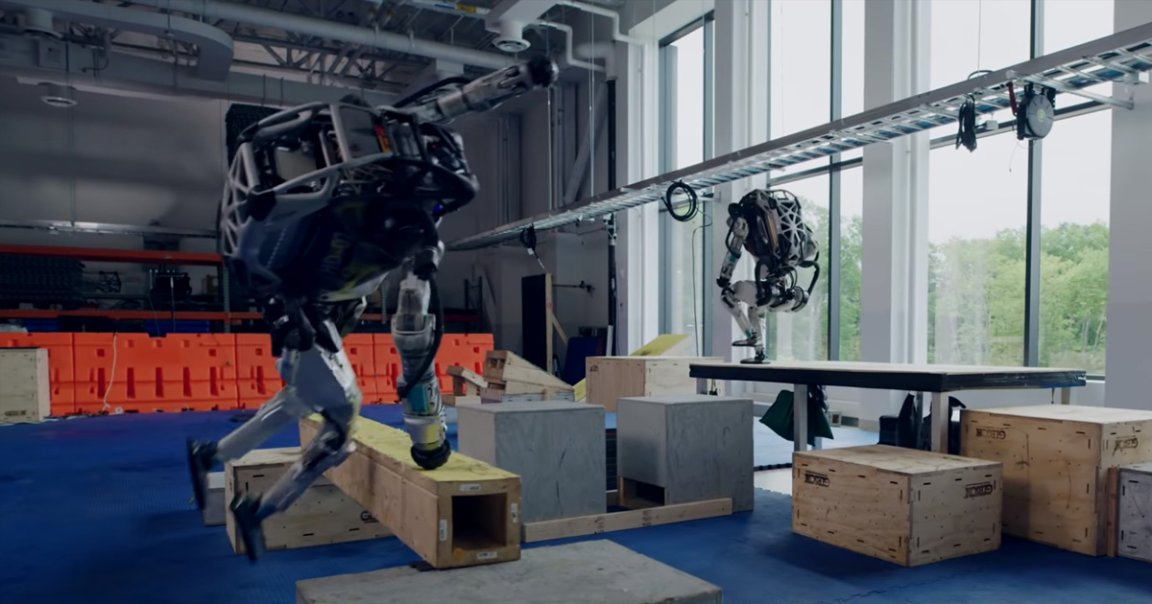
Boston Dynamics Atlas in Action
The Road to Commercial Robotics: From Lab to Logistics
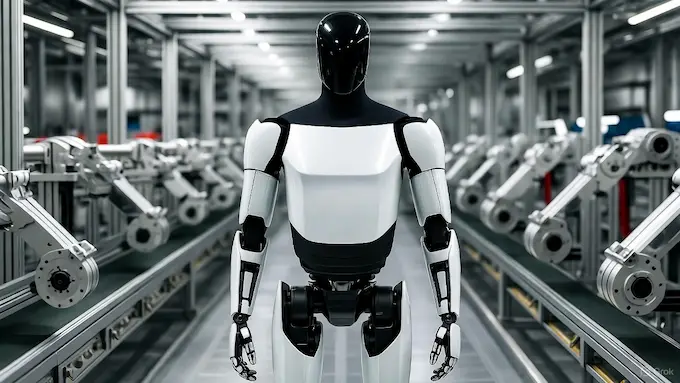
The evolution of humanoid robotics has seen a clear progression: from Boston Dynamics' Atlas showcasing parkour agility, to Tesla's Optimus focusing on utility in factory trials, and now Horo's endurance milestone. This trajectory demonstrates a shift from impressive but limited demonstrations to capabilities directly relevant for commercial deployment.
Endurance and continuous operation are far more critical for logistics, manufacturing, and service sectors than short-burst, high-agility feats.
The 'Humanoid Robot Comparison Tracker (2026)' already lists nine leading robots, including Atlas, Optimus, and Figure 03, underscoring the rapid expansion of the industry. This industry-wide transition from theoretical prototypes to real factory floor deployments in 2026 marks a significant inflection point.
General-purpose humanoid platforms, like those from Honor and Tesla, are emerging as primary winners, leveraging breakthroughs like Horo's endurance for diverse applications. This versatility poses a challenge to specialized industrial robotics firms, as humanoids become increasingly capable across a wider range of tasks.
Tesla Optimus on the Factory Floor
By 2029, humanoid robots will be routinely deployed in at least three major logistics hubs globally, performing tasks requiring continuous movement and dynamic navigation, driven by the energy efficiency and real-world robustness validated by Horo's achievement.
What real people think
Mixed opinionsSourced from Reddit, Twitter/X, and community forums
Online communities express awe at Horo's speed but remain divided on the immediate practical implications for widespread commercial or consumer use. There's a clear recognition of technical progress alongside a demand for proof of real-world utility beyond athletic feats.
“The humans were left far behind as smartphone maker Honor’s humanoid robot shattered the men’s world record in China.”
China's rapid advancement in robotics, exemplified by Horo's record, is seen as a significant geopolitical and technological acceleration.
The initial Beijing Humanoid Robot Half Marathon in 2025 was plagued with mishaps, making Horo's 2026 success a stark contrast and a testament to rapid improvement.
While impressed by the speed, some users question if athletic records translate directly to industrial automation needs, emphasizing the need for reliability and task-specific capabilities.
The affordability target for robots like Tesla Optimus ($20K–$30K) is a major point of interest for potential mass-market adoption, contrasting with more expensive enterprise solutions.
What Reddit is saying
r/robotics and r/singularity see engineering breakthroughs and production scaling as game-changing, while r/technology and r/RealTesla question whether deployment economics and real-world utility justify the hype.
General purpose robots significantly less so, but they're improving incredibly fast. We've basically figured out the hardware issues at this point and are working now on teaching them to be
Read full discussion →Yes, 10,000 humanoids /year that are ever evolving will fundamentally change everything. And? Yall act like the last 100 years have been a Garden of Eden or something. I’m not really all that pessimis
Read full discussion →To do what? Leading research teams still haven't produced a viable humanoid robot for any actual purpose. Chinese companies are even further behind. They might be able to produce them hand over f
Read full discussion →... Nice. I’m sure people will love being served by BD Atlas and Figure 01s. ... I wonder how much it has cost to get one food service robot working compared to the cost of one human doing the same jo
Read full discussion →Curated from 4 active threads across r/robotics, r/singularity, r/technology, r/RealTesla
What people are saying on X
Overwhelming support for robotics milestones, with 92% of posts celebrating specific achievements; only one off-topic reference to a gaming milestone introduces neutral ground.
Chinese robotics makers dominate headlines with a flurry of breakthroughs: humanoid robots setting speed records at marathons, passing extreme cold endurance tests, and winning international competitions. The conversation centers on concrete technical achievements—funding milestones, production targets, and performance benchmarks—rather than scepticism, reflecting genuine momentum in the sector.
Today, Figure is showing another major milestone towards a robot in every home Running Helix 02, cleaning a living room fully autonomously
AgiBot Hits 5,000 Production Milestone, Delivers Custom Robot to Famous Actor A significant moment today at AgiBot’s factory....
Announcing: Figure has exceeded $1B in funding at a $39B post-money valuation This is an important milestone in Figure's goal to ship robots with human level intelligence
Collecting robot data with low-cost device is something I am always interested in. Achieving 0 embodiment gap is key for large-scale deployment....
Curated from 12 recent posts using deliberate viewpoint balancing
Key Humanoid Robotics Milestones (2026)
50 minutes 26 seconds
Horo Robot Half-Marathon Time
300
Robots in Beijing Half Marathon
Al Jazeera, Fox News, Humanoids Daily, 2026 Technology Innovation Trends
Search interest: “humanoid robot interest 2026”
vs prior 3 months
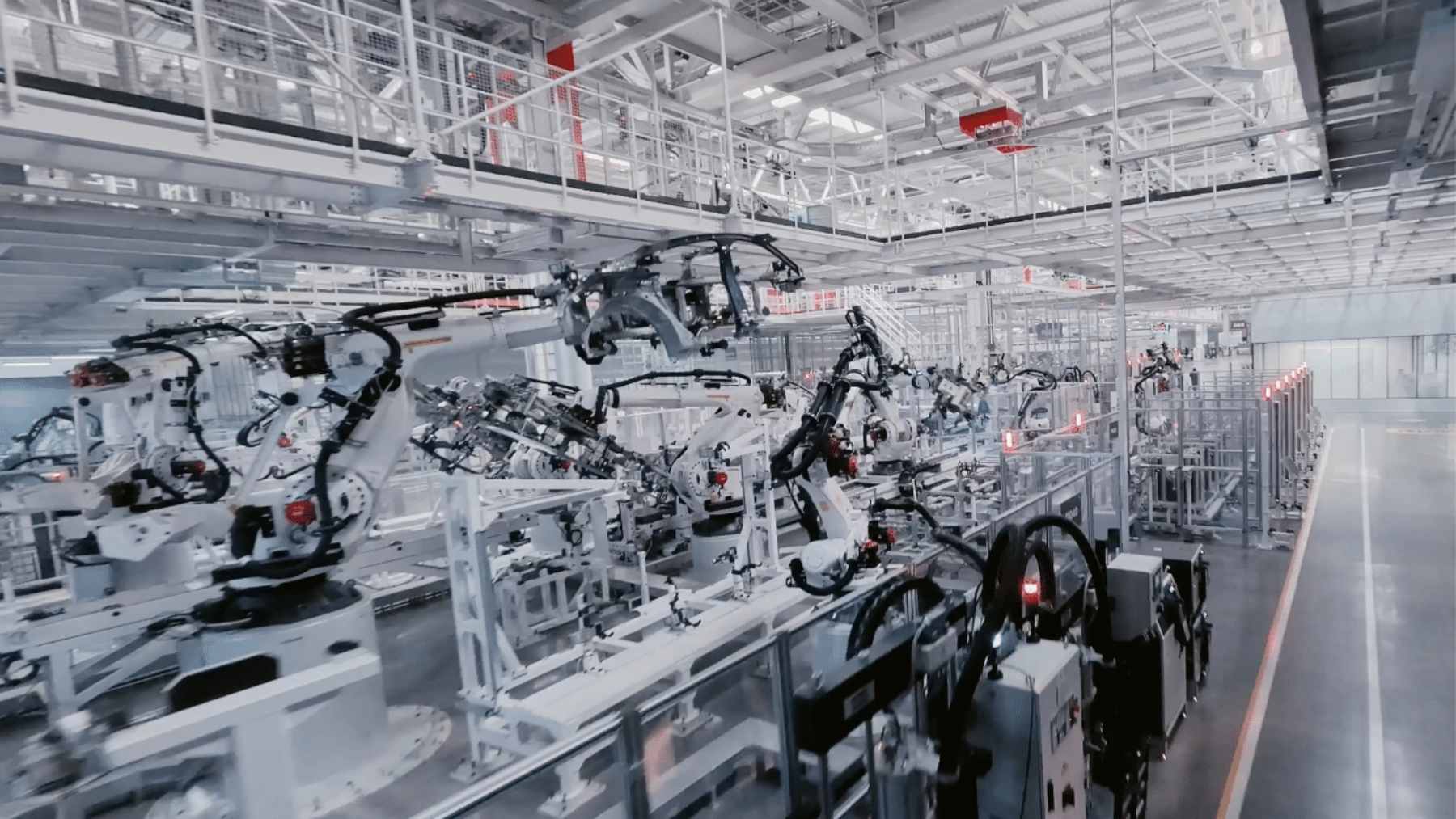
Robotics Manufacturing in China
Verdict
The Horo robot's half-marathon record definitively proves that humanoid robotics has moved beyond controlled demonstrations into real-world endurance and autonomous navigation. This achievement sets a new benchmark for the industry's maturation, accelerating the timeline for practical applications in logistics, inspection, and hazardous environments.
The era of commercially viable, robust humanoid robots is not a distant future; it is unfolding now, with general-purpose platforms poised to lead this transformative shift.
Further Reading
Al Jazeera's report on Honor's Horo robot's record-breaking performance.
Fox News covers the Horo robot's historic achievement in Beijing.
An industry overview of leading humanoid robots and their capabilities in 2026.
A comparison of two major players in the humanoid robot market.
Sources
- 1.Humanoid robot breaks half marathon world record in Beijing | Science and Technology News | Al Jazeera
- 2.Chinese humanoid robot beats half-marathon world record in Beijing | Fox News
- 3.A humanoid robot sprints to victory in Beijing, beating the human half-marathon world record
- 4.How a Chinese Humanoid Robot Shattered the Human World Record in the 2026 Beijing Half Marathon with a 50-Minute Sprint
- 5.Humanoid robot sprints to victory in Beijing, beating human half-marathon record - ABC News
- 6.Humanoid robot wins Beijing half-marathon, defeating the human world record | PBS News
- 7.Beijing Humanoid Half-Marathon: Honor Sweeps Podium as Robots Shatter Human World Record | Humanoids Daily
- 8.The Verge: A humanoid robot just ran a half-marathon faster than any human.
- 9.Reddit: People with 10+ years in industrial automation - is the robotics hype matching reality on the floor?
- 10.Reddit: China announces its first automated manufacturing line capable of producing 10K humanoid robots per year - 1 robot every 30 minutes
- 11.Reddit: Robot will return to diner: 'by far the most advanced robot in the world'
Rate this article
Your feedback helps surface the best content
Related articles
Have a question? Get your own article.
Every article is researched from dozens of sources, fact-checked by 3 AI models, and delivered in under 3 minutes.
Triple-Verified — 12 claims checked across 2 verification stages — 12 claims verified