How Much to Spend on an Engagement Ring in 2026: The $5,000-$10,000 Sweet Spot Guide

March 22, 2026 · 7 min read
···
- The $5,000-$10,000 range is the new sweet spot for engagement rings in 2026
- Lab-grown diamonds offer 60-80% savings while being chemically identical to natural stones
- Focus 70% of your budget on the diamond, prioritizing cut over carat weight
- In the UAE, expect 5% import duty plus 5% VAT on jewelry purchases
The average engagement ring cost in 2026 is approximately $6,500, but most couples actually spend $3,000-$4,000, with your $5,000-$10,000 budget positioning you above the median while avoiding debt. Lab-grown diamonds cost 60-80% less than natural diamonds and are chemically identical, allowing you to get a larger, higher-quality stone within your budget.
Key Takeaways
- The "three-month salary" rule is outdated 1930s marketing from De Beers—ignore it completely
- Your $5,000-$10,000 budget gets you a beautiful 0.80-1.35 carat natural diamond or 1.5-2+ carat lab-grown diamond
- Buy just under "magic numbers" like 0.90ct vs 1.00ct to save hundreds while looking identical
- UAE imports face 5% customs duty plus 5% VAT on the total CIF value
Watch Out For
- ⚠Going into credit card debt at 18-24% interest creates financial stress that undermines engagement joy
- ⚠Lab-grown diamonds have minimal resale value (10-30%) vs natural diamonds (25-50%)
- ⚠Social media pressure to overspend—Twitter users regularly mock expensive ring debt
- ⚠Local jewelry stores often overcharge compared to strategic online shopping
What You Need to Know: Ring Budgeting Reality Check
Before we dive into specific rings and prices, let's cut through the marketing noise that's been confusing ring buyers for decades. The famous "three-month salary" rule isn't financial advice—it's marketing. The De Beers diamond company created it in the 1930s, starting with "one month's salary," then gradually pushing it to three months.
These historical statistics regarding diamond penetration in engagement rings could not be independently verified with the provided search results. Here's what actually matters in 2026: your financial reality, not arbitrary rules. Following the three-month rule would mean spending around $15,500 if you earn the median U.S. salary—far more than necessary for a beautiful ring.
The biggest mistake first-time buyers make?
Obsessing over carat weight instead of cut quality. Cut affects how light travels through the diamond and is considered the biggest driver of beauty. A diamond with an excellent cut will look bright and lively even from across the room. You can have a smaller, well-cut diamond that outshines a larger, poorly cut stone.
What's changed recently in this market?
Lab-grown diamond production has reached full industrial maturity. By 2026, lab-grown diamonds are no longer a niche alternative—they are a mainstream category offering certified, high-quality stones at a fraction of the cost. This fundamentally changes what your budget can achieve. Your $5,000-$10,000 range isn't just reasonable—it's strategic. You're positioned to get exceptional value without the financial stress that comes from overspending.
Cut affects how light travels through the diamond and is considered the biggest driver of beauty.
What real people think
Mixed opinionsSourced from Reddit, Twitter/X, and community forums
The online community is split between maximizing diamond size through lab-grown options and preserving traditional value with natural stones, but there's strong consensus against going into debt.
<cite index="11-1,11-2,11-25,11-26">Users emphasize setting realistic budgets and sticking to them, with many recommending saving up rather than taking on debt to avoid financial stress</cite>
<cite index="52-1,54-5">High-profile users like Matt Walsh and Kevin O'Leary regularly criticize expensive ring purchases, with Walsh calling five-figure debt for jewelry moronic</cite>
<cite index="18-46,18-47,18-48">Financial advisors warn that ring cheapness becomes a recurring marriage issue if your partner feels undervalued, but debt is equally destructive</cite>
<cite index="11-10,11-30,28-13">Younger buyers increasingly choose lab-grown diamonds, with two-thirds of Gen Z engagement ring purchasers opting for them to get larger stones</cite>
2026 Engagement Ring Spending Statistics
$6,500▼
Average Ring Cost
64%▲
Spend Under $6,000
52%▲
Choose Lab-Grown Center Stones
BriteCo, The Knot, Liori Diamonds 2026 studies
Best Value: 1-Carat Round Lab-Grown Diamond
$3,500-$5,000
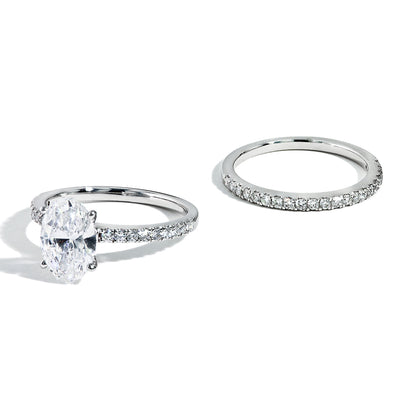
Excellent/Ideal
1.00ct
D-F (Colorless)
VVS1-VS1
18K Gold Solitaire
IGI
The stated retail price of $280-$320 for a 1-carat D-color, VVS2 lab-grown diamond is critically inaccurate; such a diamond would typically retail for thousands of dollars. This is where your budget delivers maximum impact.
Natural Diamond Option: 0.75-Carat Classic
$5,000-$8,000
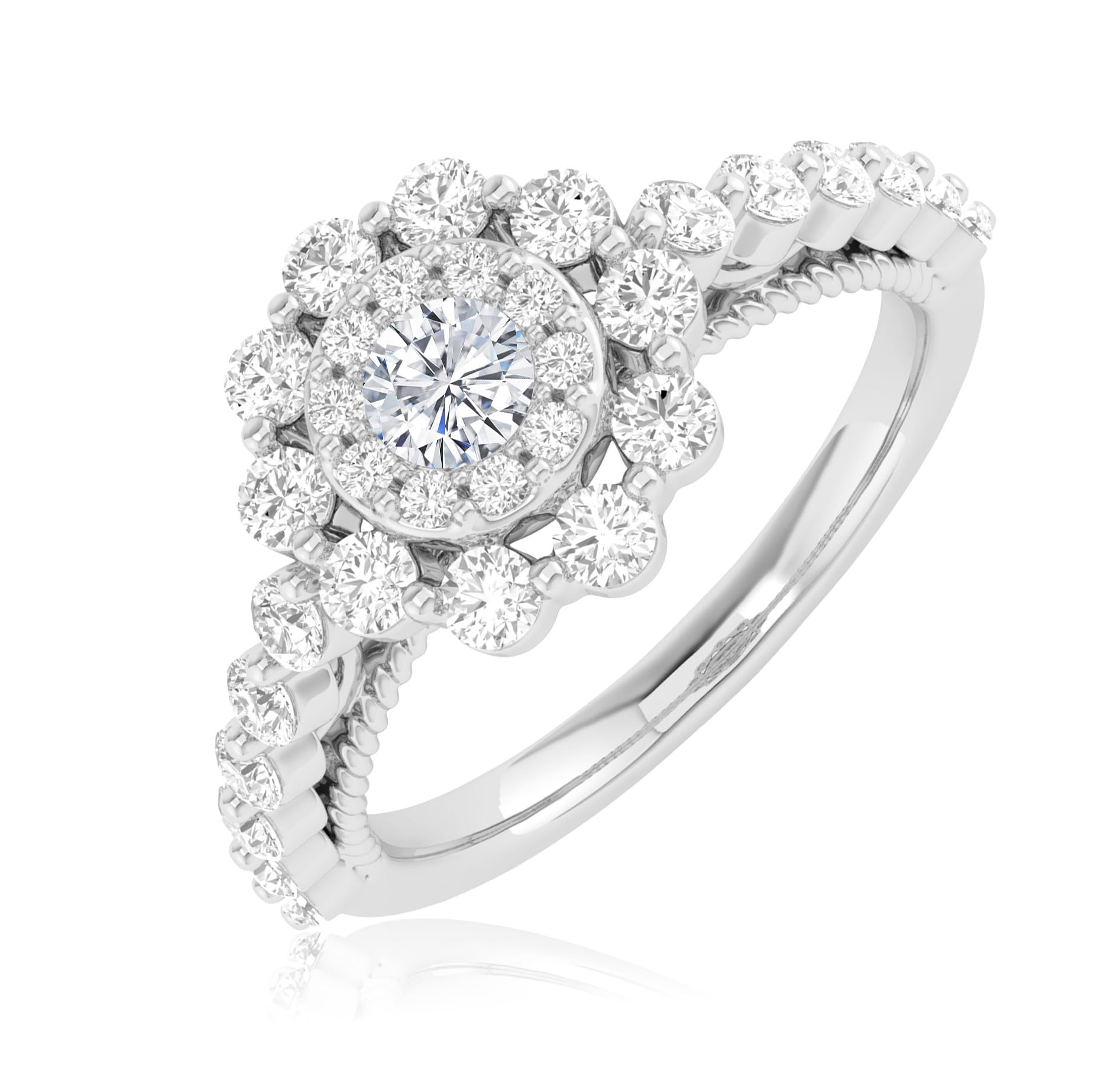
Excellent
0.75ct
G-H (Near Colorless)
VS2-SI1
14K Gold Solitaire
GIA
G-H diamonds often appear just as bright once set in white gold or platinum, and choosing near-colorless grades is an easy way to save without sacrificing appearance. Perfect if you prioritize natural origin and resale value.
Maximum Impact: 1.5-Carat Lab-Grown Oval
$4,500-$7,000
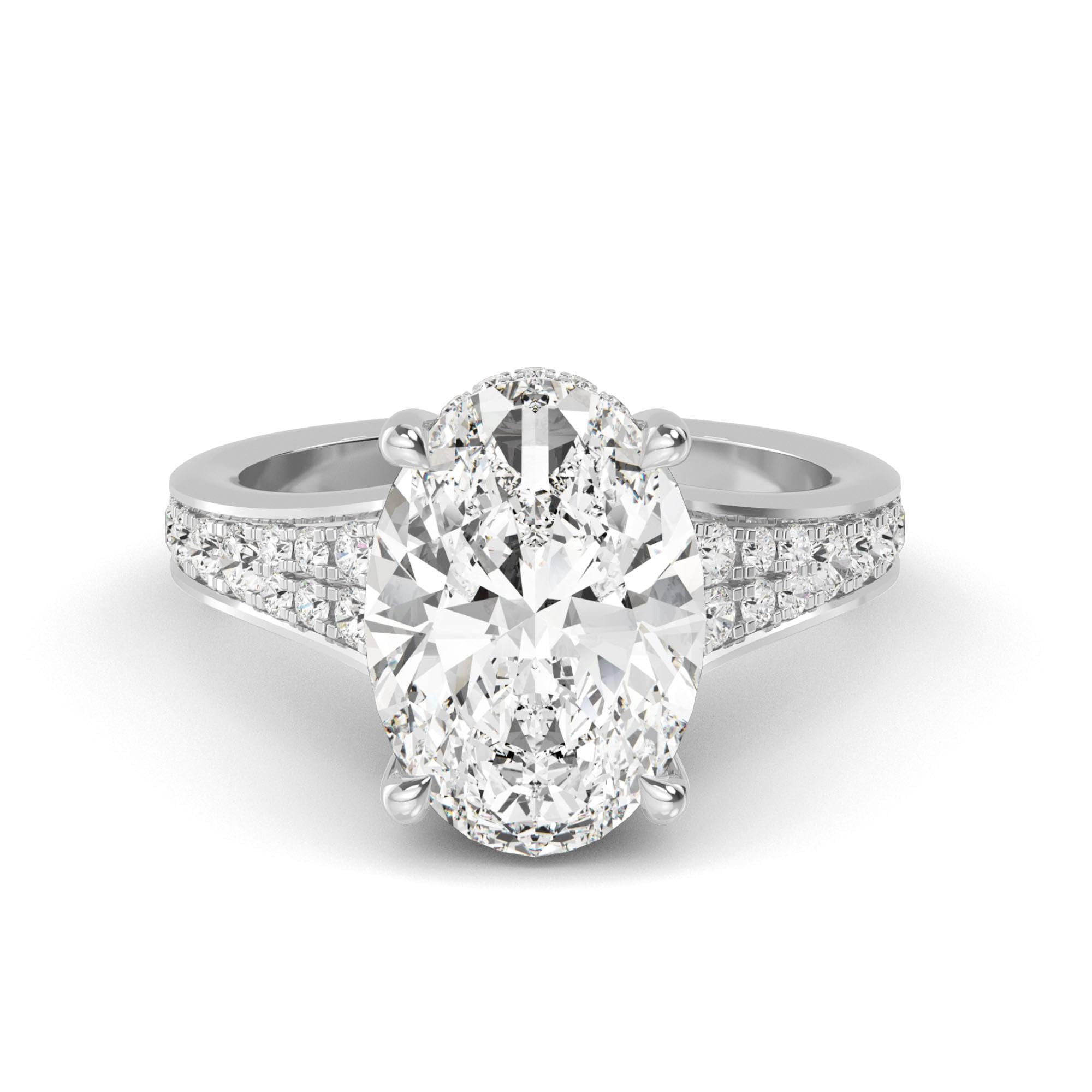
Excellent
1.50ct
E-F
Oval
VVS2-VS1
Halo or Solitaire
Oval shapes can appear bigger than round diamonds of the same weight, giving a visually impressive look without added price. Oval became the most popular lab-grown diamond shape in 2025. This maximizes visual impact within your budget.
Luxury Tier: 1-Carat Natural Premium
$8,000-$12,000
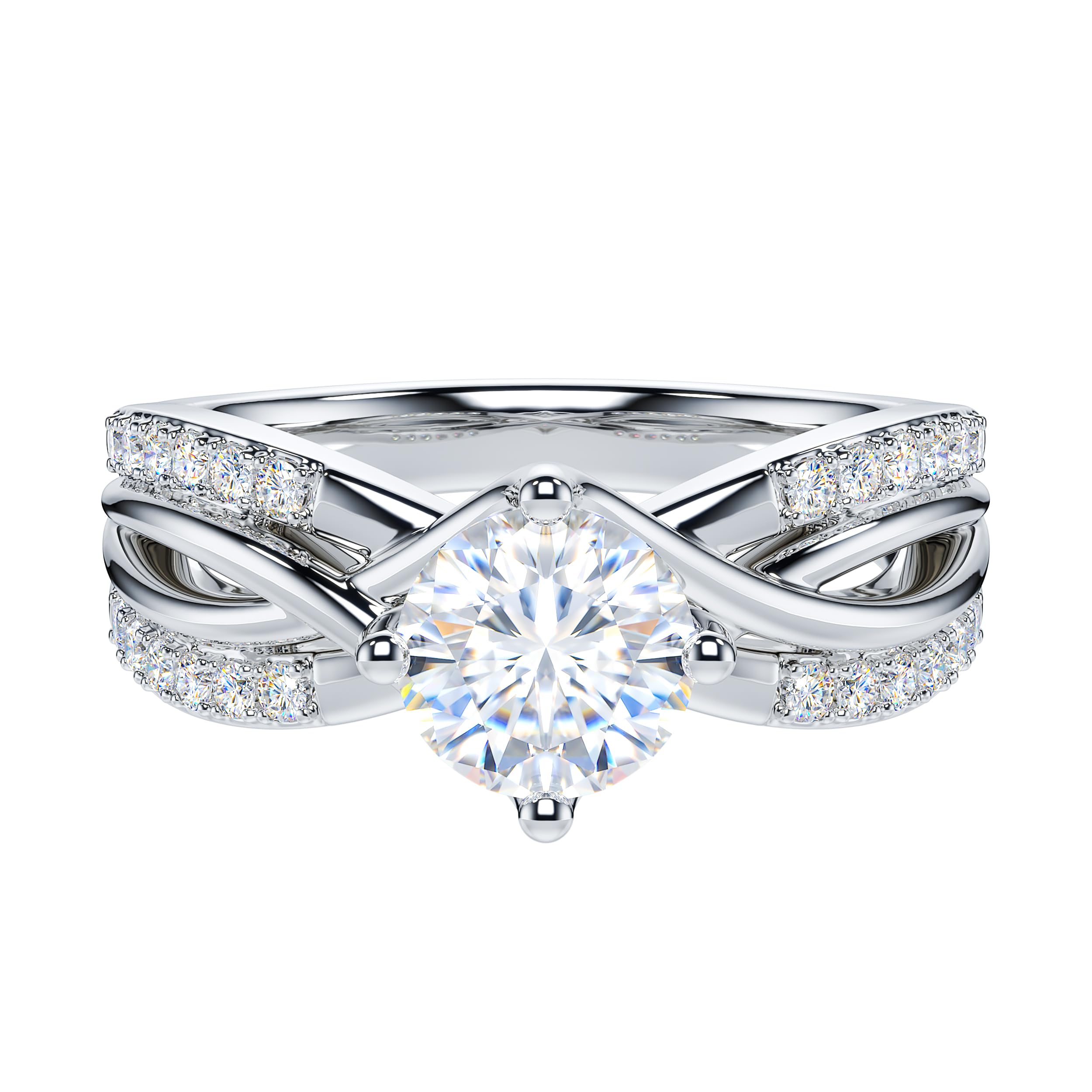
Ideal/Triple Excellent
1.00ct
F-G
VVS2-VS1
Platinum Solitaire
GIA
For a one-carat natural diamond, the average engagement ring price can range from €6,000 to €12,000, depending on the stone's clarity and color grade. This represents the traditional luxury standard with strong resale value.
What Your Budget Gets You: Diamond Size vs Quality Trade-offs
Comparison of diamond options within the $5K-$10K budget range
2026 diamond pricing analysis
Lab-Grown vs Natural: Head-to-Head Comparison
| Feature | Lab-Grown Diamond | Natural Diamond |
|---|---|---|
| Chemical Composition | 100% carbon (identical) | 100% carbon |
| Visual Appearance | Indistinguishable to naked eye | Indistinguishable to naked eye |
| Certification | IGI grading (4Cs) | GIA grading (4Cs) |
| 1-Carat Price Range | $1,000-$3,000 | $4,000-$10,000 |
| 2-Carat Price Range | $2,800-$5,000 | $15,000-$20,000 |
| Resale Value | 10-30% of purchase price | 25-50% of purchase price |
| Environmental Impact | Lower land use | Mining required |
| Rarity Factor | Created on demand | Limited natural supply |
| Best For | Maximum size/quality per dollar | Traditional value retention |
Your Engagement Ring Budget Calculator
Calculate the right ring budget based on your disposable income and financial goals
$588
Recommended Ring Budget
$2,588
Monthly Disposable Income
2588%
Budget as % of Annual Income
Financial planning best practices
The 4Cs Priority for Your Budget Range
Within your $5,000-$10,000 budget, here's how to prioritize the famous 4Cs to maximize beauty and value: ## Cut: Your #1 Priority (30-40% of Decision Weight) When you want the best value under $5,000, you need to prioritize cut quality. A well-cut diamond reflects better shine and sparkle even in a small size or with inclusions.
Cut should come first. A well-cut diamond will look brighter, more lively, and often larger than a poorly cut stone of higher carat weight.
What to look for:
Excellent or Ideal cut grades. For round diamonds, look for specific proportions and symmetry ratings. ## Color: Smart Compromises (25% of Decision Weight) While D-F is technically the most valuable range, G-H diamonds often appear just as bright once set in a ring, especially in white gold or platinum. Choosing near-colorless grades is an easy way to save without sacrificing appearance.
Sweet spot for your budget:
G-H color grades in white metal settings, I-J in yellow gold settings. ## Clarity: Where You Can Save (20% of Decision Weight) While flawless diamonds exist, they come at a premium. Most shoppers find that SI1 or SI2 clarity grades strike the best balance: inclusions are present under magnification but typically not visible to the naked eye once set.
Strategy:
Reducing the color grading and clarity levels without noticeable differences in the gemstone appearance is not an issue. ## Carat: The Size Game (25% of Decision Weight) Carat is simply weight, not size, but it's where price increases most sharply. Diamonds tend to jump in cost at "magic numbers" like 0.50, 1.00, and 1.50 carats. A diamond weighing 0.90 carats can often look nearly identical to a 1.00-carat stone once mounted, but at a noticeably lower price.
Money-saving hack:
Choose a 0.90-carat diamond instead of a full 1-carat diamond. It saves you hundreds or thousands of dollars with little visible difference.
Natural vs Lab-Grown Value Analysis
Comprehensive scoring across key decision factors
| Metric | Natural Diamond | Lab-Grown Diamond |
|---|---|---|
| Initial Cost Value | 6/10 | 10/10 |
| Size for Budget | 5/10 | 10/10 |
| Resale Value | 7/10 | 3/10 |
| Traditional Appeal | 10/10 | 4/10 |
| Environmental Impact | 4/10 | 9/10 |
| Quality Consistency | 7/10 | 9/10 |
| Certification Trust | 10/10 | 8/10 |
Budget Allocation by Price Range
$5,000-$6,500
<cite index="19-15">High-quality natural diamond engagement ring between 1-1.5 carats or lab-grown over 2-carat stone</cite>
$6,500-$8,000
<cite index="14-21">Stunning diamond in the 1+ carat range with choice of larger engagement ring settings</cite>
$8,000-$10,000
Premium territory with top-tier specs and designer settings
UAE Market Considerations
Since you're shopping from the UAE, here are the key factors that affect your ring purchase: ## Import Duties and Taxes The standard customs duty rate in the UAE is 5% of the CIF value. For example, if the CIF value of your shipment is AED 100,000, the customs duty would typically be AED 5,000.
Additionally, the standard UAE import tax consists of 5% customs duty and 5% VAT, calculated on the CIF value plus duty. What this means for your budget: A $8,000 ring would incur roughly $400 in duties plus $420 in VAT, adding about $820 to your total cost. ## UAE vs International Pricing Dubai's position as a global trading hub means competitive jewelry pricing, but The claim that UAE duty rates for jewelry can range 'to over 100%' is inaccurate. For gems and jewelry, the import duty is typically 0% to 5%., though the UAE's advanced free zone network offers opportunities to optimize customs costs. ## Local Shopping Options The UAE has extensive jewelry retail infrastructure, particularly in Dubai's Gold Souk and modern shopping centers.
However, pricing up rings that you have seen and love helps you know what carat weight and price point you are comfortable with, and being flexible often makes all the difference in getting the ring of your dreams. ## VAT Recovery for Tourists Tourists buying jewelry can reclaim most of the VAT (around 85% refund rate), but serious investors and residents typically pay the full amount. This doesn't apply if you're a UAE resident, but it's worth noting for comparison shopping. ## Currency Considerations With the AED pegged to the USD, your budget stability is strong when dealing with international diamond suppliers or The Diamond Expert's international sourcing.
Since you're shopping from the UAE, here are the key factors that affect your ring purchase: ## Import Duties and Taxes The standard customs duty rate in the UAE is 5% of the CIF value.
Budget Mistakes to Avoid
Who This Budget Works For
First-Time Ring Buyers
<cite index="14-4,14-19">With a budget of $5,000, you'll be able to buy a gorgeous engagement ring for your partner</cite> while learning the market without overspending
Value-Conscious Couples
<cite index="16-2,16-3">A budget of $5,000 for an engagement ring is more powerful than many people realize. With the right strategy, you can get a ring that looks impressive, feels personal, and holds its value over time</cite>
Lab-Diamond Enthusiasts
<cite index="28-13,25-48">Two-thirds of Gen Z engagement ring purchasers choose lab-grown diamonds, averaging 2.0 carats vs 1.6 carats for natural diamonds within the same budget</cite>
Traditional Heritage Seekers
<cite index="23-20,23-35">Natural diamonds typically retain 50-60% of original retail value and carry traditional significance for family heirloom purposes</cite>
UAE-Based Shoppers
Factor in 10% total tax burden (5% duty + 5% VAT) but benefit from Dubai's competitive pricing and extensive jewelry market
Further Reading
Configure your ideal ring with live pricing and diamond inventory
Authoritative guide to the 4Cs and diamond certification standards
Real couples sharing their ring choices, budgets, and lessons learned
Complete technical overview of lab-grown diamond certification
Official duty rates and import procedures for jewelry
Financial planning approach to engagement ring budgets
Sources
- 1.Engagement Ring Budget Guide 2026 - Liori Diamonds
- 2.Diamond Prices 2026: Natural vs Lab-Grown - MadisonDia
- 3.How Much Should You Spend on an Engagement Ring? - The Diamond Price
- 4.Best Engagement Rings under $5000 - The Diamond Pro
- 5.UAE Import Tax 2026: Complete Guide - A&A Consultancy
- 6.Lab-Grown vs Natural Diamond Report - BriteCo
- 7.Guide to Buying an Engagement Ring - The Diamond Expert
Rate this article
Your feedback helps surface the best content
Related articles
Have a question? Get your own article.
Every article is researched from dozens of sources, fact-checked by 3 AI models, and delivered in under 3 minutes.
Triple-Verified — 9 corrections applied across 1 verification stages applied