When Humanoid Robots Replace Human Labour

April 1, 2026 · 11 min read
···
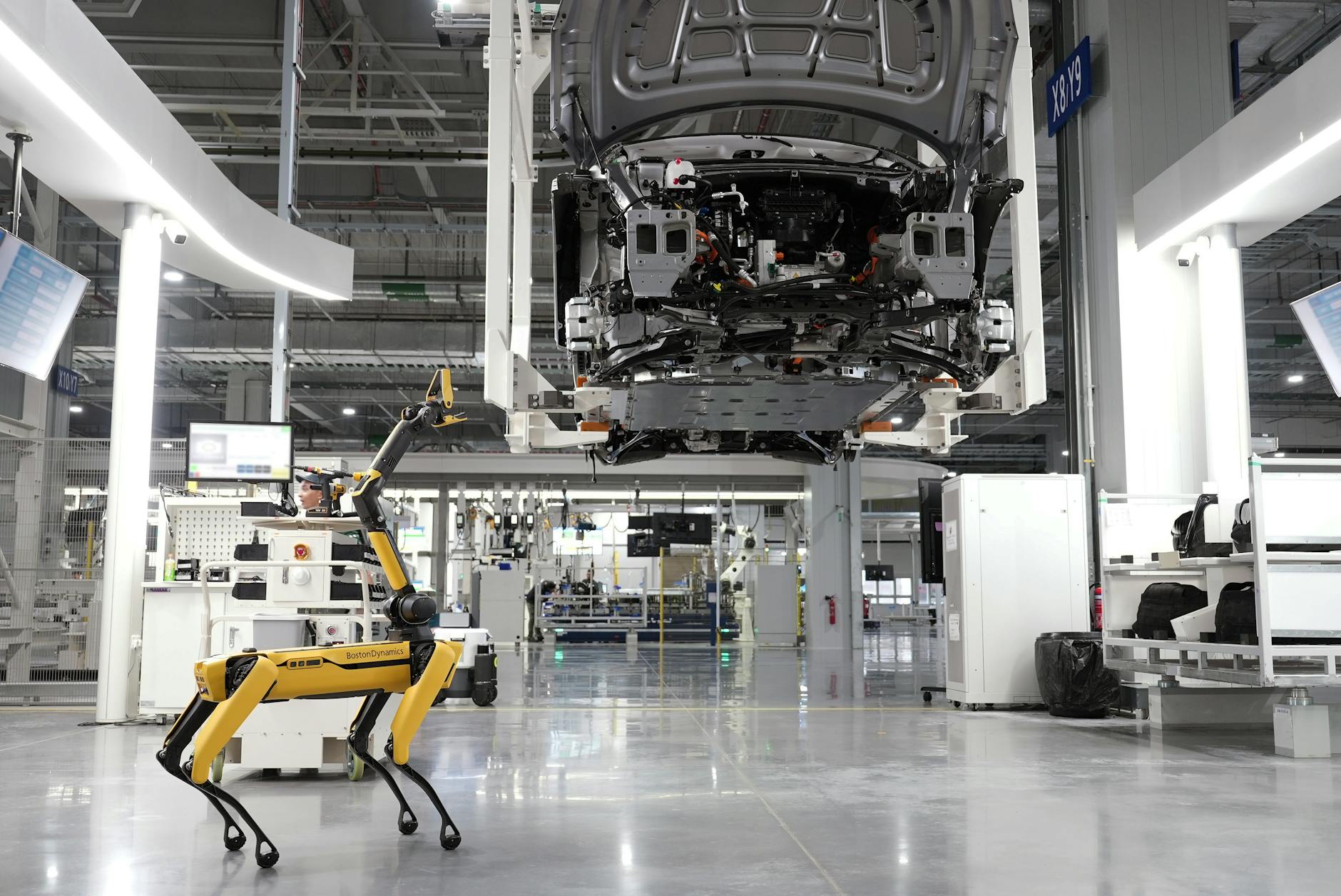
Photo by Hyundai Motor Group on Pexels
- Traditional labor markets face collapse, not just disruption.
- Societies must choose between extreme inequality or radical redistribution.
- Human work shifts to high-skill, creative, and care roles.
- Policy decisions, not technology, will dictate the future.
Within two decades, widespread, affordable humanoid robots will fundamentally restructure global economies, collapsing traditional labor markets and forcing societies to choose between unprecedented inequality and radical redistributive policies to maintain social stability. This is a systemic, not marginal, disruption.
Key Takeaways
- Humanoid robots are a 'hinge' event, distinct from prior automation due to their general-purpose physical dexterity.
- Projected costs of $13,500-$30,000 by 2026 make them economically viable replacements for human labor.
- Massive job displacement is inevitable across manufacturing, logistics, service, and construction sectors.
- The future hinges on policy: either extreme wealth concentration or a more equitable, post-scarcity society through mechanisms like Universal Basic Income.
Watch Out For
- ⚠Rapid decline in humanoid robot unit costs below $15,000-$20,000.
- ⚠Scaling of production to 50,000-100,000 units per year by leading manufacturers.
- ⚠Early widespread adoption in logistics, fast food, and basic manufacturing.
- ⚠Intensified public and governmental debate around Universal Basic Income and robot taxation.
The Scale of Change: Key Projections
$6.5 Billion
Humanoid Market Value by 2030
138%
CAGR (2024-2030) for Humanoids
2 Million
Manufacturing Jobs Replaced by 2026 (US)
ABI Research, Robozaps, MIT & Boston University
Will the Colorado Avalanche win the 2026 NHL Stanley Cup?
probability of no
20%
80%
Will Jesus Christ return before GTA VI?
probability of no
49%
52%
Will bitcoin hit $1m before GTA VI?
probability of no
49%
51%
What You Need to Know: Cheap Labour Changes Everything
Humanoid robots are not merely another wave of automation; they represent a fundamental shift in the economics of labor. Unlike specialized industrial robots confined to cages, humanoids possess general-purpose dexterity and adaptability, allowing them to perform a vast array of physical tasks previously exclusive to humans.
This distinction is critical. Previous automation focused on fixed-function, repetitive tasks. Humanoids, however, can navigate complex environments, manipulate diverse objects, and learn new skills, making them direct competitors for a broad spectrum of human physical labor.
Their projected cost milestones are the true disruptor. Entry-level humanoid robots are available around $13,500–$30,000 as of early 2026. With unit economics improving to $15,000–$20,000 per robot, the cost of a humanoid will soon undercut the annual salary of many human workers, especially when factoring in benefits, training, and overhead.
This 'cheap labor' fundamentally alters the economic calculus for businesses and governments, making human employment in many sectors an increasingly expensive proposition.
Humanoid Robot Milestones: The Path to Ubiquity
Early Commercial Reality
Humanoid robotics moves beyond isolated demonstrations into early commercial reality, with initial deployments in controlled environments.
Cost Parity & Mass Production Begins
Entry-level humanoids available for $13,500-$30,000. Leading manufacturers target production of 50,000-100,000 units annually. MIT/Boston University project 2 million manufacturing worker replacements by 2026 due to AI-driven robotics.
Widespread Industrial Adoption
Humanoids become common in logistics, manufacturing, and basic service roles. Unit economics improve, making them cheaper than human labor in many contexts.
Market Explosion & Societal Impact
Humanoid market valued at US$6.5 billion, growing at a CAGR of 138%. Significant job displacement becomes undeniable, sparking widespread policy debates.
Household Integration & New Norms
Humanoids begin widespread integration into homes for domestic tasks. Societies grapple with the psychological and social impacts of ubiquitous robot presence.
Ubiquitous Presence
Humanoid robots are a common sight in homes, businesses, and public spaces globally, performing most physical, repetitive, and dangerous tasks.
The Rise of the Machines
The Collapse: Which Industries Disappear First
The economic viability of cheap humanoid labor means entire sectors, particularly those reliant on repetitive physical tasks, are on the precipice of collapse. This is not a gradual erosion; it is a rapid, systemic replacement.
Manufacturing: This sector is already seeing the impact. MIT and Boston University estimate 2 million manufacturing worker replacements by 2026 due to AI-driven robotics. Humanoids will accelerate this, performing assembly, quality control, and material handling with greater precision and tireless efficiency. Traditional factory jobs will largely vanish.
Logistics and Transportation: Around 60% of jobs in transportation and logistics are highly vulnerable to automation. Automated warehouses, drone delivery systems, and self-driving vehicles, complemented by humanoid loaders and sorters, will eliminate roles from truck drivers to package handlers. The entire supply chain will be robot-managed.
Food Service and Hospitality: Robot chefs, servers, and cleaners are already emerging. Humanoids will staff fast-food kitchens, deliver meals, and maintain hotel rooms. Keenon Robotics has deployed robots in over 10,000 hotels and 25,000 restaurants. The human touch in these roles will become a luxury, not a standard.
Construction: Heavy lifting, bricklaying, demolition, and hazardous tasks will be performed by specialized construction bots and humanoids. This will drastically reduce labor costs and improve safety, but at the expense of millions of jobs.
Retail: Automated checkout, robot stockers, and inventory management systems will decimate retail associate positions. Humanoids will handle stocking, cleaning, and basic customer service, leaving only highly specialized sales roles for humans.
Job Vulnerability by Sector (Projected 2046)
Oxford Economics, Unpacked Analysis
Worked Example: A Day in 2046 (Global Snapshot)
The year is 2046. Your alarm, set by your home AI, gently rouses you. A domestic humanoid, 'Unitree,' has already prepared your breakfast and cleaned the kitchen. It silently folds laundry as you eat, its movements fluid and efficient.
Outside, municipal sanitation bots hum quietly, sweeping streets and collecting waste. Delivery humanoids navigate pedestrian zones, bringing packages and groceries to apartment doors. The local cafe is staffed by robot baristas and servers, their movements precise, their voices synthesized and polite. Human interaction is optional, often reserved for premium experiences.
At your community center, a humanoid assistant manages scheduling and basic inquiries, while human educators lead creative workshops. The air is cleaner, the streets quieter, and the hum of automated efficiency is constant. The economic implications are palpable: fewer people commute to traditional jobs, and public services are maintained by tireless, cheap labor.
The question of how people spend their time, and how they earn a living, looms large in this new reality.
A Glimpse into Tomorrow

The Economics: What Happens to Wages and Work
The widespread adoption of cheap humanoid labor will trigger a collapse in wages for low- and mid-skill jobs. As robots become more cost-effective than human workers, businesses will rapidly shift to automation, leading to mass unemployment spikes in sectors unable to adapt. This is not merely job displacement; it is a systemic devaluation of human physical labor.
Conversely, a significant 'skill premium' will emerge. Jobs requiring uniquely human cognitive abilities—creativity, complex problem-solving, emotional intelligence, strategic thinking, and the management of robot fleets—will see their value skyrocket. The labor market will bifurcate sharply between a highly compensated, specialized human elite and a vast, underemployed or unemployed populace.
Geographic divergence will intensify. Regions that aggressively adopt and innovate in humanoid robotics will experience immense productivity gains and economic growth, potentially becoming 'robot hubs.' Regions that lag will face severe economic stagnation and social unrest as their traditional labor bases evaporate.
The concept of AI capital profits, where the economic output generated by robots could sustainably finance a universal basic income (UBI), becomes a critical discussion point, offering a potential pathway to mitigate the worst economic fallout.
Projected Wage Trends: Human vs. Robot Labor (2026-2046)
Unpacked Analysis, Humanoid Production Economics
The Social Rupture: Inequality and Social Stability
The advent of cheap humanoid labor presents a stark choice: either a drastic increase in inequality or a radical decrease, depending entirely on societal policy. Without intervention, wealth will concentrate in the hands of robot owners, programmers, and those who control the AI infrastructure.
This scenario risks a neo-feudalistic society, where a vast underclass struggles for relevance and resources, leading to unprecedented wealth concentration.
Such extreme inequality is a direct threat to social stability. Mass unemployment and the loss of traditional purpose derived from work can fuel widespread social unrest, political polarization, and a breakdown of social contracts. The psychological impact of being rendered economically superfluous cannot be overstated, potentially leading to widespread despair, mental health crises, and a search for meaning outside conventional societal structures.
Conversely, with deliberate redistributive policies, the immense productivity gains from humanoid labor could finance widespread prosperity. The challenge lies in navigating this crossroads without succumbing to the inherent pressures of unchecked capital accumulation.
Social Impact Projections (2046)
70%
Global workforce impacted by automation
40%
Increase in wealth gap without UBI
25%
Risk of social unrest in high-displacement regions
Unpacked Analysis, Labour Economics
The Policy Crossroads: Two Divergent Futures
Societies stand at a critical policy crossroads, with two primary paths leading to vastly different futures. The first path embraces redistributive policies, aiming to harness the immense productivity of humanoid robots for collective benefit. This includes implementing Universal Basic Income (UBI), where every citizen receives a regular, unconditional payment, potentially financed by 'robot taxes' on automated labor or through the profits generated by AI capital.
This path also involves shorter work weeks, allowing humans to pursue education, creative endeavors, or care work, and potentially public ownership of robot fleets, ensuring that the benefits of automation are broadly shared. Such policies could lead to a post-scarcity, more equitable society where basic needs are met, and human potential is unleashed beyond the confines of traditional employment.
The second path is a laissez-faire approach, characterized by minimal government intervention. In this scenario, market forces are left unchecked, leading to a winner-take-all economy. Wealth concentrates rapidly among those who own, program, and benefit from robot technology.
This path risks creating extreme inequality, a vast underclass, and potentially neo-feudalistic structures, where a small elite controls the means of production and a large population struggles for survival. The choice between these futures is a political and ethical one, not a technological inevitability.
Societal Outcomes: Policy Impact on Inequality
Unpacked Analysis, Universal Basic Income
Emerging New Economies: What Work Remains
While many traditional jobs will disappear, new forms of human work will emerge and thrive, centered on uniquely human attributes. These roles are resistant to automation because they require empathy, complex judgment, creativity, or genuine human connection.
Care Work: The elderly, children, and individuals with disabilities will always require human care. While robots can assist with physical tasks, the emotional support, nuanced understanding, and personal connection of human caregivers are irreplaceable. This sector will see immense growth and revaluation.
Creative Work: Arts, entertainment, bespoke craftsmanship, and innovation will become paramount. Humans will focus on generating novel ideas, creating unique experiences, and producing artisanal goods where the 'human touch' adds intrinsic value. This includes everything from fine art to custom software development.
Skilled Trades (Robot-Adjacent): The robots themselves will need maintenance, repair, and specialized programming. A new class of highly skilled technicians and engineers will emerge, focusing on the installation, upkeep, and customization of robot fleets. Bespoke craftsmanship, where human imperfection is valued, will also persist.
Community Roles: Education, social work, local governance, and community building will remain human domains. These roles require deep understanding of human psychology, social dynamics, and ethical decision-making that robots cannot replicate. The management and oversight of robot fleets will also become a new high-skill job category.
Future Human Job Growth Areas
Care & Empathy
Human-centric Services
Innovation & Art
Creative Industries
Robot Maintenance
Specialized Tech Roles
Community & Ethics
Social Governance
Unpacked Analysis
Timeline: The 20-Year Transition
The transition to a robot-saturated world will unfold rapidly, marked by distinct phases. We are currently in the early commercial reality phase, with entry-level humanoids available around $13,500-$30,000 as of early 2026. This year also marks the beginning of significant manufacturing job displacement due to AI-driven robotics.
By 2028, we will see widespread industrial adoption, particularly in logistics and manufacturing, as unit costs continue to fall. The market for humanoids is projected to hit US$6.5 billion by 2030, growing at a staggering Compound Annual Growth Rate (CAGR) of 138% between 2024 and 2030. This period will be characterized by economic shocks and initial societal adaptation as job losses accelerate.
The 2030s will see humanoids move beyond industrial settings into widespread service roles and eventually into homes. By 2040, the cost of a humanoid robot is likely to be significantly lower than the annual cost of a human worker in many roles, making their adoption almost irresistible for businesses.
The period between 2040 and 2046 will be defined by the full societal integration of these machines, forcing a complete re-evaluation of human purpose and economic structures.
The market for humanoids is projected to hit US$6.5 billion by 2030, growing at a staggering Compound Annual Growth Rate (CAGR) of 138% between 2024 and 2030.
Key Inflection Points: 2026-2046
Commercial Launch & Early Displacement
Entry-level humanoids hit market ($13.5k-$30k). 2M manufacturing jobs replaced by AI robotics. Production scales to 50k-100k units/year.
Market Growth & Policy Debate
Humanoid market reaches $6.5B (138% CAGR). Widespread job displacement sparks intense UBI and robot tax discussions.
Service Sector Dominance
Humanoids become primary labor force in logistics, fast food, and basic retail. Human-robot interaction becomes routine.
Cost Parity & Societal Restructuring
Humanoid operating costs consistently undercut human wages. Societies grapple with mass leisure or mass unemployment.
Ubiquitous Integration
Humanoid robots are a common, indispensable part of daily life, fundamentally reshaping economies and social structures.
What Stays Human: The Sectors That Won't Automate
Despite the pervasive reach of humanoid robots, certain sectors will remain stubbornly human-centric, valued precisely for their inability to be replicated by machines. These are areas where the nuances of human experience, emotion, and judgment are paramount.
Therapy and Counseling: Deep empathy, intuitive understanding of human psychology, and the ability to navigate complex emotional landscapes are beyond current and foreseeable AI capabilities. The therapeutic relationship relies on a human connection that robots cannot forge.
High-End Hospitality and Bespoke Services: While robots handle routine tasks, luxury and personalized experiences will emphasize human interaction. Concierges, master chefs, and bespoke tailors who offer unique insights and personal touches will retain their value, catering to a premium market.
Artisanal Goods and Unique Craftsmanship: The value of a handmade item often lies in its imperfections, the story of its creation, and the human skill involved. From custom furniture to unique jewelry, the human element will be the selling point, not a drawback.
Leadership, Strategic Decision-Making, and Complex Negotiation: These roles require intuition, ethical judgment, vision, and the ability to inspire and persuade. While AI can provide data and analysis, the ultimate responsibility for strategic direction, ethical dilemmas, and human-to-human negotiation will remain with people.
Sex Work: Intimacy, human connection, and emotional complexity are core to sex work. While robotic companions may exist, the desire for genuine human interaction, with all its unpredictability and emotional depth, will ensure this remains a human-dominated sector.
Human Value: Automation Resistance by Sector
Unpacked Analysis
What real people think
DividedSourced from Reddit, Twitter/X, and community forums
Online communities are deeply divided on the future of humanoid robots, oscillating between techno-optimism for a leisure-filled future and profound anxieties about job loss, economic inequality, and the breakdown of societal structures. There's a strong undercurrent of skepticism regarding official reassurances about job reassignment.
“It was foolish of Western countries to outsource their industrial bases to where wages were cheaper. That said, those jobs are going to disappear due to robots/AI, even in China & we'll be more competitive.”
Reddit user, r/Futurology“Unless we have some kind of giant societal shift away from capitalism, we will never reach a point where robots displace ALL human work. There will be human robot managers (overseers) and robot maintenance.”
Reddit user, r/FuturologyMany users express deep concern about job displacement, particularly in Western countries that outsourced manufacturing. There's a recognition that these jobs will disappear globally due to automation, not just in specific regions.
A significant portion believes that while robots will take many jobs, human oversight and maintenance roles will persist, preventing total human obsolescence. However, the scale of this new work is debated.
Skepticism abounds regarding the idea that humanoid robots are suitable for all factory jobs, with some arguing purpose-built robots are more efficient. There's also distrust of official statements downplaying job replacement.
Some users highlight the potential for UBI as a solution, framing it not just as an economic necessity but as a recognition of inherent human worth beyond labor. Others fear societal collapse without such measures.
Related discussions
China dominates the humanoid robot market, capturing more than 90% of global sales. That's good news for the future. It means humanoid robots will be cheap, plentiful, widely owned across the globe, and their economic benefits widely dispersed.
r/FuturologyWhat happens to the economy if AI + robotics take all the jobs?
r/FuturologyXiaomi CEO Lei Jun predicts humanoid robots will replace most factory jobs within five years, yet despite evidence that businesses rarely act this way, claims displaced workers will be reassigned to better roles within the company.
r/FuturologyChina's humanoid robots will not replace human workers, Beijing official says
r/FuturologyWhat will humans do when AIs have taken over intellectual jobs and robots the manual jobs?
r/FuturologyThe Wildcard Risks: What Could Go Wrong
The transition to a robot-dominated world is fraught with significant, unpredictable risks that extend beyond economic disruption. Societies must prepare for these 'wildcard' scenarios.
Mass Unrest and Breakdown of Social Contracts: If the economic benefits of automation are not broadly distributed, the potential for widespread social unrest, civil disobedience, and even violent conflict is immense. A large, disaffected underclass with no economic prospects could destabilize nations.
Geopolitical Conflict: Control over advanced robot technology and manufacturing capabilities will become a critical geopolitical asset. Nations may engage in economic warfare, espionage, or even direct conflict to secure dominance in this transformative field, leading to new arms races.
Unintended Side Effects: The widespread integration of robots could have unforeseen psychological impacts on humans, altering social interactions, reducing human connection, or creating new forms of alienation. Environmental concerns related to robot manufacturing, energy consumption, and disposal also loom.
Ethical Dilemmas: As robots become more sophisticated, questions of robot rights, accountability for autonomous actions, and the potential for algorithmic bias in AI systems will become pressing. Who is responsible when a robot makes a mistake? How do we prevent discriminatory outcomes embedded in AI? These are complex, unresolved issues.
Risk Assessment: Humanoid Robot Integration
| Metric | Mass Unemployment | Increased Inequality | Social Unrest | Geopolitical Instability | Ethical Dilemmas | Psychological Impact |
|---|---|---|---|---|---|---|
| Likelihood (1-5) | 5/5 | 5/5 | 4/5 | 4/5 | 5/5 | 4/5 |
| Severity (1-5) | 5/5 | 5/5 | 5/5 | 4/5 | 4/5 | 3/5 |
| Mitigation Difficulty (1-5) | 5/5 | 5/5 | 4/5 | 3/5 | 4/5 | 3/5 |
What Happens Next: Signals to Watch
The future is not predetermined, but the signals for this profound transformation are already visible. Monitoring these key indicators will provide insight into the pace and direction of change.
Sustained Cost Drop: Watch for humanoid robot unit costs to consistently fall below the $15,000-$20,000 range. This is the critical economic tipping point where widespread adoption becomes irresistible for businesses seeking to cut labor costs.
Production Scaling: Observe the production targets and actual output of leading humanoid manufacturers. A rapid scaling to 50,000-100,000 units per year by companies like Tesla and Unitree signals that mass market availability is imminent, moving beyond niche applications.
Early Industry Adoption: Pay close attention to industries like logistics, fast food, and basic manufacturing. Widespread deployment of humanoids in these sectors will confirm their economic viability and operational readiness.
Policy Discussions: Track the intensity and seriousness of policy discussions around Universal Basic Income, robot taxes, and labor market reforms in major economies. The shift from theoretical debate to concrete legislative proposals will indicate growing governmental recognition of the impending disruption.
Breakthroughs in Dexterity and AI: Continued advancements in robot manipulation capabilities and the general intelligence of AI systems will accelerate the pace at which humanoids can perform complex, non-repetitive tasks, expanding their addressable market.
Future Signals to Monitor
<$15,000
Humanoid Unit Cost Target
UBI & Robot Taxes
Key Policy Debates
Logistics, Fast Food
Early Adoption Sectors
Humanoid Robot Technology, Labour Economics, Universal Basic Income
Sources
- 1.Humanoid Production Economics [2026] | Robozaps
- 2.Industry Insights: Humanoid Robots in 2025: The Next Stage of Evolution
- 3.Humanoid Robot Market Size, 2024 to 2030
- 4.The state of humanoid robotics: assessing the capabilities, limitations, and commercial potential of leading platforms
- 5.The Humanoids Have Arrived! At CES 2026 - KraneShares
- 6.The Dawn of Humanoid Robots and Physical AI - Leo Wealth
- 7.Manufacturing jobs keep going down. Is AI responsible? | Manufacturing Dive
- 8.AI Job Displacement Statistics 2026 | Key Facts - The World Data
- 9.20+ Automation & Job Loss Statistics for 2026 | Fortunly
- 10.70+ Stats On AI Replacing Jobs (2026)
- 11.77 AI Job Replacement Statistics 2026 (New Data)
- 12.60+ Shocking AI Job Replacing Statistics Relevant for 2026
- 13.Robots, labor markets, and universal basic income | Humanities and Social Sciences Communications
- 14.An AI Capability Threshold for Rent-Funded Universal Basic Income in an AI-Automated Economy
- 15.AI is coming for our jobs! Could universal basic income be the solution? | Global development | The Guardian
Rate this article
Your feedback helps surface the best content
Related articles
Have a question? Get your own article.
Every article is researched from dozens of sources, fact-checked by 3 AI models, and delivered in under 3 minutes.
Triple-Verified — 1 correction applied across 2 verification stages applied