Iran's Drone Strategy: Exhausting US Air Defenses

March 31, 2026 · 7 min read
···
- Iran's cheap drones exploit a critical cost imbalance.
- High-value US interceptors are depleted by low-cost threats.
- This asymmetric tactic creates unsustainable economic strain.
- The strategy is a significant, evolving challenge to air defense.
Iran's deployment of inexpensive, mass-produced drones, often mixed with decoys, is a deliberate and effective strategy to overwhelm and deplete the United States' costly and limited interceptor missile stockpiles.
Key Takeaways
- Iran's Shahed-136 drones cost around $20,000, while US interceptors are orders of magnitude more expensive.
- The tactic forces defenders to expend high-value assets against low-value threats, creating an unsustainable economic burden.
- This strategy highlights a critical vulnerability in advanced military air defense doctrines, forcing a re-evaluation of counter-drone technologies.
Watch Out For
- ⚠The underestimation of seemingly 'primitive' drone threats and their strategic impact.
- ⚠Rapid depletion of critical air defense munitions stockpiles in prolonged engagements.
- ⚠The long-term strategic implications for global power projection and defense budgets.
What You Need to Know: The Cost Asymmetry Problem
Modern warfare is increasingly defined by economic asymmetry. Iran has mastered this principle, deploying cheap, easy-to-assemble drones against the United States' sophisticated, multi-million-dollar air defense systems. This isn't just about hitting targets; it's about draining resources.
The fundamental problem is simple: a $20,000 drone forces the launch of an interceptor missile that can cost hundreds of times more. This lopsided cost exchange is a strategic victory for the aggressor, regardless of whether the drone is successfully intercepted. It's a war of attrition waged on the balance sheet.
The mistake many militaries make is focusing solely on the kill chain – the ability to shoot down a threat – without adequately considering the supply chain and economic sustainability. Beginners often assume technological superiority guarantees dominance, but Iran's strategy proves that ingenuity and cost-effectiveness can challenge even the most advanced forces.
How the Tactic Works: Real Drones, Fake Drones, Noise
Iran's drone strategy is a multi-layered approach designed to maximize confusion and resource expenditure. It combines actual attack drones with a variety of decoys and distractions. The goal is to overwhelm air defense systems and force them to make difficult, costly decisions.
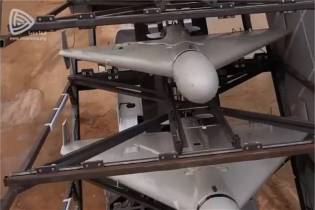
Real drones, like the Shahed-136 loitering munition, are inexpensive to produce and can carry a warhead. They pose a genuine threat, demanding a response. Alongside these, Iran employs fake drones, sometimes little more than glorified hobby aircraft or even fireworks, specifically designed to mimic radar signatures or create visual clutter.
This combination generates significant 'noise' on radar screens, making it incredibly difficult for operators to distinguish between a genuine threat and a decoy. The sheer volume of incoming objects forces air defense systems to engage everything, accelerating the depletion of precious interceptor missiles.
What real people think
Mostly positiveSourced from Reddit, Twitter/X, and community forums
The online military and technology communities largely agree that Iran's cheap drone strategy poses a significant and unsustainable challenge to US and allied air defense systems, highlighting a critical cost asymmetry problem that demands urgent solutions.
“Problem is with counter measures is they cost orders of magnitude more and take far longer to make. Iran is going to exhaust our anti missiles and anti drone defenses and then send swarms of them at e”
Reddit user
“In 2025 96 THAAD missiles were produced. That's like a days worth in this conflict.”
Reddit user
Many users emphasize the severe economic imbalance, noting that countermeasures are orders of magnitude more expensive and take far longer to produce than the drones they're designed to stop.
Concerns are raised about the limited production capacity of high-end interceptor missiles, with some pointing out that annual production numbers might only cover a few days of intense conflict.
There's a strong sentiment that Iran's strategy aims to exhaust anti-missile and anti-drone defenses before launching larger swarms, indicating a calculated long-term approach.
Related discussions
Iran's Attack Drones and Missiles Put US Military Under Unexpected Strain
r/MilitaryDoes Iran really loosing its Drone/Ballistic Missile Capabilty?
r/MilitaryIs Iran is depleting the US stock of missile defenses, or is the US just clearing the old inventory to make way for the new stuff?
r/IRstudiesUS air defenses may not be able to intercept many of Iran’s one-way drones
r/technologyAre Iranian strike capabilities really as degraded as the U.S. claims? An analysis of the Iran war so far by u/tphuang
r/LessCredibleDefenceCost Comparison: Iranian Drones vs. US Interceptors
~$20,000
Cost of one Shahed-136 Drone (as of early 2026)
Orders of Magnitude Higher
Cost of one US Interceptor Missile
The New York Times, Fox News, NPR (2026)
The Mixed Swarm Strategy Explained
The mixed swarm strategy is more than just sending a lot of drones; it's about creating a complex, overwhelming threat picture. Iran's approach involves launching a combination of actual attack drones, which carry payloads, alongside numerous decoys. These decoys are designed to appear as legitimate threats on radar, forcing air defense systems to commit resources.
This tactic exploits the inherent caution of air defense. Every blip on the radar must be treated as a potential threat until positively identified, a process that consumes valuable time and, crucially, expensive interceptor missiles. The sheer volume of objects, real and fake, can saturate defensive capabilities, leading to difficult choices about which targets to prioritize.
The ultimate goal is not necessarily to inflict massive damage with each individual drone, but to systematically deplete the defender's interceptor stockpiles. This makes future, more potent attacks potentially easier to execute and significantly raises the economic cost of defense for the United States and its allies.
Evolution of Asymmetric Drone Warfare
Emergence of Low-Cost Drone Threat
Iran and its proxies begin deploying increasingly capable, yet inexpensive, loitering munitions across the Middle East, signaling a shift in regional conflict dynamics and challenging traditional air defense paradigms.
Recognition of Cost Asymmetry
Military analysts and defense officials publicly acknowledge the severe economic imbalance between cheap attack drones and expensive interceptor missiles, raising concerns about long-term sustainability and defense budgets.
Escalation of Mixed Swarm Tactics
Iran intensifies its use of combined real and decoy drone attacks, notably exemplified by incidents like the Manama, Bahrain attack, to further strain US and allied air defense resources and expose vulnerabilities.
Why This Works Against Air Defense Systems
This asymmetric strategy works because it exploits fundamental vulnerabilities in current air defense doctrines. Firstly, small, slow-moving drones can be difficult for conventional radar systems to detect and track, especially in complex terrain or against ground clutter. Their low radar cross-section makes them stealthier than larger aircraft or missiles.
Secondly, the sheer volume of a swarm, whether real or mixed with decoys, can overwhelm the processing capacity of even advanced air defense systems. Human operators face cognitive overload, and automated systems struggle with target discrimination, leading to increased engagement of non-threats.
Most critically, the cost-exchange ratio is devastating. It is economically irrational to use a multi-million-dollar interceptor missile against a drone costing tens of thousands. However, the alternative – allowing the drone to strike its target – is often unacceptable. This forces defenders into an economically unsustainable position, where every successful interception is also a financial loss.
US THAAD Missile Production vs. Daily Conflict Demand (2025)
Reddit / Military, based on expert commentary (2026)
The Decoy Problem: How Defenders Can't Ignore Fakes
The inclusion of decoys is a brilliant, albeit frustrating, component of Iran's strategy. Air defense protocols dictate that every detected object must be treated as a potential threat until it can be definitively identified as benign. This means that even a simple, non-threatening decoy can trigger a full defensive response.
Defenders are forced to expend valuable resources – not just interceptor missiles, but also radar time, personnel attention, and intelligence assets – on objects that pose no real danger. This further accelerates the depletion of stockpiles and diverts attention from genuine threats. The psychological impact is also significant, creating a constant state of alert and decision fatigue.
Ignoring a potential decoy carries an unacceptable risk: what if it's not a decoy? This dilemma is precisely what Iran exploits. The cost of being wrong is too high, compelling defenders to engage, even when they suspect they are being tricked.
Real-World Examples: How This Has Played Out
The effectiveness of Iran's drone strategy has been demonstrated repeatedly in recent conflicts. An Iranian drone attack this month in Manama, Bahrain, serves as a stark example. While the damage from individual drone strikes might be localized or described as 'pinpricks,' their cumulative effect is strategically significant.
These attacks force the United States and its allies to deploy and expend their most advanced and expensive air defense assets. Over the Gulf region, relatively cheap Iranian drones are consistently being taken out by costly and difficult-to-manufacture U.S. interceptor missiles. This constant expenditure, even against seemingly minor threats, is unsustainable in the long term.
The strategic success for Iran lies not in overwhelming firepower, which remains lopsided in favor of the US, but in creating an economic and logistical burden. Each interception, while a tactical success for the defender, contributes to a larger strategic problem of resource depletion and rising defense costs.
The Asymmetric Threat

Strategic Implications and Counter-Strategies
The strategic implications of Iran's drone tactics are profound. This approach shifts the burden of cost squarely onto the defender, forcing a re-evaluation of air defense procurement, doctrine, and budgets. It highlights a critical vulnerability for advanced militaries that rely on expensive, high-tech solutions against low-tech, mass-produced threats.
To counter this, the United States and its allies must pivot towards more economically sustainable defensive measures. This includes accelerating the development and deployment of cheaper, directed-energy weapons like lasers, which offer a virtually unlimited 'magazine' at a fraction of the cost per engagement.
Electronic warfare capabilities to jam and disrupt drone control signals are also crucial.
Furthermore, improved intelligence, surveillance, and reconnaissance (ISR) are vital to preempt drone launches and target manufacturing facilities. A layered defense approach that doesn't solely rely on expensive kinetic interceptors, but integrates electronic warfare, cyber capabilities, and cheaper kinetic options, is the only viable long-term solution to this evolving threat.
The Limits of Asymmetric Drone Warfare
Further Reading
An in-depth podcast exploring the strategic impact and technical aspects of Iran's drone program on modern conflict.
NPR's analysis of how low-cost drones are forcing a re-evaluation of defense strategies by major powers.
A New York Times report on the ongoing role of inexpensive drones as a critical factor in regional conflicts.
An opinion piece detailing the strategic failures of advanced militaries against Iran's cost-effective drone tactics.
BBC's visual explanation of Iran's drone proliferation and its destabilizing effects in the region.
Sources
- 1.How Iran’s cheap drones are changing warfare
- 2.Iran's cheap drones are draining costly US and Israeli interceptors | Fox News
- 3.Cheap drones are reshaping modern warfare — and catching the U.S. off guard
- 4.Cheap Drones Remain Wild Card in Iran war - The New York Times
- 5.Opinion | Iran’s cheap, deadly drones have done the U.S. a favor
- 6.What to Know About Iran’s Drones, Which Are Cheap to Launch but Expensive to Intercept - The New York Times
- 7.Why the World’s Top Military Lost Badly to Iran’s Budget Drones in 2026 - eCommerce Basis
- 8.How Iran is using cheap drones to cause chaos across the Middle East - BBC News
- 9.r/Military on Reddit: Iran's Attack Drones and Missiles Put US Military Under Unexpected Strain
- 10.r/Military on Reddit: Does Iran really loosing its Drone/Ballistic Missile Capabilty?
- 11.r/IRstudies on Reddit: Is Iran is depleting the US stock of missile defenses, or is the US just clearing the old inventory to make way for the new stuff?
- 12.r/technology on Reddit: US air defenses may not be able to intercept many of Iran’s one-way drones
- 13.r/LessCredibleDefence on Reddit: Are Iranian strike capabilities really as degraded as the U.S. claims? An analysis of the Iran war so far by u/tphuang
- 14.r/Military on Reddit: The Dangerous Mismatch Between American Missiles and Iranian Drones. The US has only so many expensive munitions to send after Iran’s cheap and plentiful arms.
- 15.Iran War Shows the US and Top Allies Are Falling Behind in Drone Defense - Business Insider
Rate this article
Your feedback helps surface the best content
Related articles
Have a question? Get your own article.
Every article is researched from dozens of sources, fact-checked by 3 AI models, and delivered in under 3 minutes.
Triple-Verified — 1 correction applied across 1 verification stages applied