Iran's Nuclear Program in 2026: Status, Sanctions, and Geopolitical Impact

March 26, 2026 · 6 min read
···
- Iran's nuclear program is rapidly advancing beyond JCPOA limits.
- IAEA inspections are severely restricted, hindering oversight.
- Diplomatic efforts are stalled amidst escalating military tensions.
- The risk of regional conflict and proliferation is critically high.
As of March 2026, Iran's nuclear program has significantly advanced its enrichment capabilities and missile infrastructure, operating largely outside international oversight. The Joint Comprehensive Plan of Action (JCPOA) is effectively defunct, with major powers declaring it terminated or violated. This has led to heightened military tensions and a diplomatic deadlock, raising serious proliferation concerns.
Key Takeaways
- Iran has surpassed JCPOA enrichment and stockpile limits, with advanced technological capabilities.
- IAEA access is severely curtailed, preventing full verification of Iran's nuclear activities.
- The US has deployed significant military assets to the region following Iranian missile infrastructure reconstruction efforts.
- Despite recent talks, diplomatic solutions remain elusive, with international actors deeply divided.
Watch Out For
- ⚠Further escalation of enrichment levels or overt weaponization efforts by Iran.
- ⚠Direct military confrontation between Iran and the US or its allies.
- ⚠The complete collapse of any remaining international diplomatic channels.
- ⚠The potential for a regional nuclear arms race.
Hero Image
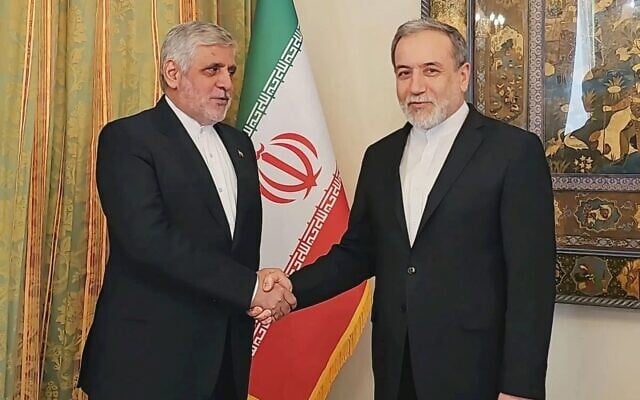
What You Need to Know: The Red Lines of Nuclear Proliferation
Understanding the gravity of Iran's nuclear program requires clarity on what constitutes a proliferation risk. A peaceful nuclear program focuses on energy generation, typically enriching uranium to low levels (under 5%) and maintaining full transparency with international inspectors. Any deviation from these norms signals a potential shift towards weaponization.
The critical indicators of a dangerous nuclear program include enrichment levels exceeding 20%, especially approaching weapons-grade 90%. Stockpiling significant quantities of highly enriched uranium, developing advanced centrifuges, and restricting access for the International Atomic Energy Agency (IAEA) are all red flags.
Beginners often misunderstand that even a 'breakout capability' – the ability to quickly produce weapons-grade material – is a severe proliferation concern, not just the possession of a finished weapon. Iran's current activities touch on all these critical indicators.
What real people think
DividedSourced from Reddit, Twitter/X, and community forums
Online communities reflect a deeply divided and anxious global sentiment regarding Iran's nuclear program. Discussions range from calls for immediate military intervention to skepticism about diplomatic efforts, highlighting the ongoing diplomatic deadlock and the perceived proximity of Iran to nuclear weapon capability.
Discussions frequently delve into advanced nuclear weapon theory and design, with users openly debating how close Iran is to having a weapon. There's a clear undercurrent of concern about the technical capabilities Iran is developing.
Many users express frustration over the 'ongoing diplomatic deadlock' and the perceived failure of international efforts to contain Iran's nuclear ambitions. The sentiment is often one of resignation or alarm.
Some posts reflect extreme positions, including direct threats of military action against Iran. This indicates a segment of the online community believes military intervention is imminent or necessary to prevent Iran from acquiring nuclear weapons.
Reports of a 'deal was within reach' during recent US-Iran talks in March 2026 sparked mixed reactions, with some hopeful for diplomacy while others remained skeptical, citing past failures and US negotiation preparedness.
Current Enrichment Status: Beyond the Red Lines
Iran's nuclear program in early 2026 stands at a critical juncture, having demonstrably moved beyond the limits set by the defunct Joint Comprehensive Plan of Action (JCPOA). The nation's technological capabilities in uranium enrichment and conversion are now significantly advanced. This progress is a direct result of Iran's decision to disregard previous international agreements.
While specific, verified 2026 figures for highly enriched uranium stockpiles are elusive due to restricted IAEA access, the consensus among intelligence agencies is that Iran possesses sufficient material for multiple nuclear devices if further enriched. The focus has shifted from adhering to the 3.67 percent enrichment cap to developing the infrastructure for higher-grade material.
This rapid advancement shortens the 'breakout time' considerably, a major concern for global security.
The focus has shifted from adhering to the 3.67 percent enrichment cap to developing the infrastructure for higher-grade material.
Key Indicators of Iran's Nuclear Program (Early 2026)
Beyond JCPOA Limits
Uranium Enrichment Level
Severely Restricted
IAEA Inspection Access
Expanding
Advanced Centrifuge Deployment
Critically High
Weaponization Concern
PIR Center Report Series (№48), Arms Control Association, ISW
Timeline of Major Escalations: 2015 to Present
JCPOA Signed
The Joint Comprehensive Plan of Action (JCPOA) was signed, imposing strict limits on Iran's nuclear program in exchange for sanctions relief.
US Bombing and IAEA Suspension
The United States bombed three Iranian nuclear sites with bunker-buster bombs. Iran subsequently suspended cooperation with the IAEA.
E3 Trigger Mechanism
France, Germany, and the UK triggered a dispute resolution mechanism, signaling Iran's non-compliance with the JCPOA.
JCPOA Declared Terminated
Iran, Russia, and China declared the JCPOA terminated and UN sanctions legally void, further eroding the agreement's framework.
US Military Buildup & Vance Statement
The largest US military buildup in the Middle East since the early 2000s occurred. US Vice President JD Vance made a statement regarding Iran's non-cooperation with IAEA inspections.
Diplomatic Deadlock Continues
A UK security adviser attended US-Iran talks, judging a deal was 'within reach,' yet US negotiators were deemed 'ill-prepared,' highlighting ongoing diplomatic challenges.
Reactor Development and Military Capability Concerns
Beyond uranium enrichment, Iran's reactor development and missile capabilities present significant military concerns. The PIR Centre's February 2026 report specifically assesses Iran's technological capabilities in uranium enrichment and conversion, alongside its prospects for nuclear weapons development.
This includes a review of its missile delivery systems, which are crucial for any potential weaponization.
Alarmingly, Iran is actively attempting to leverage physical damage to its missile infrastructure as a 'strategic catalyst' for reconstruction. This suggests a determined effort to rebuild and enhance its delivery systems, directly contributing to the perceived threat.
While Iran maintains religious and doctrinal restrictions against nuclear weapons, its actions on the ground contradict these assurances, fueling international skepticism.
International Diplomacy

International Response: A Fragmented Front
The international community's response to Iran's nuclear program in 2026 is characterized by a fragmented front. The United States maintains a firm stance, supporting IAEA inspections to verify Iranian compliance and deploying significant military assets to the Middle East. US Vice President JD Vance's February 2026 statements underscored Washington's commitment to preventing a nuclear-armed Iran.
European powers, including France, Germany, and the UK, have expressed deep concern, triggering dispute mechanisms in response to Iran's violations. However, their ability to exert unified pressure is complicated by the US withdrawal from the JCPOA and the subsequent declaration by Iran, Russia, and China that the agreement is terminated.
Israel, viewing Iran's nuclear program as an existential threat, continues to advocate for robust action, including military options if diplomacy fails. The admission by WHO officials that they are preparing for possible nuclear weapon use in Iran highlights the global alarm.
IAEA Inspection Access and Transparency Issues
Transparency is paramount for international oversight, and Iran's consistent refusal to cooperate fully with IAEA inspections is a critical failing. Following the US bombing of Iranian nuclear sites in June 2025, Iran suspended operations with the IAEA, severely limiting the agency's ability to monitor its nuclear activities.
This lack of access prevents independent verification of Iran's claims and fuels suspicions about the true nature and extent of its program.
The United States explicitly supports the IAEA's mandate to verify Iranian compliance. However, without Iran's full cooperation, the IAEA's reports are incomplete, leaving significant gaps in the international community's understanding. This opacity is a deliberate strategy by Iran, allowing it to advance its program with minimal external scrutiny, thereby increasing proliferation risks.
Diplomatic Prospects and Negotiation Outlook
The diplomatic prospects for resolving the Iranian nuclear dossier in 2026 remain bleak, mired in an 'ongoing diplomatic deadlock.' While a UK security adviser reportedly attended US-Iran talks in March 2026 and judged a deal 'within reach,' this optimism is tempered by critical assessments. Reports indicate that US negotiators were 'ill-prepared' for serious nuclear negotiations, undermining the potential for a breakthrough.
The fundamental disagreements persist: Iran demands full sanctions relief and security guarantees, while the US and its allies insist on verifiable, long-term restrictions on Iran's nuclear program. The termination of the JCPOA by key players has removed the primary framework for negotiations, leaving a vacuum.
Without a renewed, credible diplomatic channel and a willingness from all sides to compromise, the outlook for a peaceful resolution is dim.
What This Means for Global Energy and Security
The unchecked advancement of Iran's nuclear program carries profound implications for global energy markets and international security. A nuclear-armed Iran would fundamentally alter the geopolitical landscape of the Middle East, potentially triggering a regional arms race as other nations seek their own deterrent capabilities.
This instability would inevitably impact oil prices and supply chains, given the region's critical role in global energy.
From a security perspective, the risk of miscalculation or accidental escalation is alarmingly high. The WHO's admission that it is preparing for possible nuclear weapon use in Iran underscores the severity of the situation. The international community faces a stark choice: either find a way to rein in Iran's nuclear ambitions through concerted diplomatic pressure or confront the dangerous reality of a potentially nuclear-armed state in one of the world's most volatile regions.
Further Reading
A detailed 2026 report assessing Iran's technological capabilities in uranium enrichment and conversion.
Analysis of Iran's efforts to reconstruct its missile infrastructure and its strategic implications.
An overview of Iran's nuclear program, its history, and current status from a leading non-proliferation organization.
A recent intelligence update on Iran's activities and regional impact.
A critical perspective on the effectiveness of recent US diplomatic efforts concerning Iran.
Sources
- 1.№ 7 (55), 2026. PIR Center Report Series: “The Nuclear Program of the Islamic Republic of Iran: An Assessment of Its Current Status and Capabilities” - PIR Center
- 2.Iran - Situation Assessment (February 2026): The Race to Rebuild the Nuclear and Missile Array, Casual Terror and the CRINK
- 3.The Status of Iran's Nuclear Program | Arms Control Association
- 4.Nuclear program of Iran - Wikipedia
- 5.Iran Update, February 26, 2026 | ISW
- 6.Iran's Nuclear Program — Comprehensive UPSC Notes | Legacy IAS
- 7.How advanced is Iran’s nuclear program? Here’s what we know. - WTOP News
- 8.Iran and Nuclear Weapons Production | Congress.gov | Library of Congress
- 9.r/navy on Reddit: What even is 2026 at this point . Iranian spokesman today” Trump you are fired you are familiar with this sentence thank you for your attention to this matter” Also T minus 24 hours for the president’s deadline for them to open the straight or face mass attacks on power plants
- 10.r/nuclearweapons on Reddit: Let's discuss the Iranian Nuclear Weapon Program Here
- 11.r/AskTheWorld on Reddit: Iran in 2026: What the World Needs to Know
- 12.r/nuclearweapons on Reddit: How Close Is Iran to Having a Nuclear Weapon?
- 13.Opinion | Iran’s ‘Nuclear’ Option - The New York Times
- 14.U.S. Negotiators Were Ill-Prepared for Serious Nuclear Negotiations with Iran | Arms Control Association
- 15.WHO officials admit they are preparing for possible nuclear weapon use in Iran | The Independent
Rate this article
Your feedback helps surface the best content
Related articles
Have a question? Get your own article.
Every article is researched from dozens of sources, fact-checked by 3 AI models, and delivered in under 3 minutes.
Triple-Verified — 2 corrections applied across 1 verification stages applied