- Yes, for scientific advancement.
- Modest cost for deep space.
- Contingent on sample return.
- Boosts Japan's space standing.
Should Japan commit significant resources to a Martian moon sample-return mission?
Key Takeaways
- MMX aims to return 10g of Phobos material to Earth.
- Mission will clarify Martian moon origins and early solar system evolution.
- Positions Japan as a leading player in complex deep-space missions.
Watch Out For
- ⚠Landing on Phobos's low gravity is a significant technical challenge.
- ⚠Failure to successfully return the sample negates primary scientific value.
- ⚠Total mission costs could exceed initial development estimates.
MMX Mission Snapshot
10g
Target Sample Weight
2026
Planned Launch Year
JAXA, Associated Press
The MMX mission's true value isn't just in the science it promises, but in demonstrating Japan's growing capability to execute complex deep-space missions independently.
What the MMX Mission Actually Does
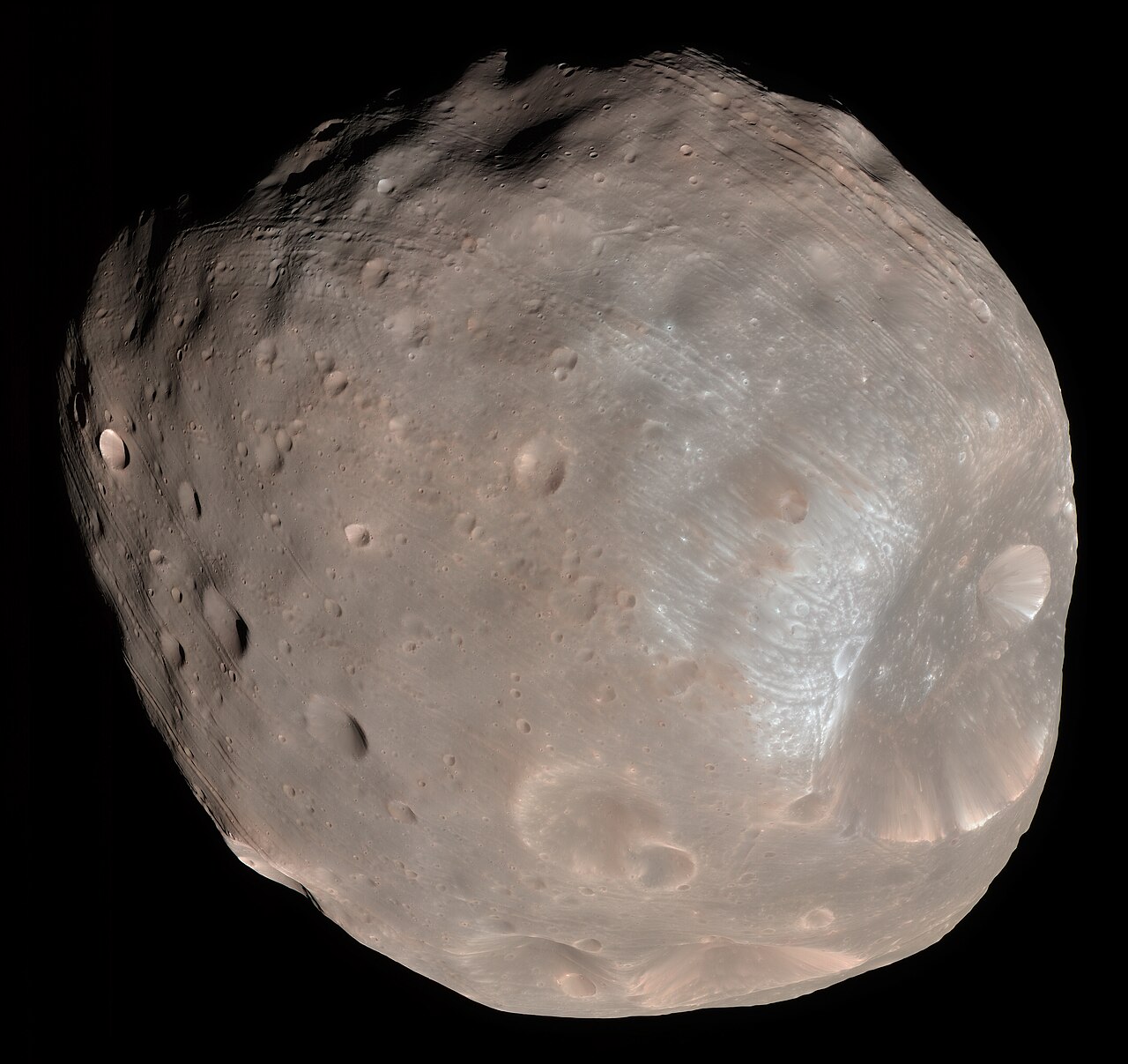
JAXA’s Martian Moons eXploration (MMX) mission, launched in October 2026, targets Mars’s two small moons, Phobos and Deimos. Its primary objective is to collect a sample from Phobos and return it to Earth. This marks a critical step in understanding the formation of the Martian system.
The mission involves a 4.2 to 4.5-ton spacecraft designed to perform a delicate landing on Phobos. Phobos has only about one-1,000th of Earth’s gravity, making surface operations exceptionally challenging. The spacecraft will collect approximately 10 grams of surface material before beginning its journey back to Earth.
Beyond sample collection, MMX will conduct extensive observations of both Phobos and Deimos. These observations will provide crucial context for the returned samples and enhance our understanding of these enigmatic celestial bodies. The mission represents a significant leap in Japan's deep-space exploration capabilities.
Many assume the MMX mission is primarily about finding life on Mars, when its core scientific objective is actually to understand the formation and evolution of the Martian moons and the early solar system.
The Case For: What Science Gains from Martian Moon Samples
The MMX mission’s scientific rationale is compelling, focusing on a fundamental question in planetary science: the origin of the Martian moons. Two main theories currently exist for Phobos and Deimos’s formation. One posits they are captured asteroids, gravitationally snared by Mars. The other suggests they formed from ejecta after a giant impact on Mars, similar to Earth’s moon.
Analyzing returned samples will provide definitive evidence to distinguish between these theories. Rocks formed from Martian ejecta would show chemical alteration from the impact heat and contain Martian mantle material. Conversely, captured asteroids would exhibit compositions more consistent with outer solar system bodies.
This distinction will fundamentally alter our understanding of planetary moon formation processes.
Beyond the moons themselves, MMX offers insights into the early solar system. The material on Phobos could preserve pristine records of the conditions and processes that shaped planets billions of years ago. Understanding material transport in the early solar system is crucial for piecing together the broader narrative of planetary evolution.
The mission’s observations of the moons will complement the sample analysis, providing a complete picture.
MMX Mission Concept
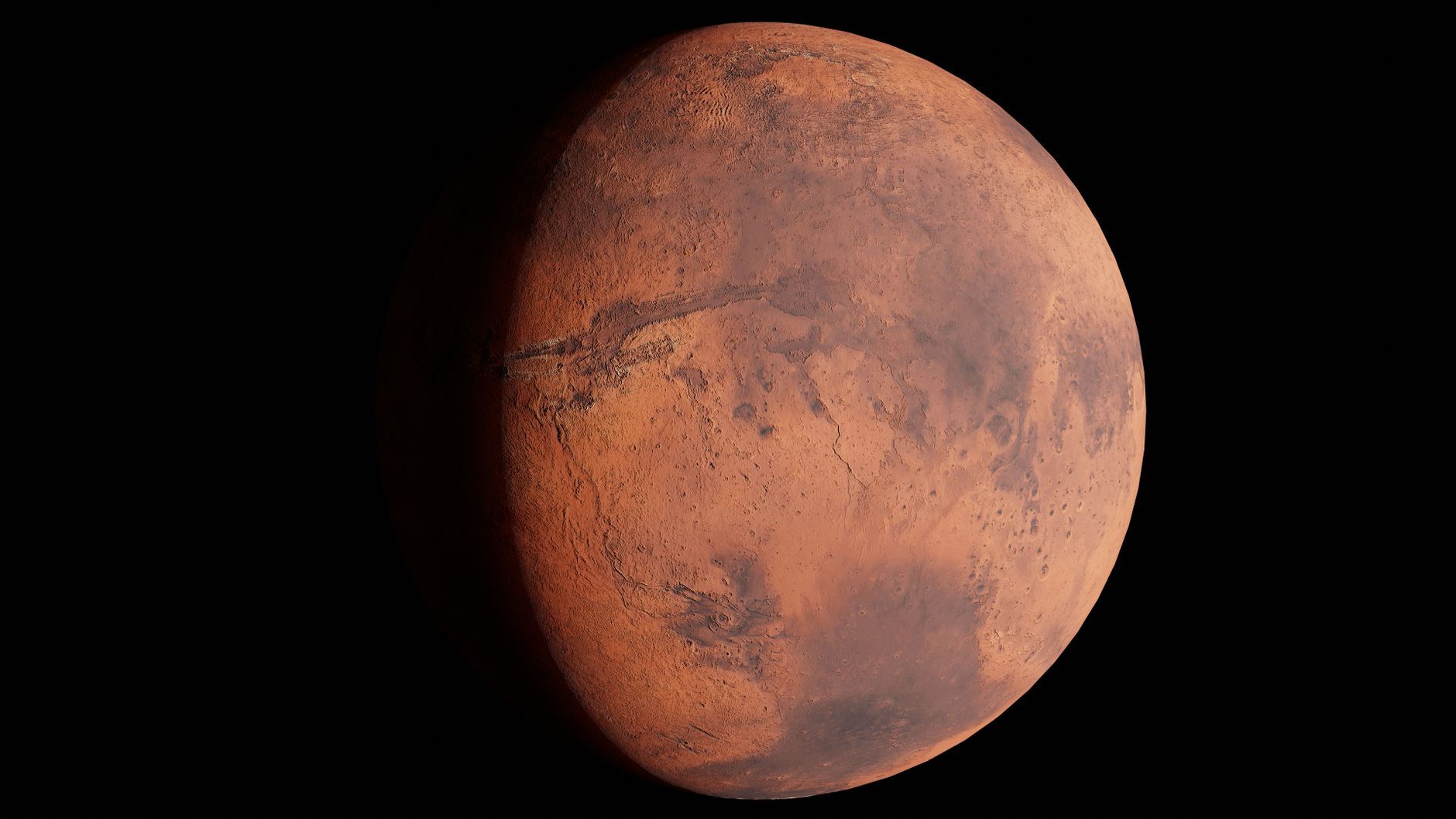
By 2030, the MMX mission's returned samples will have definitively settled the debate on whether Phobos and Deimos are captured asteroids or formed from Martian ejecta.
The Case Against: Cost, Risk, and Opportunity
Despite its scientific promise, the MMX mission carries substantial costs and inherent risks. JAXA reported a development cost of 55.3 billion yen, approximately $350 million USD. However, the Associated Press cited a higher figure of $578 million for the total mission, indicating potential cost escalation or a broader scope of expenses.
The technical challenges are immense. Landing on Phobos, with its extremely low gravity, demands unprecedented precision and autonomous capabilities. The risk of mission failure, particularly during the critical sample collection and return phases, is significant. Any contamination of the sample or failure to return it intact would severely undermine the mission's primary scientific objective.
These funds represent an opportunity cost. The resources allocated to MMX could have been directed towards other planetary science initiatives, Earth-observing missions, or even domestic scientific research. While the scientific gains are high, the investment is concentrated on a single, high-risk endeavor.
Planetary scientists focused on solar system origins stand to gain immensely, but missions requiring larger, more expensive sample returns from Mars itself might see their funding prospects slightly diminished as MMX demonstrates a more 'lean' approach to sample acquisition.
MMX Technical Challenges
1/2000th
Phobos Gravity vs. Earth
55.3 billion yen
Development Cost (JAXA)
JAXA, Associated Press
Bottom Line
JAXA's MMX mission is a worthwhile scientific endeavor. Its relatively contained cost, especially compared to other deep-space sample returns, and its potential for groundbreaking discoveries about the Martian system make it a valuable investment. The mission directly addresses a fundamental question about planetary formation, which has implications far beyond Mars.
While the technical risks are real, the strategic value of demonstrating Japan's independent deep-space capabilities cannot be overstated. Assuming the critical sample return is successful, MMX will deliver an unparalleled scientific payoff, solidifying Japan's position at the forefront of space exploration.
What Reddit is saying
r/esa and r/interestingasfuck lean enthusiastic about MMX, while r/Mars voices skepticism about NASA's cancelled sample return project and r/SpaceXMasterrace stresses the overlooked competition between missions.
MMX mission – The journey to the Martian moon Phobos - Get ready! ... Japan’s MMX mission aims to retrieve samples from Mars’s mysterious moon. They could reveal how it formed—and hold pieces of Mars
Read full discussion →Wow... what a nice mars moon mission 😲👍 Share ... This is awesome! Go on Japan! ... Germany and France, who bilaterally provide the rover to the Japanese mission. ... We’re livestreaming the launch
Read full discussion →Russia also launched a Phobos sample return mission in 2011, but it failed and got stranded in Earth's orbit. ... One funny thing about Fobos-Grunt is that the reentry capsule would have no parac
Read full discussion →But let him go there, perhaps (hopefully) never to return. ... Or sooner if Arkady Bogdanov can help it. ... Nadia approves. ... Before that happens though it will likely become a new set of rings. =)
Read full discussion →Curated from 7 active threads across r/interestingasfuck, r/esa, r/SpaceXMasterrace, r/Astronomy
What people are saying on X
Supporters outnumber sceptics overwhelmingly, with no visible criticism of the mission's cost in this set of posts.
The posts on this thread are overwhelmingly celebratory launch coverage rather than debate about cost, with agencies, space outlets and JAXA-linked accounts sharing the H3 launch, separation from the upper stage and the mission's sample-return goals at Phobos. No post in the set questions whether the mission is worth its cost, so the 'worth the cost?' framing in the article is not reflected in what people are saying here. The main substantive interest is scientific, centred on settling whether Phobos is a captured asteroid or debris from a giant Martian impact.
The countdown is on for the October 20 launch of @JAXA_jp's Martian Moons eXploration (MMX) mission from Tanegashima Space Center 🚀!...
LAUNCH! JAXA's H3-24L launches MMX to Phobos. Overview: nasaspaceflight.com/2026/10/mmx-la…
JAXA Martian Moons eXploration (MMX) mission to Mars to survey the two moons; Phobos and Deimos, and collect a sample to bring back to Earth.
🚀🔴 MMX : 3, 2, 1… Décollage ! La fusée H3 F10 s’élance depuis le Centre spatial de Tanegashima....
Curated from 12 recent posts using deliberate viewpoint balancing
Further Reading
Official mission overview from the Japan Aerospace Exploration Agency.
Detailed report on the mission's launch and significance.
European Space Agency's overview of their collaboration on MMX.
Scientific paper discussing the implications of MMX for moon formation theories.
Sources
- 1.Martian Moons eXploration: MMX - JAXA
- 2.Japan launches historic $578 million mission to Mars moon Phobos, return samples to Earth: Timeline, significance & more | Mint
- 3.MMX spacecraft launched for world’s 1st Mars moon mission | The Asahi Shimbun: Breaking News, Japan News and Analysis
- 4.Japan to launch Martian moon mission on Tuesday - United States
- 5.Japan launches first mission to collect samples from Phobos | Межа
- 6.Japan to launch Martian moon mission on Tuesday | NHK WORLD-JAPAN News
- 7.ESA - MMX factsheet
- 8.Martian Moons eXploration - Wikipedia
- 9.ESA - Mars moon lander set to launch on 19 October
- 10.Mission Overview/Mission Flow | MMX - Martian Moons eXploration
- 11.JAXA’s MMX Enroute to Mars To Return Samples of Phobos
- 12.phobos sample return: Topics by Science.gov
- 13.Degasing of Phobos in a giant impact scenario: Implications for the MMX sample return mission - ScienceDirect
- 14.‘Once-in-a-lifetime chance’: Japan launches historic mission to collect rocks from Mars’s moon Phobos | Japan | The Guardian
- 15.Japan's Mars Moon Mission: Unlocking Mars' Secrets with Phobos Sample Return (2026)
Rate this article
Your feedback helps surface the best content
Related articles
Have a question? Get your own article.
Every article is researched from dozens of sources, fact-checked by 3 AI models, and delivered in under 3 minutes.
Triple-Verified — 2 corrections applied across 3 verification stages applied