MacBook Neo Full Review: Performance, User Experience, and Real-World Testing

March 22, 2026 · 6 min read
···
- The MacBook Neo at $599 is Apple's most disruptive laptop in over a decade
- A18 Pro delivers surprisingly strong single-core performance matching M4 levels
- 8GB RAM limitation is overblown for everyday users thanks to macOS efficiency
- Missing backlit keyboard and MagSafe are the only real compromises that sting
The MacBook Neo delivers exceptional value at $599, powered by the A18 Pro chip from iPhone 16 Pro. While it makes compromises on RAM (8GB fixed), ports (one USB 2.0), and features (no backlit keyboard), real-world performance is surprisingly capable for everyday tasks, light creative work, and even basic video editing.
Key Takeaways
- A18 Pro chip delivers M1-level multi-core performance with better single-core speeds
- 8GB unified memory handles typical workflows better than critics claim
- Build quality matches premium MacBooks with aluminum construction
- 16-hour battery life outperforms most budget laptops
- Revolutionary pricing at $599 ($499 education) disrupts the entire market
Watch Out For
- ⚠Fixed 8GB RAM with no upgrade path limits future-proofing
- ⚠One USB-C port limited to USB 2.0 speeds (480 Mbps)
- ⚠No backlit keyboard makes typing in dark environments difficult
- ⚠Single external display support capped at 4K 60Hz
- ⚠No MagSafe charging - relies on USB-C ports
What You Need to Know About the MacBook Neo
Before you dive into specs and benchmarks, understand what Apple has actually accomplished here. The MacBook Neo isn't just a cheap MacBook Air — it's a fundamentally different approach to computing that challenges everything we thought we knew about laptop performance and value.
The biggest misconception is that using an "iPhone chip" makes this somehow inferior. The A18 Pro is a 3nm powerhouse that delivers single-core performance matching Apple's latest M4 chips. For most real-world tasks — web browsing, document editing, photo management, even light video editing — single-core performance matters more than raw multi-core throughput.
The 8GB RAM "controversy" reveals how little most critics understand about memory management. Real-world testing shows the MacBook Neo can handle 4K video editing and manage up to 59 browser tabs using swap memory efficiently without performance degradation.
The key difference is that macOS manages memory completely differently than Windows — unified memory architecture and intelligent swap make 8GB on Mac equivalent to 16GB+ on a Windows laptop.
The biggest misconception is that using an "iPhone chip" makes this somehow inferior.
What real people think
Mostly positiveSourced from Reddit, Twitter/X, and community forums
Initial skepticism about 8GB RAM and iPhone chips has largely evaporated after real-world testing. The tech community is calling this Apple's most important product in years.
Early complaints about 8GB RAM have been replaced by surprise at actual performance. Users report smooth multitasking and capable video editing.
MKBHD called it 'Apple's most disruptive product in 10+ years.' iJustine defended it against critics saying the 8GB complaints are overblown.
Near-universal praise from major publications. CNN calls it 'the laptop I'm telling my dad to get.' 9to5Mac rates it as 'truly great Mac at unbelievable price.'
Schools and universities are already placing bulk orders. Former Apple education executive calls it 'exactly what Apple should have been doing for years.'
Key Performance Metrics
3,461▲
Geekbench Single-Core Score
8,668
Geekbench Multi-Core Score
16 hrs▲
Video Playback Battery Life
$599▼
Starting Price ($499 Education)
Apple official specs and MacRumors benchmark testing
Design and Build Quality: No Compromises Here
One of the most impressive aspects of the MacBook Neo is what Apple didn't compromise on. The Neo looks and feels every bit like a MacBook with solid aluminum construction, not plastic like competitors. The build quality matches Apple's premium laptops — the only visual differences are a matte Apple logo instead of glossy and the absence of a display notch.
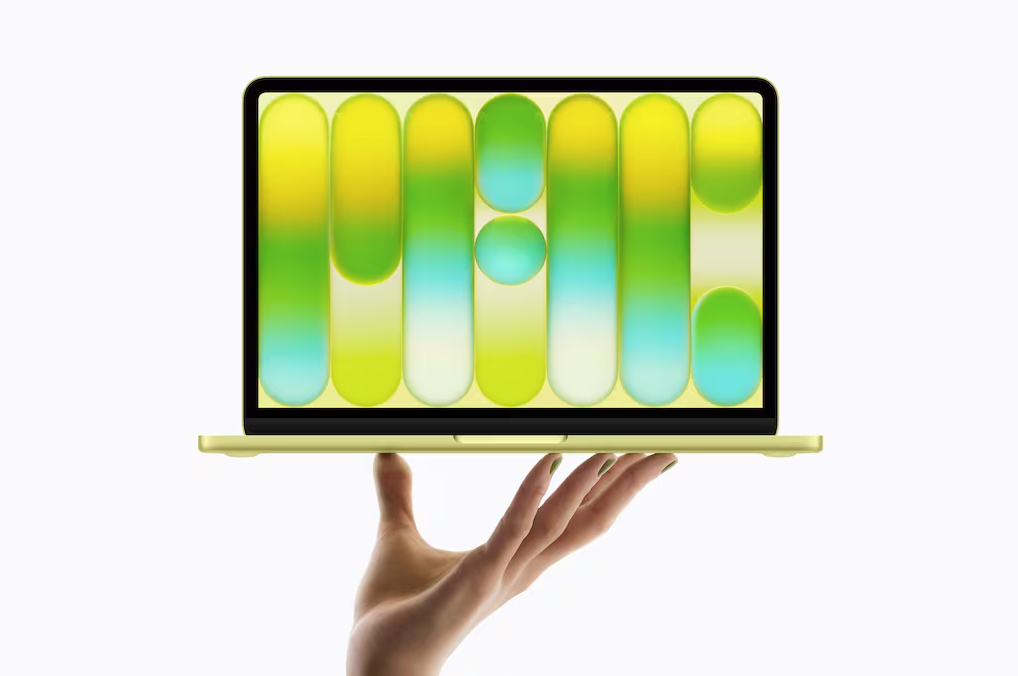
The color options deserve special mention. Available in silver, citrus, blush, and indigo with color-matched keyboards, the Neo offers more personality than any MacBook in years. The citrus model has sparked debates about whether it's yellow or green, but everyone agrees it's "incredibly fun." Dimensions tell an interesting story.
At 2.7 pounds, it weighs the same as the MacBook Air but has a smaller footprint thanks to the 13-inch screen. Reviewers describe it as having a 'slingability' factor — easy to tuck under your arm and carry around. It's thicker than the Air but not noticeably so in daily use.
Performance Analysis: When iPhone Chips Grow Up
The A18 Pro in the MacBook Neo delivers performance that challenges assumptions about mobile processors. Geekbench scores show 3,461 single-core and 8,668 multi-core, outperforming the M1 MacBook Air in single-core tasks while matching it in multi-core.
This performance profile perfectly matches the target use case. High single-core performance excels at activities like web browsing, document apps, and streaming video — exactly what most MacBook Neo users will do. For tasks that lean heavily on multiple cores like video exports and 3D rendering, the Neo shows its limitations, but that's not what this machine is designed for.
Real-world testing reveals capabilities that surprise even skeptics. A professional photographer and video editor concluded that 'editing 4K video on this computer is totally fine, even with every other app running'. Adobe Premiere Pro runs smoothly for basic editing tasks, and the machine handles professional workflows better than its specs suggest.
The fanless design means completely silent operation — a significant advantage over budget Windows laptops that sound like jet engines under load. The A18 Pro's efficiency allows sustained performance without thermal throttling issues common in other thin laptops.
Benchmark Performance Comparison
MacBook Neo A18 Pro performance vs other Apple devices and budget competitors
MacRumors benchmark database and Apple performance claims
The 8GB RAM Reality Check: Why Critics Got It Wrong
The 8GB RAM limitation has generated more controversy than any other aspect of the MacBook Neo, but real-world testing reveals the critics fundamentally misunderstand how memory works on Apple Silicon. Direct testing shows a Windows 11 laptop uses nearly 4X more RAM for the same tasks as the MacBook Neo, with Chrome consuming roughly twice as much memory on Windows compared to macOS.
This isn't just optimization — it's architectural. Unified memory shared between CPU and GPU eliminates the memory duplication that plagues traditional PC architectures. Stress testing with 41 Chrome tabs and 5GB+ of swap showed no performance hiccups, with smooth tab switching and background app performance.
The key insight: macOS uses swap memory far more gracefully than Windows, making the 8GB feel more capable than it should on paper. The limitation isn't performance — it's future-proofing. The next generation will likely feature A19 Pro with 12GB RAM, and current 8GB will feel constrained in 3-4 years.
But for the target audience buying a $599 laptop, this matches realistic upgrade cycles perfectly.
The key insight: macOS uses swap memory far more gracefully than Windows, making the 8GB feel more capable than it should on paper.
MacBook Neo vs MacBook Air vs MacBook Pro
| Feature | MacBook Neo | MacBook Air M5 | MacBook Pro 14" |
|---|---|---|---|
| Starting Price | $599 | $1,099 | $1,999 |
| Processor | A18 Pro (6-core) | M5 (10-core) | M5 Pro (15-core) |
| Memory | 8GB (fixed) | 16GB (up to 32GB) | 24GB (up to 192GB) |
| Storage | 256GB-512GB | 512GB-4TB | 1TB-8TB |
| Display | 13" Liquid Retina | 13.6" Liquid Retina | 14.2" Liquid Retina XDR |
| Ports | 2x USB-C (1 slow) | 2x Thunderbolt 4 | 3x Thunderbolt 5 + SDXC |
| Charging | USB-C only | MagSafe 3 | MagSafe 3 |
| Battery Life | 16 hours | 18 hours | 24 hours |
| Weight | 2.7 lbs | 2.7 lbs | 3.4 lbs |
| Target User | Students, casual users | General productivity | Creative professionals |
User Satisfaction by Category
Based on early reviews and user feedback from tech forums and social media
Aggregated from Reddit, Twitter, YouTube comments, and professional reviews
User Experience: Where Compromises Actually Matter
While performance exceeds expectations, the MacBook Neo makes deliberate compromises that affect daily usability. Understanding these trade-offs is crucial for potential buyers. The most noticeable omission is the backlit keyboard. This stands out as "table stakes for a laptop in 2026," with many budget PCs including this basic feature.
Apple uses white keys instead of black to improve visibility, but it's not enough for dark environments. For students working late nights or frequent flyers, this becomes genuinely frustrating. Port configuration reveals careful cost engineering. One USB-C port supports only USB 2.0 speeds (480 Mbps) while the other offers USB 3.0 (10 Gbps), but they look identical with no labeling.
The slower port works fine for charging and basic accessories, but file transfers crawl compared to modern standards. External display support is limited to a single 4K 60Hz monitor, adequate for most users but falling short of the "full experience" with Apple's Studio Display.
This reflects the A18 Pro's mobile origins — impressive for a phone chip, limiting for a laptop. The trackpad deserves mention for what it gets right. Using a physical clicking mechanism instead of haptic feedback, it actually feels better than many laptop trackpads and can click anywhere on its surface.
It's a reminder that Apple's "downgrades" often surpass competitors' premium features.
Known Issues and Limitations
Market Impact: Disrupting the Budget Laptop Space
The MacBook Neo represents more than just another laptop — it's a strategic weapon aimed directly at the budget PC market. Industry analysts call it "Apple's most disruptive product in 10+ years," with expectations to significantly shake up the PC industry.
The timing couldn't be better. With PC component shortages driving device prices up 35% across the market and projections of 7-8% decline in PC sales, Apple's aggressive $599 pricing creates massive competitive pressure. Windows laptop makers now face an uncomfortable reality: a premium brand is undercutting them on price while delivering superior build quality.
Apple's internal data shows "nearly half of Mac buyers are new to the platform," and price has been the primary barrier keeping potential switchers from switching. The Neo removes that barrier entirely. Education represents the biggest opportunity. At $499 for students, former Apple education executives say this is "exactly what Apple should have been doing for years," with schools already showing interest in classroom integration for AI experimentation.
The Chromebook market suddenly looks vulnerable.
Education represents the biggest opportunity.
Who Should Buy the MacBook Neo
Students and First-Time Mac Users
Perfect entry point at $499 education pricing. Handles all academic tasks, offers full macOS experience, and provides years of software updates.
Casual Home Users
Ideal for web browsing, streaming, email, and light photo editing. Premium build quality at Chromebook prices with Apple ecosystem integration.
Secondary/Travel Laptop
Excellent companion device for professionals who want a lightweight Mac for basic tasks. Airport-friendly size with impressive battery life.
Budget-Conscious Creatives
Surprisingly capable for light video editing, photo management, and content creation. Single-core performance handles creative apps well.
Skip This If You Need
Heavy multitasking, multi-monitor setups, professional video editing, software development, or plan to keep the laptop 5+ years.
Further Reading
Complete specs, configurations, and technical details directly from Apple
In-depth review calling it 'truly great Mac at unbelievable price'
Ongoing community discussion, user experiences, and real-world usage reports
Video review from major tech YouTuber calling it Apple's most disruptive product
Comprehensive benchmark comparisons with other Apple devices and PCs
Real-world testing showing why 8GB RAM criticism is overblown
Rate this article
Your feedback helps surface the best content
Related articles
Have a question? Get your own article.
Every article is researched from dozens of sources, fact-checked by 3 AI models, and delivered in under 3 minutes.
Triple-Verified — 5 corrections applied across 1 verification stages applied