Meta Muse Wonder vs Gemini 4 Argon: Which New AI Model Wins?
October 16, 2026 · 4 min read
···
- Meta Muse Wonder is the definitive winner for creative and complex professional tasks.
- Gemini 4 Argon excels in specific analytical operations requiring high precision.
- Muse Wonder offers superior security, context, and multitasking for agents.
- Argon's low hallucination rate is a key advantage for factual accuracy.
Which of the new frontier AI models, Meta Muse Wonder or Gemini 4 Argon, offers superior performance and utility?
Key Takeaways
- Meta Muse Wonder features a one-million-token context window and active memory, making it ideal for sustained, complex professional tasks.
- Muse Wonder is engineered for robust data privacy and resistance to misuse, crucial for sensitive applications in law and finance.
- Gemini 4 Argon achieves strong general performance, ranking #7 on Artificial Analysis, with a notably low 15% hallucination rate.
- Argon excels in analytical challenges, securing first place on the Arena.ai Text Arena, but its broader feature set is less comprehensive.
Despite Meta's consumer-facing branding, Muse Wonder's true strength lies in its enterprise-grade security and complex task execution, making it a stealth competitor to established business AI solutions.
What You Need to Know About Next-Gen AI Models
Next-gen AI models are evolving beyond simple chatbots into intelligent systems capable of complex tasks with minimal human intervention. These advanced models are designed to act as personal and professional agents, handling intricate workflows.
Key differentiators now include the size of the context window, the ability for active memory, and robust multitasking capabilities. Data privacy and security features are also paramount, especially for handling sensitive information.
For users, these advancements translate into enhanced productivity, more reliable information processing, and secure handling of sensitive data across various professional domains. The choice of model significantly impacts efficiency and trustworthiness.
Meta Muse Wonder: Creative Powerhouse with Enterprise Security
Meta Muse Wonder is designed as a frontier model for personal and professional AI agents, emphasizing discretion and robustness. It features an impressive one-million-token context window, active memory, and multitasking capabilities for sustained, complex work.
The model leads on security and misuse resistance, specifically trained for discretion with private information and robustness to adversarial instructions. This makes it a compelling choice for sensitive applications.
Muse Wonder brings advanced capabilities to expert domains including law, finance, and health, alongside frontier coding performance. Meta AI chief Alexandr Wang stated the model was developed to "improve the capabilities of personal and professional agents."
Subscription plans for Muse Wonder Full are available, with pricing for Muse Wonder (via API) at $4 per million input tokens and $20 per million output tokens as of late 2026. Muse Wonder Full is available through Muse Code subscriptions starting from $50 per month.
Meta Muse Wonder AI Model

Many assume that a higher ranking on general AI leaderboards directly translates to superior real-world utility across all tasks, overlooking specialized strengths like Muse Wonder's creative capabilities or Argon's precision in specific analytical niches.
Gemini 4 Argon: Precision & Logic
Gemini 4 Argon demonstrates strong general performance, ranking #7 of 224 models at 80.96/100 on the BenchAlign leaderboard, and scoring 53 on Artificial Analysis's Intelligence Index. Its key strength lies in precision and logical reasoning.
Argon boasts a notably low 15% hallucination rate, significantly outperforming competitors like GPT-6 Astra, which registers 51%. However, its factual accuracy stands at 50% compared to Astra's 63%.
The model achieved first place on the Arena.ai Text Arena with 1,525 points, highlighting its prowess in text-based analytical challenges. It also ranks #1 on the Vals Index at 68.90% for performance across critical economic sectors.
Pricing for Gemini 4 Argon (per test on the Vals Index) ranges from $15.68, while its API pricing is $2 per million input tokens and $10 per million output tokens (introductory, doubling to $4 and $20 after late 2026).
Gemini 4 Argon AI Model
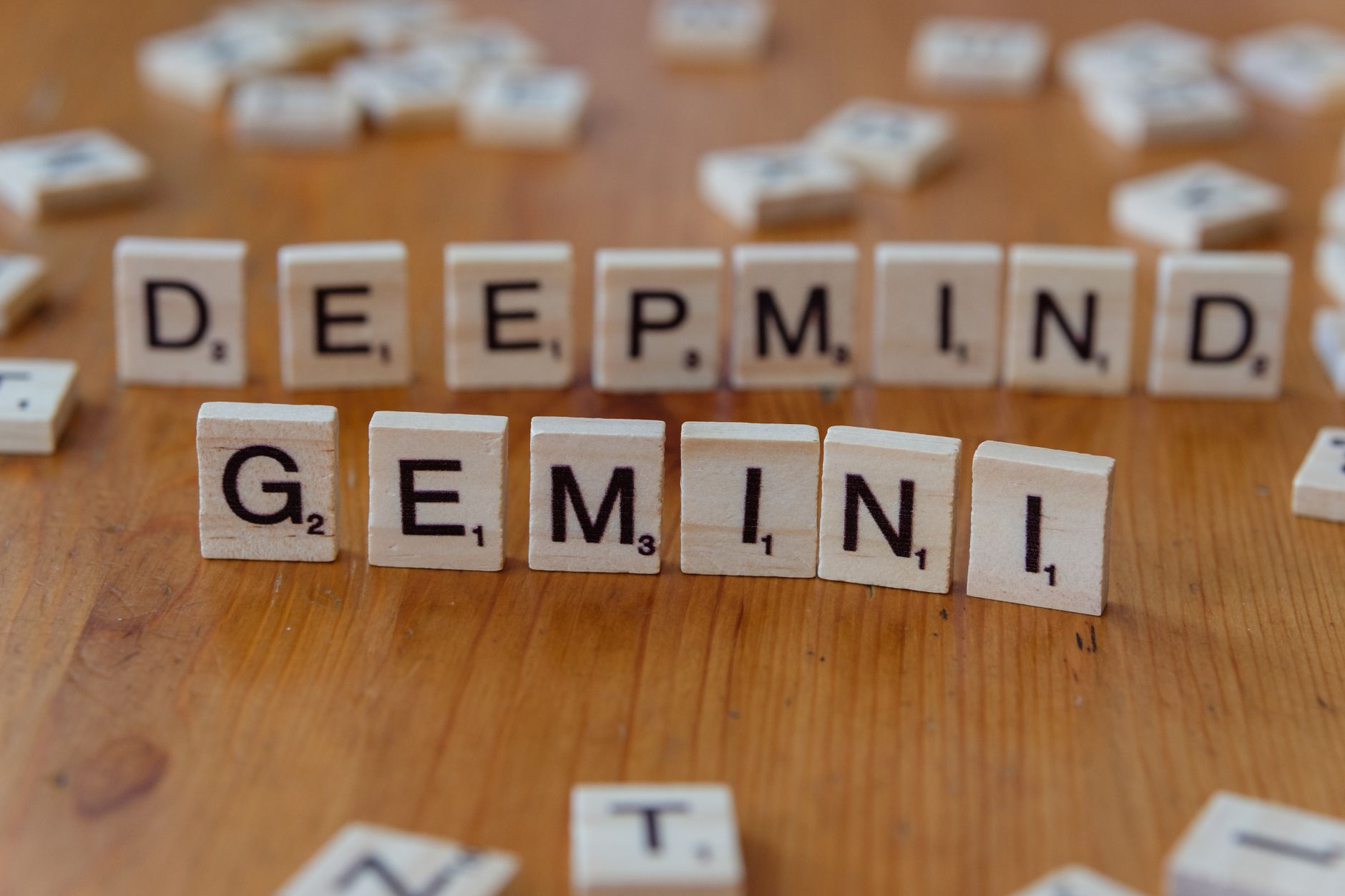
Head-to-Head Comparison: Performance Benchmarks
| Feature/Metric | Meta Muse Wonder | Gemini 4 Argon |
|---|---|---|
| Overall Leaderboard Rank (Artificial Analysis) | Reportedly leapfrogs Gemini 4 | #7 of 222 |
| Score (Artificial Analysis) | N/A (specific score not provided) | 80.85/100 |
| Hallucination Rate | N/A (focus on misuse resistance) | 15% (vs. 51% for GPT-6 Astra) |
| Factual Accuracy | N/A (focus on expert domains) | 50% (vs. 63% for GPT-6 Astra) |
| Context Window | One-million-token | N/A (evaluated for long-context) |
| Key Strengths | Active memory, multitasking, enterprise security, expert domains (law, finance, health, coding) | Precision, logical reasoning, analytical tasks, agentic coding, knowledge work |
| Arena.ai Text Arena Rank | N/A | #1 (1,525 points) |
| Vals Index Rank | N/A | #1 (68.90%) |
| Pricing Model (as of late 2026) | Subscription plans (approx. $4-$20) | Per test (approx. $15.68-$32.14) |
What real people think
Mixed opinionsSourced from Reddit, Twitter/X, and community forums
Community sentiment for both models is still forming, with early reactions to Muse Wonder being mixed regarding its real-world performance versus benchmarks. Gemini 4 Argon receives positive feedback for specific analytical tasks like translation.
Some users find Muse Wonder's benchmarks inflated, reporting it doesn't 'feel' as intelligent in real-world usage as expected, describing it as 'benchmaxxed junk'.
Other users report Muse Spark 1.3 (a Muse family model) performing comparably to GPT-5.6 Sol, suggesting potential for Muse Wonder despite initial skepticism.
A former translator praised Gemini 4 Argon's ability to handle tough translation sentences, indicating strong performance in linguistic and analytical precision.
Some users note that Gemini 4 scores similarly to GPT 6 Astra on Artificial Analysis benchmarks but at a lower cost, highlighting its value proposition.
One user tested Muse Wonder's ability to play Pokémon Red without hints, focusing on its capacity to adapt and change plans when stuck, indicating complex reasoning potential.
What Reddit is saying
r/singularity is largely sceptical of Muse Wonder's real-world utility, while taking a neutral, comparative stance on Gemini 4 Argon's performance.
I never used it so meta to me looks like any other account. ... This may or may not be a good model, but "personal superintelligence index" is just lol. ... It's benchmaxxed junk. In re
Read full discussion →i was using the muse flagship (muse wonder full xhigh) which I thought would be comparable to opus, just not expecting it to nuke usage like that on a $50 plan (i guess all of them are headed that way
Read full discussion →I used Muse Spark 1.3 but it didn't "feel" so extremely intelligent for its benchmarks. Hope Muse Wonder is better. ... Damn, that means in real world usage it's... Still trash, al
Read full discussion →I've tried both and I've found muse spark 1.3 to work better for me than GLM 5.3. Around GPT-5.6 Sol level, has been my experience. Benchmarks seemed a little inflated but I found it to be a
Read full discussion →Curated from 8 active threads across r/singularity, r/ArtificialInteligence
What people are saying on X
Sceptical viewpoints are the most common, mainly concerning Meta Muse Wonder's confusing naming and inconsistent performance, as well as Gemini 4 Argon's accuracy and cost. Supporters highlight Gemini 4's specialized improvements and Muse Wonder Full's coding prowess.
The discussion about Meta Muse Wonder is dominated by confusion over its confusing nomenclature and varying performance between "Full" and standard versions, with some championing the "Full" version's code capabilities while others struggle with benchmarking. Meanwhile, Gemini 4 Argon is praised for significant improvements in specialized fields like legal and data analysis, though some benchmarks show it with lower overall accuracy compared to competitors, raising questions about its consistency and cost at higher settings.
Already see a lot of people discounting Muse Wonder because it wasn’t RL’d in 3d stuff like Astra and Opus. 3d game demos are cool! They don’t represent real code work at all....
I should specify that this is Muse Wonder Full. Standard Wonder (the one over API) is significantly worse. These are very different models. The naming sucks....
Muse Wonder Full ≠ Muse Wonder. Pretty sure these are just different models and meta named them almost the same on purpose. Think of Muse Wonder Full as metas Fable and Muse Wonder as metas Opus....
Update: Muse Wonder Full 1.0 is difficult to benchmark. I hit weekly limits after several runs using a $50/mo subscription....
Curated from 18 recent posts using deliberate viewpoint balancing
By Q3 2027, Meta Muse Wonder will capture over 25% of the market share for AI agents in legal and financial sectors, driven by its one-million-token context window and enhanced data privacy features.
Bottom Line
Meta Muse Wonder decisively wins this comparison for users seeking a versatile, secure, and powerful AI agent. Its one-million-token context window, active memory, and robust security features position it as the superior choice for creative and complex professional tasks, particularly in sensitive domains like law and finance.
While community sentiment is still evolving, its stated capabilities for enterprise-grade discretion are a clear differentiator.
Gemini 4 Argon, despite its impressive #7 ranking on Artificial Analysis and a remarkably low 15% hallucination rate, is best suited for highly specific analytical and logical operations where precision is paramount. Its strength lies in focused accuracy rather than broad, sustained agency.
For most professionals and creatives looking for a comprehensive AI partner, Muse Wonder offers a more compelling, future-proof solution. Google's model risks being pigeonholed into niche analytical roles, losing ground in the broader AI agent market.
Further Reading
Official Meta blog post detailing Muse Wonder's features and goals.
Forbes analysis of Meta's new AI models and their implications.
Detailed benchmark data and pricing information for Gemini 4 Argon.
Google DeepMind's official announcement on Gemini 4 Argon's capabilities.
A direct comparison focusing on the utility of both models as AI agents.
Sources
- 1.Muse Wonder: A Frontier Model For Personal & Professional AI Agents
- 2.Unpacking Meta Muse Wonder And Muse Wonder Full
- 3.Muse Wonder: 7 Powerful Features of Meta's New AI Models - Progressive Robot
- 4.Meta Unveils Muse Wonder Series, Its Most Capable AI Models Yet – Unite.AI
- 5.Meta debuts Muse Wonder AI model in latest test of users' willingness to pay
- 6.Meta launches Muse Wonder, catching OpenAI, Anthropic: How to try it, benchmark results | Mashable
- 7.Gemini 4 Argon Benchmarks & Pricing (October 2026)
- 8.Gemini 4 Argon: Benchmarks, Pricing & Security (2026) | NeuralTrust
- 9.Gemini 4 Argon Benchmarks, Cost and Capabilities | Vals AI
- 10.Gemini 4 Argon - Model Card — Google DeepMind
- 11.Gemini 4 Argon: Built to solve your hardest problems
- 12.Gemini 4 Argon Rolls Out: Benchmark Scores Reflect High Mode, Not Subscriber Default
- 13.Muse Wonder vs Gemini 4 Argon vs Opus 5.5 vs Astra vs Grok | explainx.ai Blog | explainx.ai
- 14.Gemini 4 Argon vs Meta Muse Wonder for AI Agents
- 15.Gemini 4 Argon vs Muse Wonder Full: Benchmarks & Cost
Rate this article
Your feedback helps surface the best content
Related articles
Have a question? Get your own article.
Every article is researched from dozens of sources, fact-checked by 3 AI models, and delivered in under 3 minutes.
Triple-Verified — 8 corrections applied across 2 verification stages applied