Middle East War 2024-2026: Missile Defense, Economic Impact, and Regional Outcomes

March 21, 2026 · 5 min read
···
- The Middle East conflict has entered its most dangerous phase since the 1967 Six-Day War
- UAE defense systems show 95% interception rates but face interceptor shortages
- Dubai's economy remains resilient despite 11-27% projected tourism decline
- Iran's proxy strategy is failing as direct confrontation becomes inevitable
The Middle East conflict that began in October 2023 has escalated dramatically in 2024-2026, with Iran launching over 3,000 missiles and drones at Gulf states, killing Supreme Leader Khamenei, and triggering the largest regional war since 1973. The UAE leads in defensive capabilities with 95% interception rates but faces critical interceptor shortages. Dubai shows economic resilience despite projected tourism drops of 11-27%, while defense spending across Gulf states surges 15% annually.
Key Takeaways
- Over 1 million people displaced in Lebanon; 72,000+ Palestinians killed in Gaza
- UAE intercepted 814 of 871 incoming projectiles (93% success rate) but faces ammunition shortages
- Middle East defense spending increased 15% in 2024, with global military expenditure reaching record $2.7 trillion
- Dubai tourism projected to fall 11-27% but economy shows 4.4% growth through diversification
- Iran's proxy network strategy failing as Hezbollah, Hamas leadership decimated
Watch Out For
- ⚠Critical interceptor shortages forcing Gulf states to ration defensive fire
- ⚠Escalation scenarios ranging from limited retaliation (50% probability) to strategic asset strikes (28%)
- ⚠Energy chokepoint vulnerabilities at Strait of Hormuz affecting 20% of global oil flows
Current Conflict by the Numbers
1.05M▲
Displaced in Lebanon
72,000+
Palestinians Killed in Gaza
3,000+
Iranian Projectiles at Gulf States
95%
UAE Interception Rate
$2.7T▲
Global Military Spending 2024
UNRWA, UAE Ministry of Defense, SIPRI 2025
Current State of the Conflict
The Middle East war that began with Hamas's October 7, 2023 attack has exploded into the region's most devastating conflict in decades. Israel's ongoing operations have killed more than 72,000 Palestinians, while the enclave of 2.3 million has been turned into rubble through escalated bombardments across the Gaza Strip and expanded ground operations.
The conflict's scope dramatically widened in March 2026 following the assassination of Iran's Supreme Leader Ayatollah Ali Khamenei. Israel's first sorties appear to have killed not just Supreme Leader Khamenei but also, reportedly, as many as 40 senior military and intelligence commanders.
This triggered unprecedented direct Iranian retaliation against Gulf states hosting US assets. By March 17, Iran had launched 314 ballistic missiles, 1,672 drone attacks and 15 cruise missiles at targets in the UAE, killing 8 people including 2 military personnel and injuring 157 others.
The scale represents a fundamental shift from proxy warfare to direct state-on-state confrontation. Lebanon bears the heaviest civilian cost. More than 1 million people have been internally displaced in Lebanon since the start of the current conflict, with the total number of registered displaced people reaching 1,049,328.
Between March 2 and March 16, Israeli attacks killed at least 886 people – including 67 women, 111 children, and 38 health workers.
Major Escalations and Turning Points Since October 2023
Hamas October 7 Attack
Hamas launches surprise attack killing 1,200 Israelis, taking 251 hostages, triggering Israeli response in Gaza
Lebanon Ceasefire
Israel-Hezbollah ceasefire signed November 26, 2024, but Israel continues violations with daily strikes
US-Israeli Strikes on Iran
Coordinated airstrikes target Iranian leadership and military infrastructure, escalating to direct confrontation
Khamenei Assassination
Supreme Leader killed in Israeli strike along with 40+ senior commanders, triggering massive Iranian retaliation
Gulf Under Fire
Iran launches 3,000+ missiles and drones at Gulf states; UAE, Saudi Arabia, Qatar face daily attacks
Regional Defense Systems and Missile Interceptions
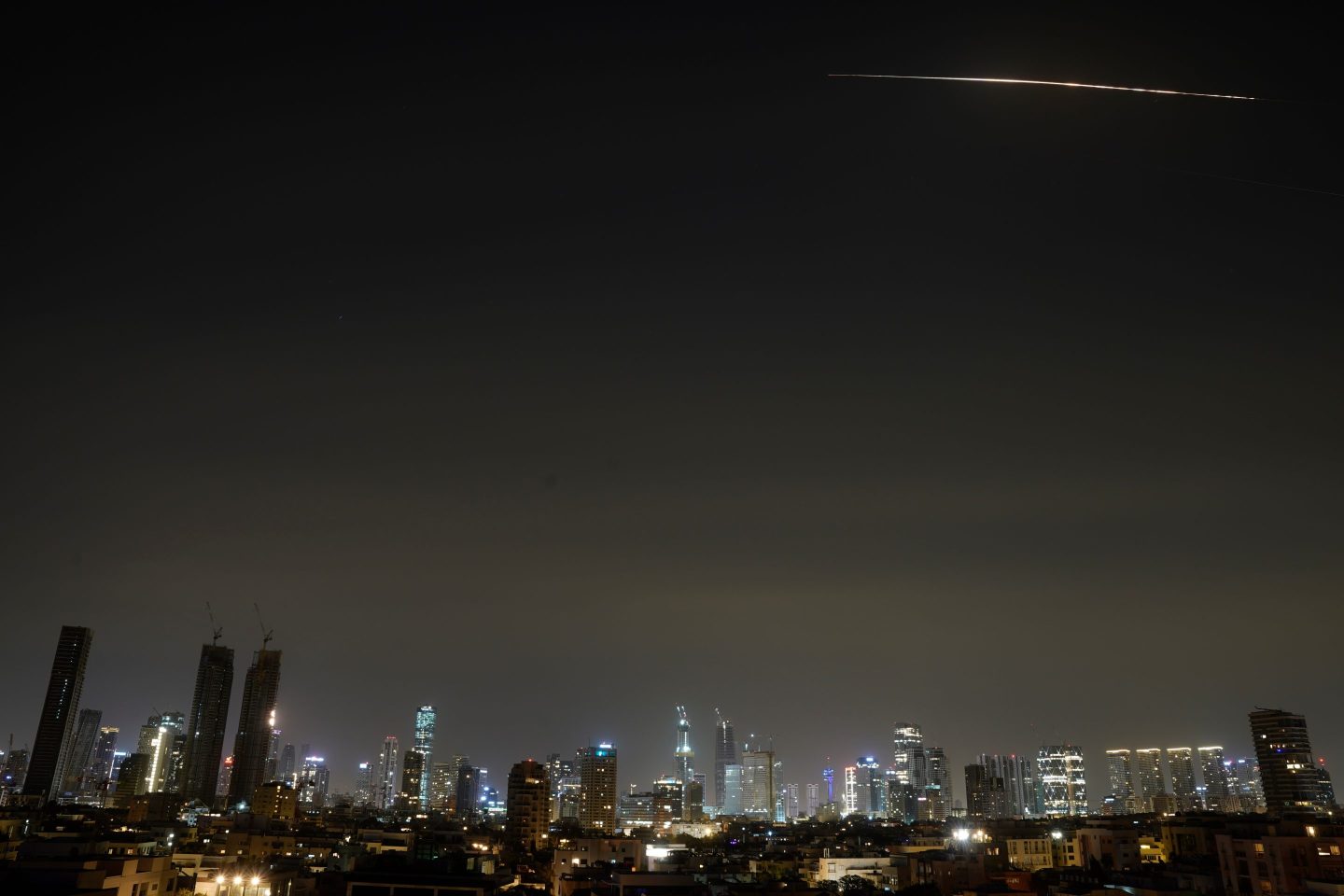
The conflict has become a proving ground for advanced missile defense systems, with the UAE demonstrating the most impressive defensive capabilities. As of March 1, the UAE had a 95% interception rate, with the military destroying all missiles that breached its territory and 94% of the notoriously difficult drones.
The UAE operates a sophisticated multi-layered defense architecture. The UAE has THAAD high altitude interceptors and Patriot batteries from the US, Israel's Barak-8 system, Russia's Pantsir-S1, South Korea's Cheongung II, and the homemade SkyKnight. This diverse portfolio provides redundancy against different threat types.
The UAE said on Monday it had destroyed 814 of the 871 drones, ballistic missiles and cruise missiles fired at it since Saturday, representing a 93% success rate under intense bombardment. However, success comes at enormous cost. The UAE's interception rate is above 90 percent according to the government's tally, but THAAD and Patriot interceptors are costly and take years to make, with the UAE now having burned through a significant chunk of an interceptor stockpile that took years to build.
Saudi Arabia has also demonstrated effective defenses. Saudi air defense forces have proven their effectiveness by intercepting more than a thousand projectiles—missiles and drones—since the launch of operations in support of Yemen's legitimate government.
Saudi Arabia's Ministry of Defense intercepted and destroyed two ballistic missiles launched towards Prince Sultan Air Base and six drones heading towards the Shaybah oilfield. The challenge lies in sustainability. As a general rule, defenders are expected to fire two to three interceptors to down an incoming missile.
With thousands of incoming projectiles, even wealthy Gulf states face ammunition shortages that could prove decisive.
Missile Attacks and Interception Rates by Country (March 2026)
UAE Ministry of Defense, Breaking Defense analysis March 2026
Defense Spending Increases Across Gulf States (2020-2025)
SIPRI Military Expenditure Database 2025
Economic Impact on Gulf States
Despite the security crisis, Gulf economies show remarkable resilience, particularly Dubai's diversified model. Dubai's economy is almost fully powered by non-oil sectors, with oil now accounting for less than 2% of gross domestic product, replaced by a mix of trade, tourism, high-end real estate and financial services.
According to Emirates NBD, Dubai's economy expanded by an estimated 4.4% in the first half of 2025, up from 3.3% in 2023 and 3.2% in 2024. This growth occurred despite regional tensions, demonstrating the economy's structural strength. Tourism faces significant headwinds but maintains volume.
Almost 20 million tourists visited Dubai in 2025, including four million Europeans and around half a million French visitors. However, projections have turned sharply negative. Tourism experts forecast between an 11% and 26% fall in arrivals rather than growth, with the range depending largely on how long the U.S.-Iran war lasts, cautioning that should the conflict stretch past two months, arrivals could drop by more than a quarter.
Aviation hubs face operational disruption. Major regional aviation hubs including Dubai, Abu Dhabi, Doha and Bahrain, which together normally process around 526,000 passengers per day, have experienced closures and operational disruption as the conflict escalates.
Yet Dubai International still recorded impressive pre-war performance. Dubai International celebrated a record 2025 having handled 95.2 million passengers, up 3.1 percent year on year. The broader regional economy faces structural pressures. The Gulf Cooperation Council region has a combined nominal economic value of US$2.4 trillion and serves as home to aviation, tourism, and business hubs.
Energy infrastructure remains vulnerable despite defensive measures.
Dubai International celebrated a record 2025 having handled 95.2 million passengers, up 3.1 percent year on year.
Dubai's Economic Indicators During the Conflict
4.4%▲
GDP Growth H1 2025
20M
Tourist Arrivals 2025
95.2M▲
Airport Passengers 2025
4M
Population Milestone 2025
25%
Trade Share of GDP
Emirates NBD, Dubai Economy and Tourism, Dubai Airports 2025
Regional GDP Impact and Recovery Projections (2024-2026)
IMF World Economic Outlook, Emirates NBD forecasts 2025
Potential Outcomes and Scenarios
Multiple escalation pathways remain open with no clear off-ramps visible. As the war with Iran enters its third week, various escalation scenarios are possible with no off-ramps in sight, featuring straight-line escalation marked by periods of stasis in the conflict.
Analysts identify three primary scenarios based on probability assessments. The first scenario, 'Limited Retaliation' carries 50% probability, involving localised military engagements with Israel targeting minor Iranian assets and limited retaliations from Iran, likely leading to modest increases in oil prices and contained market impacts due to swift diplomatic de-escalation.
The second scenario, 'Strategic Asset Strikes' has 28% probability, envisioning broader Israeli strikes on key Iranian infrastructure, prompting significant retaliation and heightened global economic repercussions, including sharp increases in oil prices and inflationary pressures. Iran's proxy strategy faces fundamental challenges.
While proxies offer flexibility and plausible deniability, Iran faces challenges in controlling them, as seen in Hezbollah's 2006 war and Hamas's October 7 attack, which led to significant costs and strategic blowbacks, raising questions about the long-term sustainability and effectiveness of the proxy war strategy. Iran's strategy of so-called resistance—arming, directing, and supporting proxy militias—has faltered, leaving the regime vulnerable, with Tehran's vulnerability becoming further evident in its direct attacks on Israel which caused minimal damage due to US military support and advanced Israeli missile defense systems.
Nuclear escalation risks remain elevated. Major General Ahmad Haghtalab warned that continued Israeli threats could force Iran to reconsider its nuclear posture, with the possibility of Tehran pursuing a nuclear deterrent becoming more tangible as Israeli operations increasingly erode Iran's sense of strategic security.
Likelihood and Impact of Different Resolution Scenarios
| Metric | Limited Retaliation | Strategic Asset Strikes | Regional War | Nuclear Escalation | Negotiated Ceasefire |
|---|---|---|---|---|---|
| Probability (%) | 50/100 | 28/100 | 15/100 | 5/100 | 25/100 |
| Economic Impact (1-10) | 3/10 | 7/10 | 9/10 | 10/10 | 2/10 |
| Humanitarian Cost (1-10) | 4/10 | 6/10 | 9/10 | 10/10 | 1/10 |
| Duration (months) | 2/24 | 6/24 | 18/24 | 24/24 | 3/24 |
What real people think
DividedSourced from Reddit, Twitter/X, and community forums
Regional experts and communities show sharp divisions between those calling for immediate ceasefire and those supporting continued military pressure on Iran. Gulf business communities express growing concern about economic costs despite defensive successes.
Iran wants to damage Dubai's reputation as a safe global hub, which carries far greater strategic weight than just targeting American bases
IISS labeled the outcome strategically inconclusive, suggesting the war may inaugurate a new phase of structured hostility, not resolution
Embattled Shiite populations who long supported Hezbollah may be reaching breaking point after repeated displacement
UAE demonstrates impressive defensive capabilities but faces critical interceptor shortages that could prove decisive
Critical Risks and Vulnerabilities
Sources
- 1.UNRWA Situation Report #177 - Gaza Strip and West Bank
- 2.UAE Ministry of Defense - Iranian Attack Statistics
- 3.SIPRI Military Expenditure Database 2025
- 4.Breaking Defense - UAE Interception Analysis
- 5.Dubai Economy and Tourism 2025 Statistics
- 6.Al Jazeera - Lebanese Displacement Mapping
- 7.CSIS - Iran's War Strategy Analysis
- 8.International Crisis Group - Middle East War Assessment
Rate this article
Your feedback helps surface the best content
Related articles
Have a question? Get your own article.
Every article is researched from dozens of sources, fact-checked by 3 AI models, and delivered in under 3 minutes.
Triple-Verified — checked across 1 verification stages — all claims verified