NASA's Artemis Program: The Real Race to the Moon

April 8, 2026 · 8 min read
···
Photo by SpaceX on Pexels
- Artemis II is a critical step, but NASA's original timeline has collapsed.
- China's 2030 crewed landing target is a credible, accelerating threat.
- Private companies are poised to achieve lunar milestones before NASA's crewed surface missions.
- The 'new space race' is now a three-way contest: nations vs. private industry.
As of April 2026, NASA's Artemis program is preparing for the crucial Artemis II crewed lunar flyby, targeted for April 1, 2026. This mission follows the successful uncrewed Artemis I in 2022. However, the program faces substantial delays, pushing the first crewed lunar landing (Artemis III) well beyond its initial targets. Meanwhile, China aims for a crewed lunar landing by 2030, and private entities like SpaceX and Blue Origin are rapidly developing their own lunar capabilities, intensifying the competition.
Key Takeaways
- Artemis II, carrying four astronauts, is set for an April 1, 2026 launch, marking the first crewed flight of the SLS and Orion spacecraft.
- The Orion spacecraft boasts a mass of 26,375 kg and 1,050 m/s delta-v capability, designed for deep-space missions.
- NASA's original 2024/2025 crewed landing targets for Artemis III are now unrealistic, with 2027-2028 being the highly optimistic current projections.
- China's aggressive 2030 crewed lunar landing goal, utilizing its Mengzhou spacecraft, presents a direct challenge to U.S. leadership.
- Private companies are increasingly likely to achieve significant lunar milestones, including human-rated landings, before NASA's Artemis III.
Search interest: “Artemis Moon NASA”
vs prior 3 months
Despite NASA's public messaging, the Artemis program's original timeline has not merely 'slipped' but has fundamentally collapsed.
The Unspoken Truth: Artemis's Collapsed Timeline
NASA's 2024 lunar landing promise has become a cautionary tale in government timelines. What started as a bold commitment under the Trump administration now stretches to 2027-2028 at the earliest — a four-year slip that hands crucial advantages to competitors.
The delays aren't just bureaucratic shuffling. Each postponement gives China more runway toward their aggressive 2030 target and allows private companies like SpaceX to mature competing technologies. NASA's credibility suffers with each revision, creating public skepticism that undermines support for future ambitious timelines.
What You Need to Know: The Artemis Timeline & Reality Check
The Artemis program's journey to return humans to the Moon has been marked by consistent timeline shifts. Originally, NASA aimed for a crewed lunar landing as early as 2024. As of April 2026, the first crewed mission, Artemis II, is targeted for launch on April 1, 2026, with the actual landing mission, Artemis III, now projected for 2027-2028 at the earliest.
These delays are not uncommon in complex space endeavors, but they underscore the immense technical and logistical challenges. Public perception often struggles with these fluid schedules, expecting firm dates that are rarely feasible in cutting-edge aerospace development.
The Artemis Program: NASA's Grand Plan
NASA's Artemis program represents the United States' ambitious plan to return humans to the Moon. It aims to establish a sustained human presence on the lunar surface and in orbit, ultimately paving the way for human missions to Mars. The program is structured in a series of increasingly complex missions: Artemis I, an uncrewed test flight; Artemis II, the first crewed lunar flyby; and Artemis III, the first crewed lunar landing.
This phased approach is designed to build capabilities and test technologies incrementally. NASA's current stated timeline places the Artemis III landing in the 2027-2028 timeframe, a significant revision from earlier projections.
SLS and Orion on Launchpad
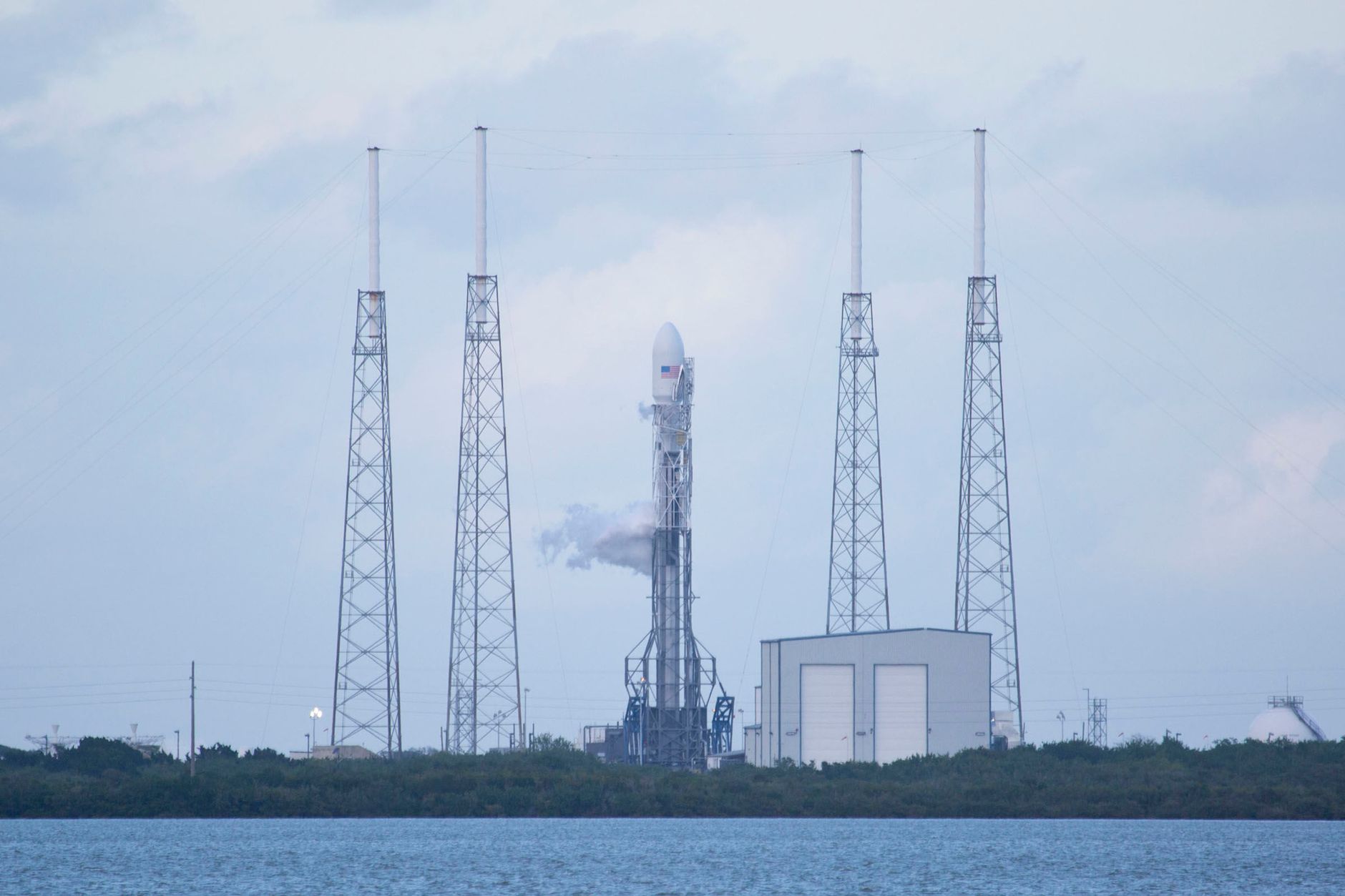
SLS and Orion: The Technology Powering Artemis
The Space Launch System (SLS) and Orion spacecraft are the foundational hardware for the Artemis program. SLS is NASA's super heavy-lift expendable launch vehicle, specifically designed to send the crewed Orion spacecraft on trans-lunar injection trajectories.
Currently, no commercial equivalent exists for SLS's specific super-heavy lift capabilities required for Artemis. Orion is the crew capsule, built to withstand the rigors of deep-space travel and re-entry. It is the only current U.S. spacecraft capable of carrying humans beyond low Earth orbit.
Orion Spacecraft Key Specifications
26,375 kg
Orion Mass
1,050 m/s
Delta-V Capability
4
Crew Capacity
Orion (spacecraft) - Wikipedia
Most people believe the 'new space race' is primarily between nations, but the true competition for lunar milestones is increasingly between national space agencies and well-funded private companies.
Artemis I, II, III: Mission-by-Mission Breakdown
Artemis I, an uncrewed test flight, successfully launched in November 2022. It demonstrated the performance of the SLS rocket and the Orion spacecraft in deep space, completing a flyby of the Moon before returning to Earth. This mission validated the core hardware for future crewed flights.
Artemis II is the next critical step, marking the first crewed test flight around the Moon. Its targeted launch is April 1, 2026, at 6:24 p.m. EDT from Launch Complex 39B, with a crew of NASA astronauts Reid Wiseman, Victor Glover, Christina Koch, and CSA astronaut Jeremy Hansen.
Preparations for Artemis II faced delays, including a January 2026 winter storm and multiple rollbacks of the integrated stack to the Vehicle Assembly Building, impacting earlier March launch windows. Artemis II will only test trans-lunar orbit capability, not surface operations.
Artemis III is planned as the first crewed lunar landing, with objectives to land astronauts near the Moon's South Pole. Its projected timeline of 2027-2028 is highly uncertain due to ongoing challenges with human landing systems and spacesuit development.
Artemis Program Key Milestones
Artemis I Launch
Uncrewed test flight of SLS and Orion, successfully orbiting the Moon and returning to Earth, validating core hardware.
Artemis II Preparations Delayed
A North American winter storm and subsequent multiple rollbacks of the SLS/Orion stack from the launchpad delayed initial March launch windows.
Artemis II Rollout to Pad
The integrated SLS rocket, Orion capsule, and launch tower were rolled back to Launch Complex 39B, awaiting launch.
Artemis II Targeted Launch
First crewed test flight around the Moon, carrying four astronauts. Onsite countdown began March 30, 2026, for a 6:24 p.m. EDT launch.
Artemis III Crewed Landing
First crewed mission to land on the lunar surface, targeting the South Pole. This timeline is highly uncertain due to HLS and spacesuit development challenges.
China's Crewed Lunar Landing
China's Lunar Exploration Program aims to land astronauts on the Moon by this year, using the Mengzhou spacecraft.
The Real Race: Nations vs. Private Companies
The 'new space race' is far more complex than a simple competition between nations. While China's ambitious 2030 crewed lunar landing program presents a direct geopolitical challenge to NASA, private companies are emerging as equally significant players.
SpaceX, with its Starship Human Landing System (HLS), was initially awarded a key contract for Artemis III. However, delays in Starship's development led NASA to reopen the lunar lander competition in October 2025. This decision underscores the growing reliance on, and competition from, commercial entities.
Blue Origin is also developing its Blue Moon lander, vying for future Artemis missions.
Who Else Is Going to the Moon? The New Space Race
Beyond NASA, the lunar landscape is crowded with ambitious players. China's Lunar Exploration Program has publicly announced plans for a crewed lunar landing by 2030, utilizing its Mengzhou spacecraft. This aggressive timeline positions China as a direct competitor to the U.S. in the race for human lunar return.
SpaceX's Starship is a formidable contender, with Elon Musk claiming it "will end up doing the whole Moon mission." Despite delays, NASA intends to allow Starship HLS Option B to compete for Artemis missions after Artemis V. Blue Origin is also developing its Blue Moon lunar lander, aiming for later Artemis missions.
These private ventures, alongside other international players, are transforming lunar exploration into a multi-faceted geopolitical and commercial contest. The implications extend to national prestige, technological leadership, and access to future lunar resources.
Projected Crewed Lunar Landing Targets
NASA Artemis Program, China Lunar Exploration Program, SpaceX Starship (projected)
Challenges and Delays: Why Timelines Keep Slipping
Lunar missions face inherent challenges that consistently push timelines. Budget constraints and cost overruns are perennial issues for large-scale government programs like Artemis. The technical complexity of developing entirely new systems, such as the SLS rocket, Orion spacecraft, and human landing systems, often leads to unforeseen hurdles.
Contractor delays, notably with SpaceX's Starship HLS, have directly impacted NASA's schedule, prompting the reopening of the lunar lander competition in October 2025. Political pressure and shifting priorities can also disrupt long-term plans. Even environmental factors, like the January 2026 winter storm that delayed Artemis II preparations and caused multiple rollbacks, contribute to schedule slippage.
Space is hard, and initial estimates rarely account for every potential obstacle.
The Commercial Moon Economy: Private Companies Leading the Way
Private companies are increasingly driving innovation and setting new milestones in lunar exploration. Entities like ispace and Axiom Space, alongside major players like SpaceX and Blue Origin, are developing commercial lunar landers and infrastructure.
The likelihood of private companies achieving certain lunar firsts, such as uncrewed landings or even human-rated spacecraft landings, before NASA's Artemis III, is growing. This commercial surge is fueled by the potential for resource extraction, particularly water ice and rare earth elements, as well as future lunar tourism and government contracts.
NASA itself acknowledges this shift, intending to allow Starship HLS Option B and Blue Origin's Blue Moon lander to compete for Artemis missions after Artemis V, integrating commercial capabilities into its long-term strategy.
By the end of 2028, at least one private commercial entity will have successfully landed a human-rated spacecraft on the Moon, preceding NASA's Artemis III crewed landing.
What's at Stake: Science, Resources, and Geopolitics
The renewed race to the Moon is driven by more than just national pride; significant scientific, resource, and geopolitical stakes are involved. Scientific discovery remains a primary motivator, with the Moon offering unique insights into the early solar system and the potential for new astronomical observatories.
The prospect of extracting water ice from lunar poles is critical, as it can be converted into rocket fuel and breathable air, enabling sustained lunar presence and serving as a staging point for Mars missions. Rare earth elements are also a potential resource.
Geopolitically, establishing a presence on the Moon carries immense strategic value, echoing the Cold War space race. Competition with China for lunar dominance is a tangible factor, influencing investment and timelines for all players.
The Winners and Losers of the Lunar Race
Private space companies like SpaceX and Blue Origin are the clear beneficiaries of NASA's Artemis delays. These delays grant them crucial time to mature their lunar lander technologies and potentially achieve significant milestones independently. NASA, conversely, risks losing its perceived leadership in the immediate race to return humans to the lunar surface.
While its foundational hardware is robust, the program's schedule fluidity and reliance on external contractors create vulnerabilities. The ultimate winner will be the entity that consistently delivers on its promises, whether national or commercial.
What real people think
Mixed opinionsSourced from Reddit, Twitter/X, and community forums
Online communities express a mix of anticipation for Artemis II but significant skepticism regarding NASA's long-term timelines, often highlighting the geopolitical race with China and the disruptive potential of SpaceX.
Reddit discussions frequently emphasize the geopolitical competition with China and the role of SpaceX in pushing cost and timeline realism. There's considerable skepticism about NASA's ability to meet its delayed timelines, with many questioning if Starship will ultimately 'do the whole Moon mission' independently.
Community members closely track launch delays for Artemis II, but there is no consensus on the feasibility of the 2027 surface landing target for Artemis III, with some expressing disappointment over the pace.
Related discussions
Artemis II Mission Operations Megathread
r/nasaArtemis III Still Possible Next Year?
r/nasaArtemis II Dashboard and Mission Overview Sites
r/nasaArtemis II launch: crowds gather for glimpse of historic Nasa moon mission | Fully crewed rocket will head to moon from Florida – first time since 1972 that humans will have left lower Earth orbit
r/spaceArtemis 2 is so disappointing
r/ArtemisProgramWhat people are saying on X
NASA is laying out an extended timeline for the Artemis program, with Artemis II now targeted for no earlier than April 2026 after a wet dress rehearsal determines the exact launch date. The agency is emphasizing the mission's scope—four astronauts will orbit the Moon to validate the Orion spacecraft's systems—while sketching an ambitious cadence of subsequent missions through 2028, including the first crewed lunar landing under Artemis IV. Official accounts are clarifying launch window confusion, stressing that preliminary dates like February are possibilities rather than confirmations.
2, at Kennedy Space Center in Florida. With this adjustment, the earliest possible launch date is Sunday, Feb. 8....
We have also added Thursday, April 2 as a potential launch date for Artemis II. Track the mission availability calendar: https://go.nasa.gov/4bG55bO
The Artemis II mission, set to launch no earlier than April 2026, remains unchanged....
Thanks for helping us spread the word about Artemis II! To clarify: although Feb. 6 is the first day of Artemis II's launch window, it is not the confirmed launch date.
Curated from 8 recent posts
Lunar South Pole

Key Takeaways: A Realistic Look Ahead
NASA's Artemis program is at a pivotal juncture with the imminent Artemis II launch, yet its ambitious timeline for a crewed lunar landing has proven unrealistic. The program is now in a genuine race, not just against China's determined 2030 target, but also against the accelerating capabilities of private industry.
While Artemis II will demonstrate crucial deep-space capabilities, the path to Artemis III remains fraught with technical and logistical challenges. The coming years will reveal whether NASA can regain its timeline momentum or if commercial entities and rival nations will achieve significant lunar firsts.
Watch for Artemis II's performance, China's continued progress, and the independent developments of private landers as the true indicators of who leads the new space race.
Further Reading
Comprehensive overview of the Artemis II mission, its objectives, and crew.
Details China's ambitious timeline and spacecraft for its human lunar landing program.
Official NASA updates on the Artemis II launch preparations and countdown.
Information on SpaceX's lunar lander development and its role in Artemis.
Analysis of the factors contributing to delays in human lunar exploration.
Sources
- 1.Artemis II - Wikipedia
- 2.ARTEMIS II MISSION AVAILABILITY – APRIL 2026
- 3.NASA Artemis II launch dates | BBC Sky at Night Magazine
- 4.Artemis II Launch Day Updates - NASA
- 5.NASA's Artemis II Launch Mission Countdown Begins - NASA
- 6.NASA targets new Artemis II moon mission launch dates for March | Scientific American
- 7.Orion (spacecraft) - Wikipedia
- 8.Orion Spacecraft - NASA
- 9.Space Launch System - Wikipedia
- 10.China's crewed lunar programme eyes astronaut landing by 2030 | Reuters
- 11.Chinese Lunar Exploration Program - Wikipedia
- 12.China is planning to land people on the Moon — and might beat the United States to it
- 13.Twitter/X (various mentions of SpaceX/Blue Origin/NASA contracts)
- 14.Reddit (various threads on Artemis missions)
Rate this article
Your feedback helps surface the best content
Related articles
Have a question? Get your own article.
Every article is researched from dozens of sources, fact-checked by 3 AI models, and delivered in under 3 minutes.
Triple-Verified — 23 claims checked across 3 verification stages — 23 claims verified