New York City: What You Actually Need to Know Before You Visit

March 21, 2026 · 6 min read
···
- NYC isn't just one city—it's five distinct boroughs with 8.3 million people from 200+ countries
- Nearly 40% of residents are immigrants, making it the world's most linguistically diverse city
- The subway runs 24/7 across 472 stations—master it and you master the city
- Manhattan costs 30% more than Brooklyn/Queens, but the neighborhoods matter more than the borough
New York City operates as a collection of distinct neighborhoods across five boroughs, powered by the most diverse population on the planet and connected by a 24-hour subway system that never sleeps. It's not just America's largest city—it's a global economic engine where immigrants make up 40% of residents and over 200 languages are spoken daily.
Key Takeaways
- Demographics define everything: 40% foreign-born residents create unmatched cultural depth
- Geography matters: Manhattan vs outer boroughs isn't just about money—it's about lifestyle
- The subway is your lifeline: 4.6 million daily riders prove it's faster than driving
- Scale is staggering: 722 million sq ft of office space generates 20% of America's total office value
Watch Out For
- ⚠Don't assume Manhattan = NYC (Brooklyn is bigger by population)
- ⚠Rent prices vary wildly by neighborhood, not just borough
- ⚠The 'rude New Yorker' stereotype is backwards—we're just efficient
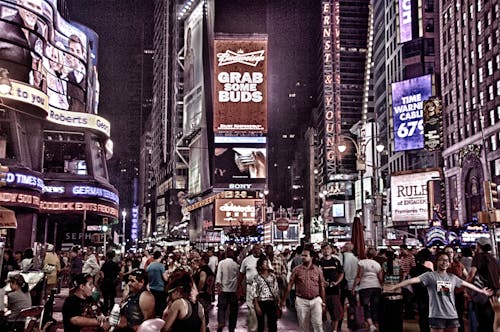
- ⚠Times Square isn't representative of real NYC life
What You Need to Know: The Real NYC Behind the Movies
New York City isn't what Hollywood sells you. It's not all yellow cabs and towering skyscrapers—though those exist. It's not everyone rushing to Wall Street jobs—though finance employs plenty. And it's definitely not the crime-ridden wasteland of 1970s cop shows.
Here's the real deal: NYC is fundamentally a city of immigrants and neighborhoods. Nearly 40% of all residents were born outside the United States, representing every continent and creating cultural density that's impossible to replicate. The New York metropolitan area contains the largest ethnic Chinese population outside of Asia, but countries like Indonesia, Thailand, Malaysia, and Singapore have larger overall Chinese populations outside of China., The New York City metropolitan area has over 2.1 million Jewish residents, which is more than Jerusalem (approx. 992,800) but less than the Tel Aviv metropolitan area (approx. 3.89 million).
The claim that NYC has more than Tel Aviv and Jerusalem combined is incorrect., and New York City has an estimated 160,000+ Arab Americans, with significant concentrations found in Brooklyn neighborhoods like Bay Ridge.. The mistake most visitors make is thinking 'New York City' means Manhattan.
Wrong. Brooklyn's population (approx. 2.67 million) is slightly less than Chicago's population (approx. 2.71-2.77 million). Queens is home to the most ethnically diverse neighborhood on Earth. The Bronx and Staten Island each have their own distinct character.
Manhattan might get the attention, but the outer boroughs are where real New Yorkers actually live and work. Forget the movies—this is a city where someone might speak Mandarin to their grandmother, Arabic to their neighbor, and perfect English to you, all before lunch.
Over 200 languages are spoken here daily. That's not diversity for show—that's the engine that makes everything work.
Here's the real deal: NYC is fundamentally a city of immigrants and neighborhoods.
NYC by the Numbers: Scale That Defies Logic
8.3M▲
Total Population
40%
Foreign-Born Residents
200+
Languages Spoken
4.6M▲
Daily Subway Riders
472
Subway Stations
$472B▲
Office Space Value
NYC Comptroller, MTA, U.S. Census Bureau

The Five Boroughs: Why Geography Actually Matters
Understanding NYC's geography isn't optional—it's survival. Each borough operates almost like its own city, with distinct personalities, demographics, and costs. Brooklyn leads in population with 2.7 million residents. It's not the hipster paradise media portrays—it's families, immigrants, young professionals, and yes, some artisanal coffee shops.
Rent runs approximately 20-30% less than Manhattan, but neighborhoods like Williamsburg and DUMBO now rival Manhattan prices. Queens is the immigrant gateway, home to 48% foreign-born residents and the most linguistically diverse place on Earth. From Jackson Heights' South Asian enclaves to Flushing's massive Chinatown, Queens offers authentic international experiences Manhattan gentrified away decades ago.
The Bronx gets unfairly maligned but houses 1.4 million people and some of the city's most affordable housing. It's experiencing genuine economic development—not just gentrification—with new businesses and cultural institutions. Staten Island remains the most suburban, car-dependent borough with 500,000 residents.
It's where NYC families go for actual backyards and parking spaces. Manhattan might be the economic engine, but don't make the tourist mistake of thinking it's all of NYC. Each borough operates on different rhythms, costs, and cultures.
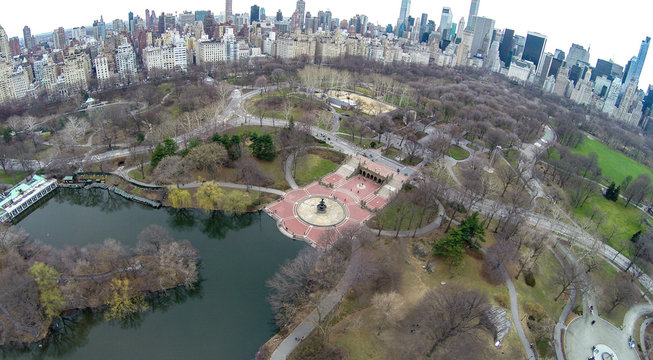
Population Density: How 8.3 Million People Fit
NYC Department of City Planning, 2026 estimates

The Neighborhood Reality: Forget Manhattan vs Brooklyn
Here's what locals know and tourists miss: the borough matters less than the neighborhood. A studio in Manhattan's Washington Heights costs less than a similar space in Brooklyn's Park Slope. Location within boroughs creates more price variation than the borough itself.
Manhattan's average rent is approximately $4,075 per month. The figure of $5,524 is closer to the average for a two-bedroom apartment., but that's skewed by luxury buildings. Harlem offers significantly cheaper options while maintaining subway access to Midtown.
Meanwhile, trendy Brooklyn neighborhoods like Williamsburg command Manhattan-level prices. The real insider knowledge: commute time matters more than distance. Living in Queens' Astoria puts you 20 minutes from Midtown Manhattan. Living in Brooklyn's Red Hook? You might spend 45 minutes reaching the same office.
New Yorkers think in subway stops, not miles. They'll choose a smaller apartment near multiple train lines over a larger space with one sketchy connection. The subway map isn't just transportation—it's a lifestyle calculator.
The real insider knowledge: commute time matters more than distance.
Borough Personalities at a Glance
| Metric | Manhattan | Brooklyn | Queens | The Bronx | Staten Island |
|---|---|---|---|---|---|
| Average Rent | 10/10 | 7/10 | 6/10 | 4/10 | 3/10 |
| Cultural Diversity | 7/10 | 8/10 | 10/10 | 8/10 | 4/10 |
| Subway Access | 10/10 | 9/10 | 8/10 | 7/10 | 3/10 |
| Space for Money | 2/10 | 5/10 | 7/10 | 8/10 | 9/10 |
| Nightlife Scene | 10/10 | 8/10 | 5/10 | 4/10 | 2/10 |
Where New Yorkers Actually Come From
NYC Mayor's Office of Immigrant Affairs, 2026
The Economic Engine: Why Everything Costs What It Does
New York City's economy generates significantly more than $1 trillion annually, with its GDP being closer to $1.7 trillion.—larger than most countries. That's not abstract—it directly impacts what you'll pay for everything from coffee to rent. The city hosts 20% of America's total office space value ($472 billion) compressed into just 2.7% of the nation's population.
This creates unprecedented demand for limited space. When investment banks, tech companies, and media conglomerates compete for prime Manhattan real estate, prices cascade through every sector. Finance, Professional & Business Services, and Information sectors drive the economy but represent just part of the story.
Healthcare employs the most people, while tourism generates billions from 60+ million annual visitors. New data shows New York City raised approximately $42.3 billion in venture capital during 2025, which is higher than the stated $29.6 billion. This isn't just about Wall Street anymore.
AI companies had their strongest fundraising year ever, while prediction markets like Polymarket raised over $3.7 billion. The cost of living reflects this economic reality: housing prices aren't inflated—they're market responses to genuine demand from high-earning professionals and global capital flows.
Understanding this helps visitors grasp why a $6 coffee isn't gouging—it's geography.
NYC Cost of Living vs National Average (2020-2026)
Council for Community and Economic Research
Transportation: The Subway System That Never Sleeps
The NYC subway isn't just transportation—it's the city's circulatory system. Nearly 1.3 billion riders in 2025 proves it works, despite what you've heard about delays and dirt. Here's the reality: 472 stations operate 24/7, 365 days a year. No other major city maintains round-the-clock service.
At 3 AM on a Tuesday, trains still run every 20 minutes. This enables the city's 24-hour economy—from late-night restaurants to early morning markets. Daily ridership hit a new post-pandemic record of 4.6 million riders in December 2025. Weekend ridership recovered faster than weekdays (80% vs 68% of pre-pandemic levels), reflecting changing work patterns but proving the system's resilience.
The subway moves faster than traffic. During rush hour, a train from Brooklyn to Manhattan takes 25-35 minutes. The same trip by car? 60-90 minutes, plus parking costs that exceed most cities' daily wages. Approximately 65% of MTA riders currently use contactless payment through OMNY, not 94%. (tap-and-go), making the system more accessible than ever.
MetroCards officially end sales December 31, 2025, with acceptance ending mid-2026.
How NYC Became NYC: Key Moments That Shaped the City
Dutch Settlement
New Amsterdam founded as trading post, establishing NYC's commercial DNA
Five Borough Consolidation
Manhattan, Brooklyn, Queens, Bronx, and Staten Island unite as one city
First Subway Opens
IRT line connects City Hall to 145th Street, enabling vertical and horizontal growth
Immigration Act
Removes national quotas, creating modern NYC's incredible diversity
Fiscal Crisis
Near-bankruptcy forces reforms that strengthen city finances for decades
9/11 Recovery
City rebuilds stronger, proving resilience that defines modern NYC
Pandemic Adaptation
Remote work, outdoor dining, and housing changes reshape urban life


The Culture Machine: Why NYC Sets Global Trends
New York doesn't just participate in global culture—it manufactures it. This happens because of density, diversity, and determination colliding in unexpected ways. The Hip Hop Museum opens in the South Bronx in fall 2026, celebrating a cultural movement born in NYC that now influences music worldwide.
Meanwhile, MoMA PS1 in Queens became free starting January 2026, removing financial barriers to world-class art. Broadway broke attendance records in 2025-2026 season, but the real cultural action happens in smaller venues across all five boroughs. A experimental theater in Bushwick influences Off-Broadway.
A food cart in Queens inspires Manhattan restaurants. A street artist in the Bronx gets gallery shows in Chelsea. This cultural ecosystem self-reinforces. Artists move here because other artists are here. Media companies locate here because stories break here first.
Fashion designers need NYC's manufacturing and fashion week infrastructure. The FIFA World Cup Final lands in the New York area July 19, 2026, bringing global attention to the region's ability to host world-class events. But locals know the real culture happens daily—in basement clubs, rooftop gardens, and community centers most visitors never see.
Broadway broke attendance records in 2025-2026 season, but the real cultural action happens in smaller venues across all five boroughs.
What real people think
Mixed opinionsSourced from Reddit, Twitter/X, and community forums
New Yorkers are protective of their city but welcoming to visitors who show basic respect for local rhythms and unwritten rules.
Don't stop walking in the middle of sidewalks. Move with purpose or step aside to get your bearings. We're not rude—we're efficient.
Times Square isn't representative of NYC. It's like judging America by Disney World. The real city exists in neighborhoods you've never heard of.
We actually help tourists find directions and give subway advice. The 'rude New Yorker' thing is mostly wrong—we just don't make small talk.
Each borough has microclimates and subcultures. Don't assume Manhattan knowledge applies to Queens or Brooklyn.


Common NYC Misconceptions That'll Trip You Up
Rate this article
Your feedback helps surface the best content
Related articles
Have a question? Get your own article.
Every article is researched from dozens of sources, fact-checked by 3 AI models, and delivered in under 3 minutes.
Triple-Verified — 11 corrections applied across 1 verification stages applied