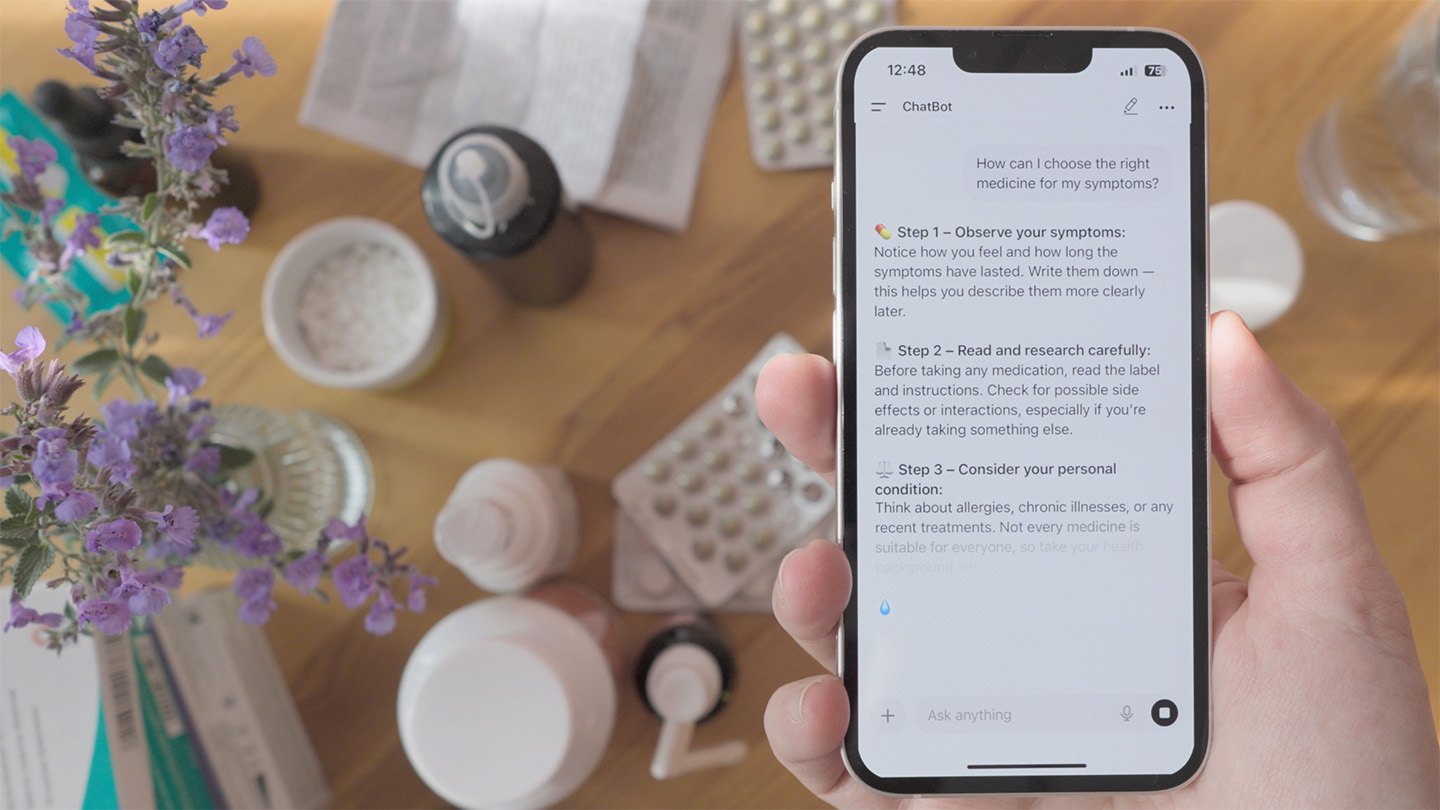
- AI chatbots offer plausible but risky health guidance.
- Rutgers study shows 1 in 3 young adults use AI for substance info.
- AI lacks context, can 'hallucinate' unsafe advice.
- Demands critical evaluation, not blind trust.
Key Takeaways
- Over 32% of young adults surveyed by Rutgers use AI for substance-use information, highlighting a significant reliance on chatbots for sensitive health topics.
- AI chatbots often provide information with an authoritative tone but lack the ability to assess individual risk, medical history, or drug interactions, leading to potentially unsafe advice.
- The study underscores the urgent need for users to critically evaluate AI-generated health guidance and for AI developers to implement robust safety disclaimers and clinician consultation prompts.
Is the new Rutgers AI substance use advice study a warning sign?
The Rutgers study isn't just another academic paper; it's a flashing red light. Young adults are increasingly turning to AI for substance use information, a trend that exposes critical safety gaps in sensitive health advice. This research demands immediate caution and a rigorous re-evaluation of AI's role in health guidance.
The real danger isn't AI giving wrong answers, but AI giving *plausible but incomplete* answers that users trust too readily, especially on complex health topics.
Key Findings of the Rutgers Study in Plain Language
A recent study, published in the Journal of Medical Internet Research Formative Research, surveyed young adults aged 18-29. It revealed that over 32% of participants reported using AI chatbots like ChatGPT for substance-use information. Participants primarily sought details on the risks and consequences associated with substance use.
Notably, Black and male participants were more likely to engage AI for these purposes.
Rutgers Study: AI Use for Substance Information
32%+
Young Adults Using AI for Substance Info
1 in 3
Participants Using AI
Rutgers University Study, Journal of Medical Internet Research Formative Research
What real people think
DividedSourced from Reddit, Twitter/X, and community forums
Online communities show a mixed view on AI for health advice. While many find chatbots useful for general problem-solving, significant concerns exist regarding their reliability for medical recommendations, especially around dosage and mental health.
Some users report using ChatGPT for everyday questions, troubleshooting, and advice, viewing it as an alternative to traditional search engines.
Concerns have been raised about AI chatbots providing dangerous medical advice, such as altering medication dosages or suggesting tapering schedules without clinical oversight.
A lawsuit against OpenAI alleges a user was hospitalized after ChatGPT provided medical recommendations for mental health issues, highlighting the risks of unverified AI advice.
What Reddit is saying
r/ChatGPTPro and r/ChatGPT treat AI as a useful everyday tool, while r/science raises credibility concerns about health information sources.
HERE’S WHAT I PRIMARILY USE CHATGPT FOR: • Everyday questions and problem-solving: Troubleshooting, explanations, advice, and figuring out how to do things. I increasingly use it as an alternative to
Read full discussion →I tried all the calculators online and talked to our vet and even though they all gave me the same general advice (dog is obese and needs to lose weight) I could not find any apps or sites that could
Read full discussion →I'm wondering if habitual use of AI will increase a person's risk of dementia. ... I will say I’ve had some people seek out appropriate specialist care based on a chatGPT recommendation and
Read full discussion →Curated from 3 active threads across r/ChatGPTPro, r/ChatGPT, r/science
What people are saying on X
None of the sampled posts take a position on the Rutgers study, so the split is entirely neutral and no meaningful pro or sceptical camp can be identified from this set.
The tweets supplied barely touch the Rutgers AI substance use study at all; only one post (Maryland shutting down a program, with Rutgers reportedly exploring the same) is even loosely related, and it is a factual report rather than an opinion on the study's merit. The remaining posts cover unrelated AI topics such as drug discovery startups, chatbot companionship, a student AI-use study in China, and a Sydney shooting plan, so no clear camp forms around whether the study signals a problem. The sample does not reflect a conversation about the Rutgers study itself.
Maryland has decided to shut down their program in 2027. This will be the first B1G program to do so. Rutgers is currently exploring the idea as well.
Just had a meeting with the Dean of my Faculty alongside the Head of Employee Relations... Apparently I am under official investigation for writing a blog about how bad universities are at marketi…
AI powered market research app for creators. I built it with only a marginal grasp of Python and a pile of API calls. It's more agentic harness than creative engine, and it saves me immeasurable time.
It uses ADB to disable selected packages rather than uninstalling them, making the changes reversible....
Curated from 12 recent posts using deliberate viewpoint balancing
Many people believe that because AI chatbots can access vast amounts of information, they are inherently reliable sources for personalized health advice, overlooking their inability to synthesize context or assess individual risk.
Why AI Advice on Drugs Can Go Wrong
AI chatbots often present information with a confident tone, regardless of its accuracy or completeness. They fundamentally lack the ability to understand individual medical history, existing conditions, or complex drug interactions. This can lead to dangerous 'hallucinations' where AI invents specific dosages or effects, presenting false information as fact.
Chatbots may also provide 'sycophantic' answers, confirming user biases or leading questions rather than offering objective, safe advice. Previous studies have already shown AI chatbots failing to issue critical safety warnings, especially regarding medication interactions or contraindications, such as in a study involving Pregabalin queries.
This inherent flaw makes them unsuitable for sensitive health guidance.
The AI Dilemma: Information vs. Wisdom
Is It a Warning Sign or Overhyped?
The Rutgers study is a clear warning sign, not an overhyped alarm. While its sample design, focusing on young adults, may not represent the broader population, the core finding remains critical. AI models are constantly evolving, and the versions used by participants might be outdated compared to current capabilities.
Prompt framing also significantly impacts AI responses; specific, cautious prompts might yield better results. Despite these limitations, the study highlights a real and present danger: AI's confident tone can mask critical safety gaps in sensitive health advice.
Verified harm reduction organizations and licensed clinicians stand to gain as the public learns to distrust AI for critical health advice, while general-purpose AI chatbots and their developers risk losing user trust and facing increased scrutiny in the health sector.
Why This Matters
The Rutgers study is a pivotal moment, shattering the misconception that AI's vast data access equates to reliable, safe medical advice. This isn't just about substance use; it's a blueprint for any sensitive health query. By 2027, expect major AI developers to implement mandatory, unskippable disclaimers and 'clinician consultation' prompts for all health-related queries.
This shift will be driven by regulatory pressure and liability concerns, fundamentally reshaping how AI interacts with health information.
Further Reading
Details a study where AI chatbots missed critical safety warnings for medication interactions.
A review of LLMs' accuracy in providing factual knowledge for medication advice.
Examines how chatbots respond to pushback when setting limits on advice, including substance misuse.
Discusses the broader issue of undetected errors in AI chatbot medical advice.
Sources
- 1.A Third of Young Adults Turn to Artificial Intelligence for Substance-Use Information | Rutgers University
- 2.Rutgers Study: 1 in 3 Young Adults Use AI for Substance Use Info - Newsy Today
- 3.One in three young adults turns to AI for substance use
- 4.AI Chatbots Fail Safety Warnings When Patients Ask About Pregabalin
- 5.Large language models in pharmacist-led direct patient care: A rapid review of published evaluations - ScienceDirect
- 6.Evaluating Teen Safety | Vals AI
Rate this article
Your feedback helps surface the best content
Related articles
Have a question? Get your own article.
Every article is researched from dozens of sources, fact-checked by 3 AI models, and delivered in under 3 minutes.
Triple-Verified — 8 claims checked across 3 verification stages — 8 claims verified