Space Data Centers: Why They're Coming

March 31, 2026 · 9 min read
··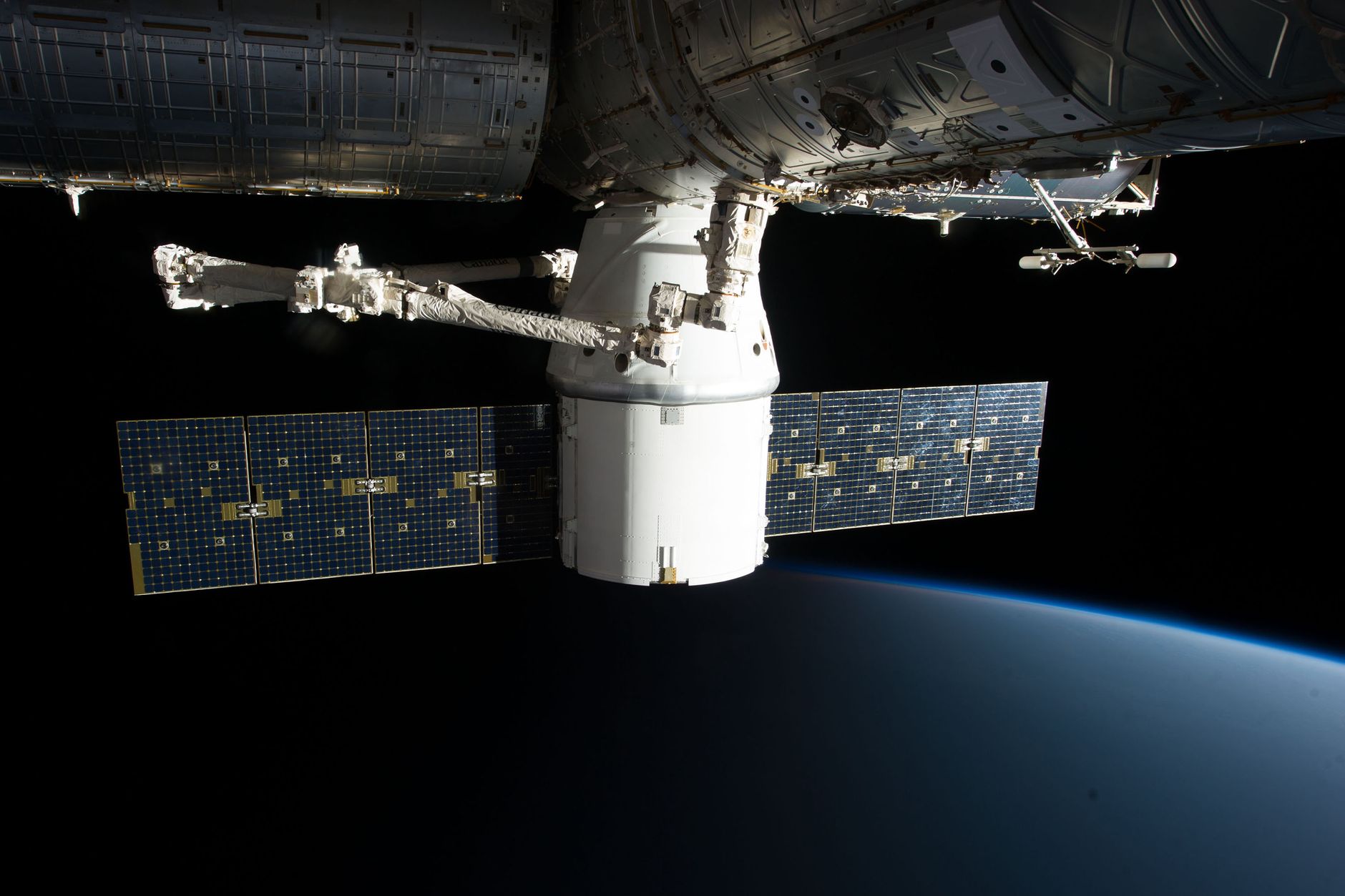
Photo by SpaceX on Pexels
- Space data centers will be viable by 2030-2032 as launch costs hit $100-200/kg
- The killer advantage is radiative cooling to vacuum, not avoiding Earth permits
- First generation targets heat-dense AI training where Earth cooling fails
- SpaceX Starship economics make orbital compute infrastructure inevitable
Space data centers are not speculative technology—they're an economic inevitability driven by Earth's physical cooling limits. Within 10-15 years, orbital infrastructure will handle the highest-density compute workloads that terrestrial facilities simply cannot cool efficiently.
Key Takeaways
- Earth data centers face insurmountable thermal density limits as AI workloads intensify
- Space offers unlimited radiative cooling to 3K vacuum—a physics advantage no terrestrial system can match
- Launch costs falling to $100-200/kg make space infrastructure cost-competitive by 2030-2032
- First orbital data centers will serve specialized heat-dense workloads, not replace terrestrial facilities
Watch Out For
- ⚠This isn't about escaping zoning laws—it's about physics and thermal management
- ⚠Radiation hardening and component reliability add significant complexity
- ⚠High-latency applications will remain Earth-bound for decades
Search interest: “space data centers orbital computing”
vs prior 3 months
What You Need to Know
]
The Earth-Based Data Center Crisis
.
Data Center Resource Consumption (2026)
945 TWh
Global electricity consumption
1.8B gal
Annual water usage (US hyperscale)
2,000W/m²
Earth cooling limit (convective)
IEA, Congress.gov, industry reports
Why Zoning and NIMBY Aren't the Real Problem
The popular narrative frames space data centers as an escape from Earth's regulatory friction. This misses the point entirely. Zoning battles and NIMBY opposition are temporary, solvable problems. Amazon, Google, and Microsoft build massive facilities despite local resistance because they have the resources and regulatory expertise to navigate permitting.
The real constraint isn't political—it's thermodynamic. Earth's atmosphere limits heat rejection through convection and conduction. Air-cooled systems hit efficiency walls around 10-15 kW per rack. Liquid cooling extends this to 50-100 kW per rack but with exponentially higher complexity and infrastructure costs.
Beyond that, you're building more cooling infrastructure than compute infrastructure. Space bypasses this limit not by avoiding permits, but by accessing unlimited radiative cooling. In vacuum, thermal radiators can reject heat directly to the 3K cosmic background at rates limited only by surface area and emissivity—not atmospheric heat capacity.
This enables power densities of 200+ kW per rack without exotic cooling systems. The regulatory environment in space is actually more complex, not simpler, involving international treaties, frequency coordination, and orbital debris mitigation.
The real constraint isn't political—it's thermodynamic.
The Thermal Physics Advantage
Heat transfer in space operates on fundamentally different principles than terrestrial cooling. On Earth, data centers rely on convection—moving air or liquid past hot surfaces to carry heat away. This process is limited by atmospheric heat capacity and requires continuous energy input to maintain airflow or liquid circulation.
Radiative cooling in space exploits the Stefan-Boltzmann law: radiated power scales with the fourth power of temperature difference. A 400K surface (127°C) radiating to 3K space background can reject approximately 1,400 watts per square meter through a perfect black-body radiator.
Real-world emissivities of 0.8-0.9 reduce this to 1,100-1,250 W/m², but this is still achievable without any moving parts or working fluids. The key insight is thermal density scaling. On Earth, doubling compute power requires doubling cooling infrastructure—fans, pumps, chillers, cooling towers.
In space, doubling compute power requires doubling radiator surface area, which scales as a simple geometric expansion. A 100 kW compute load needs roughly 100-150 square meters of thermal radiator surface—a 10x10 meter panel array that can be deployed passively.
The key insight is thermal density scaling.
Heat Rejection Capacity by Cooling Method
Maximum sustainable heat rejection per square meter for different cooling approaches
Thermal management engineering literature
How Cooling Actually Works in Space
Space data centers don't eliminate cooling systems—they fundamentally change the heat rejection pathway. Servers still generate waste heat that must be collected and transported, but instead of rejecting heat to atmosphere, orbital facilities radiate directly to space.
The thermal architecture uses a three-stage process. First, heat pipes or liquid cooling loops collect waste heat from processors and memory modules, similar to terrestrial systems. Second, this thermal energy is transported to centralized heat exchangers via working fluid circulation.
Third, large deployable radiator panels reject the collected heat through thermal radiation. Sophia Space, which demonstrated thermal management tiles on Axiom's orbital testbed in January 2026, uses passive radiative panels that require no pumps or fans.
Their modular design allows thermal capacity to scale linearly with compute load—add more processing tiles, deploy more radiator surface area. This eliminates the exponential cooling cost scaling that plagues high-density terrestrial facilities. The thermal control challenge isn't heat rejection—it's temperature management.
Electronics need stable operating temperatures, typically 60-80°C for processors. Space-based systems use thermal mass and heat pipe networks to buffer temperature swings during orbital day/night cycles, maintaining stable component temperatures even as radiator effectiveness varies with solar loading.
Launch Economics: The Tipping Point
.
Launch Cost Trajectory to LEO
Historical and projected launch costs showing the path to space data center viability
SpaceX, Blue Origin, industry analysis
Design and Architecture of Orbital Data Centers
Orbital data centers will look nothing like terrestrial server farms. The architecture prioritizes modularity, redundancy, and thermal management over human accessibility. Compute modules are built around standardized satellite buses, with processing elements integrated directly into the spacecraft structure rather than mounted in traditional racks.
Axiom Space's operational testbed uses "thermal tiles"—modular computing units designed by Spacebilt that integrate processors, memory, and thermal interfaces into standardized form factors. Each tile handles its own thermal load through dedicated heat pipes connected to shared radiator arrays.
This architecture allows compute capacity to scale by adding tiles, with thermal capacity scaling proportionally. Power systems rely on high-efficiency solar arrays with battery storage for eclipse periods. The combination of solar availability and vacuum cooling creates unique operating profiles—maximum compute performance during solar exposure, with reduced loads during eclipse to conserve battery power.
This natural duty cycle actually matches many batch processing workloads like AI training and scientific computation. Communication links to Earth use optical terminals for high-bandwidth data transfer. Skyloom's optical communication system on Axiom's testbed demonstrates gigabit-class links that can handle the massive data flows required for distributed computing applications.
Multiple orbital planes and inter-satellite links provide redundancy and continuous Earth connectivity.
What real people think
Mixed opinionsSourced from Reddit, Twitter/X, and community forums
Engineering communities are split between thermal physics enthusiasts who see the cooling advantage and skeptics focused on launch economics and complexity.
Thermal engineers acknowledge the physics advantage but question radiation hardening costs and component reliability in vacuum environments
Space industry professionals emphasize launch cost sensitivity and regulatory complexity, with most seeing 2030+ timeline as optimistic
Growing excitement around Starship economics making orbital infrastructure viable, with particular interest in AI training applications
Mixed views on operational complexity vs. cooling advantages, with most seeing specialized applications rather than wholesale replacement
Timeline: When Space Data Centers Becomes Viable
The path to commercial viability follows a predictable technology adoption curve driven by launch cost reductions and demonstration milestones. Axiom Space's January 2026 testbed represents the proof-of-concept phase, validating thermal management and basic compute operations in orbital environment.
The 2027-2028 timeframe will see expanded demonstrations as Starship achieves operational status and launch costs drop below $1,000/kg. Companies like Sophia Space and Spacebilt will deploy larger-scale testbeds with meaningful compute capacity—dozens of processing nodes rather than single demonstration units.
Commercial pilot deployments become viable in the 2029-2031 window as launch costs approach $200-400/kg. The first commercial applications will target heat-dense workloads where terrestrial cooling costs exceed orbital deployment costs—large-scale AI training, cryptocurrency mining, and scientific computation with minimal latency requirements.
Mainstream adoption occurs post-2032 as launch costs stabilize below $200/kg and operational experience reduces deployment risk. By 2035, orbital data centers capture 5-10% of the highest-density compute market—not replacing terrestrial facilities but handling workloads that Earth-based systems cannot cool efficiently.
Space Data Center Development Milestones
Axiom Testbed Operational
First thermal management tiles demonstrate orbital cooling concepts with Spacebilt partnership
Starship Commercial Operations
Launch costs drop below $1,000/kg enabling larger-scale demonstrations
First Commercial Pilots
Companies deploy production orbital compute for specialized heat-dense applications
Launch Cost Breakthrough
Sub-$200/kg costs make orbital infrastructure cost-competitive with terrestrial alternatives
Market Penetration
Orbital data centers capture 5-10% of high-density compute market
Unresolved Challenges and Risks
Radiation hardening remains the most significant technical hurdle. Commercial processors are designed for terrestrial environments with atmospheric shielding. In low Earth orbit, cosmic rays and solar particle events can cause single-event upsets, latchup conditions, and cumulative dose damage that degrades performance over time.
Space-qualified electronics traditionally use specialized manufacturing processes, older node geometries, and extensive shielding—all of which increase cost and reduce performance. Modern AI accelerators like NVIDIA H100 GPUs use cutting-edge 4nm processes that are inherently more radiation-sensitive.
The industry needs breakthrough approaches like software error correction, distributed redundancy, or novel shielding materials to make commercial processors viable in space. Orbital debris presents escalating risk as the space environment becomes more congested.
A single collision could destroy millions of dollars of compute infrastructure and create debris that threatens other orbital assets. Debris mitigation requires active tracking, avoidance maneuvers, and potentially defensive systems—all adding cost and complexity.
Latency limitations restrict applications to batch processing and latency-tolerant workloads. Round-trip communication delays of 5-20 milliseconds preclude real-time applications, interactive services, and low-latency trading systems. This confines orbital data centers to specialized niches rather than general-purpose computing.
Critical Technical Risks
Who's Building This (Landscape of Players)
Who's Building This Axiom Space leads the pack with operational hardware in orbit. Their collaboration with Spacebilt has produced the first functional thermal management demonstration, validating the core cooling concepts that make space data centers viable.
The Axiom platform provides a near-term testbed for scaling these concepts toward commercial deployment. SpaceX drives the economics through Starship development. Without sub-$500/kg launch costs, space data centers remain economically unviable. Starship's massive payload capacity and rapid reusability are critical to achieving these cost targets.
Key Players in Space Data Center Development
| Metric | Axiom Space | SpaceX | Sophia Space | Blue Origin | Varda Space |
|---|---|---|---|---|---|
| Operational Experience | 9/10 | 8/10 | 5/10 | 6/10 | 6/10 |
| Launch Capability | 3/10 | 10/10 | 2/10 | 8/10 | 2/10 |
| Thermal Tech | 8/10 | 4/10 | 9/10 | 3/10 | 5/10 |
| Commercial Timeline | 7/10 | 9/10 | 8/10 | 7/10 | 6/10 |
| Funding Access | 8/10 | 10/10 | 6/10 | 9/10 | 7/10 |
What Happens to Earth Data Centers?
Terrestrial data centers won't disappear—they'll evolve into a bifurcated market serving fundamentally different use cases. Earth-based facilities will focus on latency-sensitive applications, edge computing, and workloads requiring human interaction or real-time response.
The migration pattern will follow thermal density lines. High-power AI training clusters that push 50+ kW per rack will migrate to orbital platforms where cooling costs become economic. General-purpose computing, web services, and edge applications will remain terrestrial where latency and accessibility matter more than thermal efficiency.
Terrestrial data centers will actually benefit from this bifurcation. By shedding the highest-density workloads, existing facilities can operate more efficiently within their thermal design limits. This reduces strain on power grids, water systems, and cooling infrastructure while extending facility lifespans.
The geographic distribution will also shift. Earth-based data centers will concentrate near population centers and network exchange points where latency matters most. Water-scarce regions like Arizona and Nevada may see reduced data center construction as heat-dense workloads migrate to space, reducing pressure on local water resources.
A hybrid model emerges where complex workloads span both environments. AI training might occur in orbital facilities with unlimited cooling, while model inference runs terrestrially for low latency. This architectural split optimizes both thermal efficiency and user experience.
Data Center Market Split by 2035 (Projected)
Distribution of compute workloads between terrestrial and orbital facilities
Industry analysis and projections
Forecast: What Happens Next
The 2026-2030 period will be defined by proof-of-concept scaling and launch cost reduction. Axiom's testbed success will drive larger demonstrations as companies like Sophia Space deploy multi-rack systems. Starship's operational maturity becomes the critical path—delays in achieving reliable sub-$500/kg launch costs will push commercial viability toward the mid-2030s.
Regulatory frameworks will emerge reactively rather than proactively. Current space law doesn't address orbital data centers, creating uncertainty around liability, data sovereignty, and orbital slot allocation. Expect initial deployments to operate in regulatory gray areas until governments develop specific frameworks.
The first commercial applications will target cryptocurrency mining and AI model training—workloads with high thermal density, batch processing characteristics, and minimal latency sensitivity. Success in these niches will validate the business model and drive expansion into broader high-performance computing applications.
By 2035, orbital data centers will represent a distinct market segment rather than a wholesale replacement for terrestrial facilities. Market size could reach $50-100 billion annually if launch costs achieve projected targets, concentrated in AI training, scientific computation, and specialized batch processing.
The broader impact extends beyond computing. Successful orbital data centers will validate space-based industrial infrastructure, potentially leading to orbital manufacturing, materials processing, and other applications that benefit from vacuum, microgravity, or unlimited solar power.
The data center market becomes a proving ground for the broader space economy.
2035 Market Projections
$75B▲
Orbital data center market size
$150/kg▼
Target launch cost
50+▲
Operational orbital facilities
Industry analysis and company projections
Further Reading
Comprehensive technical and economic analysis of space-based data center viability
Deep dive into thermal management approaches for space-based computing systems
Technical research paper exploring architectural concepts for orbital AI systems
Engineering community discussion of technical feasibility and challenges
Details on passive thermal management systems for space-based computing
Community analysis of launch vehicle economics driving space infrastructure viability
Sources
- 1.Ars Technica - Orbital Data Centers Economic Analysis
- 2.Space-based Data Center - Wikipedia
- 3.Google Research - Space-Based AI Infrastructure
- 4.Cooling for Orbital Compute Analysis
- 5.Data Center Energy Consumption - IAEI Magazine
- 6.Congressional Research Service - Data Center FAQ
- 7.Aerospace America - Sophia Space Thermal Tech
- 8.SatNews - Physics Wall Cooling Challenge
Rate this article
Your feedback helps surface the best content
Related articles
Have a question? Get your own article.
Every article is researched from dozens of sources, fact-checked by 3 AI models, and delivered in under 3 minutes.