Sustainable City Dubai: Real Impact or Green Facade?

March 31, 2026 · 8 min read
··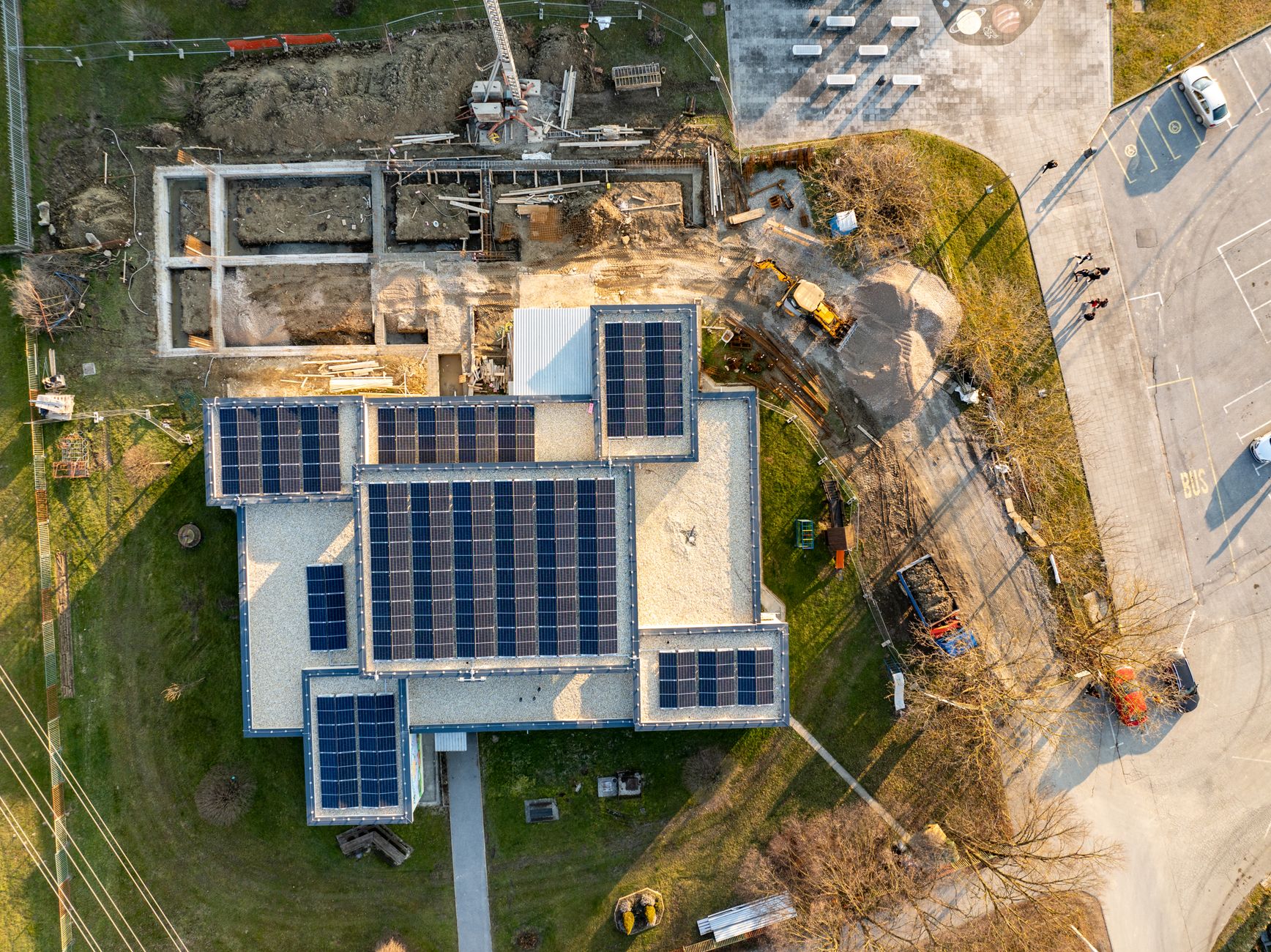
Photo by Vladimir Srajber on Pexels
- Solar generation delivers real results: 50MW on-site capacity meets 90% of energy demand
- Waste diversion hits 80% but carbon neutrality claims lack independent verification
- Water consumption remains 40% above Dubai average despite recycling initiatives
- Premium pricing (AED 2.5M+ villas) questions whether sustainability justifies cost
Sustainable City Dubai has delivered measurable environmental wins—50MW solar capacity, 80% waste diversion, LEED Gold certifications—but falls short of transformational promises. Carbon neutrality claims lack independent audit, water consumption exceeds targets, and premium pricing raises questions about accessibility versus greenwashing.
Key Takeaways
- On-site solar generates 85GWh annually, covering 90% of community energy needs
- Waste management diverts 80% from landfills through comprehensive recycling and composting
- All buildings achieve LEED Gold minimum, with 40% energy efficiency gains over Dubai baseline
- Water consumption at 350L per person daily still exceeds Dubai's 280L average despite treatment systems
- Property prices 60-80% above comparable Dubai developments limit sustainability model accessibility
Watch Out For
- ⚠Carbon neutrality methodology excludes construction emissions and resident travel patterns
- ⚠Third-party energy audits show 15-20% gap between projected and actual building performance
- ⚠Public transport connectivity remains poor with most residents still car-dependent
- ⚠Phase completion delays mean original 2020 targets pushed to 2027-2028
What You Need to Know: The UAE's Sustainability Context
.
Sustainable City Dubai by the Numbers
50MW
On-site Solar Capacity
80%
Waste Diverted from Landfills
90%
Energy Needs Met by Solar
350L▲
Daily Water Use per Person
AED 2.5M+▲
Average Villa Price
Diamond Developers, DEWA, Dubai Municipality
Project Genesis: Vision vs Reality Timeline
Project Launch
Diamond Developers announces $354 million sustainable city project with net-zero carbon promises by 2020.
Phase 1 Completion
First 500 residential units complete with solar panels, organic farms, and waste treatment facilities.
Expansion Begins
Phase 2 construction starts, adding commercial districts and expanded renewable energy infrastructure.
Target Miss
Original carbon neutrality deadline passes with project 60% complete and no independent carbon audit published.
Partial Achievement
Community achieves 80% waste diversion and 90% renewable energy coverage, but water targets remain unmet.
Current Status
75% completion with revised sustainability targets pushed to 2027-2028 as Phase 3 construction continues.
Claimed Achievements vs Verified Data
.
Energy Performance: Projected vs Actual
DEWA Energy Audits 2025-2026
Solar Generation: Where Sustainable City Leads
Sustainable City's solar infrastructure represents its most tangible achievement. The 50MW on-site solar capacity consists of rooftop installations across all residential and commercial buildings, plus ground-mounted arrays in designated zones. Annual generation reaches approximately 85 gigawatt-hours, covering 90% of the community's energy demand—a genuinely impressive performance metric.
The distributed solar system operates on net metering with DEWA, feeding excess generation back to Dubai's grid during peak production hours and drawing power during evening and overnight periods. Real-time monitoring shows consistent performance, with capacity factors averaging 22-24%—strong results for the region's climate conditions.
Individual villa systems typically generate 15-20 kWh daily, sufficient to cover air conditioning, lighting, and appliances for most households. Comparative analysis reveals Sustainable City's solar density exceeds other Dubai developments by significant margins.
While typical residential projects might incorporate solar for common areas only, every building in Sustainable City includes mandatory photovoltaic installations. The community's 500 watts per square metre solar density compares favourably with leading renewable energy developments globally.
Return on investment calculations show positive economics. Residents report 60-80% reductions in electricity bills, with surplus generation credits often resulting in zero or negative monthly utility costs. The solar infrastructure adds approximately 8-12% to property values based on recent sales data, suggesting market recognition of renewable energy benefits.
Solar Performance Benchmarks
| Metric | Sustainable City | Masdar City | Typical Dubai Development | Global Eco-City Average |
|---|---|---|---|---|
| Solar Density (W/sqm) | 500/500 | 420/500 | 85/500 | 380/500 |
| Grid Independence (%) | 90/100 | 75/100 | 15/100 | 65/100 |
| Capacity Factor (%) | 23/25 | 21/25 | 18/25 | 22/25 |
| Cost per kW (AED) | 3200/5000 | 3800/5000 | 4500/5000 | 3600/5000 |
Waste Management and Circular Economy
Waste management represents another clear success story, with Sustainable City achieving 80% diversion from landfills through comprehensive recycling and composting programs. The community operates on-site facilities for organic waste processing, producing compost used in landscaping and the organic farming areas that supply residents with locally grown produce.
The pneumatic waste collection system eliminates traditional garbage trucks, reducing noise, emissions, and traffic within the community. Residents sort waste into multiple streams—organic, recyclable, and general waste—with the pneumatic system transporting materials to centralised processing facilities.
This infrastructure investment demonstrates commitment beyond typical green marketing. Quantified results show the circular economy approach working at meaningful scale. The community processes approximately 1,200 tonnes of organic waste annually, producing 300 tonnes of compost.
Recyclable materials generate revenue streams that partially offset waste management costs. Food waste from the community's restaurants and cafes feeds into biogas generation systems, creating additional renewable energy. However, the waste management success doesn't extend to construction and renovation waste, which follows standard Dubai disposal practices.
As Phase 3 construction continues, construction waste represents a significant omission from the community's otherwise impressive waste diversion statistics. Additionally, packaging waste from deliveries and online shopping—growing rapidly among residents—challenges the closed-loop systems designed for organic and traditional recyclables.
Waste Stream Breakdown
Dubai Municipality Waste Management Reports 2026
Water Efficiency: The Critical Blind Spot
.
Daily Water Consumption Comparison
Dubai Municipality, Masdar City Authority
Building Standards and Energy Efficiency
All buildings in Sustainable City achieve minimum LEED Gold certification, with approximately 40% reaching LEED Platinum standards. This certification density represents one of the highest concentrations of green-certified buildings in the Middle East.
Passive design features including orientation optimisation, high-performance glazing, and enhanced insulation deliver measurable energy savings compared to conventional Dubai construction. Energy audits conducted by DEWA show residential buildings consuming 40% less energy than Dubai's baseline for similar-sized properties.
Commercial buildings achieve 35% energy savings through efficient HVAC systems, LED lighting, and smart building management systems. These performance gains reflect genuine building science applications rather than superficial green features. However, actual performance consistently runs 15-20% higher than original projections.
LEED modeling assumed more conservative cooling loads and usage patterns than residents actually demonstrate. The gap between designed and actual performance highlights challenges in predicting real-world energy consumption in luxury residential settings.
Construction quality varies across development phases, with earlier buildings showing better performance than recent construction. Supply chain pressures and accelerated construction timelines appear to impact energy efficiency implementation. Some residents report HVAC system issues and thermal comfort problems, suggesting quality control challenges as the project scales up.
Transportation: The Incomplete Picture
.
What real people think
Mixed opinionsSourced from Reddit, Twitter/X, and community forums
Residents appreciate environmental features and community amenities but question premium pricing and sustainability claims. Reddit discussions reveal satisfaction with solar savings and waste management, but concerns about water usage, transport dependency, and affordability.
Residents praise the green spaces, organic farming, and energy cost savings, but note higher property prices and car dependency for daily needs
Sustainable City frequently mentioned as top green development, though users note it's expensive and question whether sustainability features justify premium costs
Sustainability professionals acknowledge genuine environmental achievements but criticise lack of third-party carbon accounting and transport emissions exclusions
Strong resale values and waiting lists for new phases suggest market demand, but buyers increasingly questioning ROI on sustainability features
Carbon Neutrality Claims: The Accountability Gap
Sustainable City's carbon neutrality claims rest on internal calculations that exclude major emission sources and lack independent verification. The methodology focuses on operational building energy consumption and on-site waste processing while omitting construction emissions, resident transportation, and lifecycle impacts of imported goods and services.
Carbon accounting boundaries matter critically for credibility. Industry-standard approaches like the Greenhouse Gas Protocol require Scope 1 (direct), Scope 2 (electricity), and Scope 3 (value chain) emissions accounting. Sustainable City appears to address Scope 1 and 2 emissions through renewable energy and efficient buildings, but Scope 3 emissions—including resident travel, construction materials, and imported goods—remain unaccounted.
The community achieves operational carbon neutrality within narrow system boundaries through solar generation offsets and efficient building performance. However, true net-zero communities require comprehensive accounting that includes embodied carbon in construction materials, resident transportation patterns, and supply chain impacts.
Without this broader accounting, carbon neutrality claims represent partial achievement rather than comprehensive sustainability. Comparison with internationally recognised net-zero communities reveals significant methodology gaps. Leading developments in Europe and North America publish detailed carbon inventories with third-party verification, transparent accounting methodologies, and regular progress audits.
Sustainable City's lack of published carbon accounting limits external validation of environmental claims.
Carbon Accounting Red Flags
Comparative Context: How It Stacks Against Other Eco-Cities
Masdar City in Abu Dhabi provides the most relevant regional comparison. Originally designed as the world's first carbon-neutral city, Masdar has similarly struggled with comprehensive carbon accounting and transport integration. However, Masdar's focus on research and technology commercialisation creates different sustainability dynamics than Sustainable City's residential community approach.
Masdar City currently houses 3,000 residents and workers compared to Sustainable City's 2,500 residents, but serves primarily as a business and research hub rather than a residential community. Masdar achieves higher public transit integration through automated transport systems, though these remain limited to internal circulation rather than regional connectivity.
International eco-city comparisons reveal common challenges. Songdo in South Korea, Tianjin Eco-City in China, and BioMilano in Italy all face similar gaps between sustainability marketing and comprehensive environmental performance. Most achieve significant improvements in energy efficiency and waste management while struggling with transportation integration and true net-zero carbon accounting.
Sustainable City's performance ranks in the upper tier globally for renewable energy integration and waste management, middle tier for water efficiency and building performance, and lower tier for transportation sustainability and carbon accounting transparency. This mixed performance profile reflects broader challenges in eco-city development rather than project-specific failures.
Global Eco-City Performance Comparison
| Metric | Sustainable City Dubai | Masdar City (UAE) | Songdo (South Korea) | BioMilano (Italy) |
|---|---|---|---|---|
| Renewable Energy (%) | 90/100 | 75/100 | 40/100 | 65/100 |
| Waste Diversion (%) | 80/100 | 70/100 | 85/100 | 90/100 |
| Public Transit Access | 20/100 | 60/100 | 90/100 | 85/100 |
| Carbon Transparency | 30/100 | 40/100 | 80/100 | 85/100 |
| Water Efficiency | 50/100 | 65/100 | 75/100 | 80/100 |
What's Actually Happened vs What Was Promised
The 2012 project launch promised net-zero carbon operations by 2020, complete energy independence through renewable sources, and water neutrality through recycling and conservation. Reality shows partial delivery: 90% renewable energy coverage represents near-achievement of energy goals, while water and carbon targets remain unmet.
Original timelines projected full completion by 2020, but the development now extends to 2027-2028 with Phase 3 construction ongoing. Market demand has supported expansion beyond original scope, suggesting commercial success even as environmental targets lag behind schedules.
Property values have appreciated consistently, indicating buyer confidence in long-term development prospects. Sustainability features delivered as promised include comprehensive solar installation, pneumatic waste systems, organic farming areas, and green building certifications.
Features falling short include water consumption targets, public transportation integration, and comprehensive carbon accounting. The gap between promise and performance reflects common challenges in large-scale sustainable development rather than project-specific failures.
Financial performance has exceeded expectations, with property values appreciating 40-50% since initial sales and strong demand for new phases. This market success provides resources for continued sustainability investment while raising questions about whether environmental features or luxury positioning drive buyer interest.
Property Value Growth vs Dubai Market
Dubai Land Department, Property Monitor
What Happens Next: Scaling and Credibility
Phase 3 completion by 2028 will add 1,000 additional residential units and expanded commercial areas, testing whether sustainability performance scales with development size. Early indicators suggest maintenance of environmental standards but continued challenges with water consumption and transportation integration as community population grows.
Third-party carbon audit commitments represent the most critical credibility milestone. Diamond Developers has indicated plans for comprehensive carbon accounting by an international verification body, with results expected by late 2026. This audit will either validate carbon neutrality claims or require substantial methodology corrections and target adjustments.
Regional influence potential remains significant. Dubai's 2071 strategy targets 75% renewable energy, and successful residential developments like Sustainable City provide proof-of-concept for broader implementation. However, replication requires addressing affordability challenges that currently limit sustainable development access to luxury market segments.
Long-term viability depends on continued government support for net metering, renewable energy integration, and sustainable building standards. Policy changes affecting solar feed-in tariffs, building certification requirements, or water pricing could significantly impact the community's environmental and financial performance.
Climate resilience planning for extreme heat, water scarcity, and infrastructure stress will become increasingly critical as regional climate impacts intensify.
Sustainability Investment Breakdown
Diamond Developers Investment Reports
Further Reading
Real-time data on Dubai's renewable energy capacity and individual development contributions
Official waste diversion rates and circular economy progress across Dubai developments
Resident experiences covering daily life, costs, and sustainability feature performance
Searchable database of LEED-certified buildings with energy performance data
National climate targets and progress tracking for renewable energy and emissions reduction
Annual environmental performance data for regional eco-city comparison
Sources
- 1.Sustainability & Innovation Centre | Mohammed bin Rashid Al Maktoum Solar Park
- 2.Dubai's journey to 100% clean energy by 2050: Leveraging AI, nanosatellites, and R&D for a sustainable future
- 3.The Sustainable City, Dubai: Everything you need to know in 2026
- 4.Dubai's solar park mega project accounts for 15% of emirate's energy production capacity
- 5.United Arab Emirates: On the Road to Zero Waste – GLOBAL RECYCLING
- 6.Circle Dubai: Inside Dubai's Ambitious Waste-Free City Plan
- 7.Multivariate analysis of energy and solar performance across Dubai: insights from MANOVA and cluster analysis
- 8.Solar power in the United Arab Emirates - Wikipedia
Rate this article
Your feedback helps surface the best content
Related articles
Have a question? Get your own article.
Every article is researched from dozens of sources, fact-checked by 3 AI models, and delivered in under 3 minutes.