Tesla Robotaxi 2026: Launch Date, Revenue Projections

April 9, 2026 · 6 min read
···
- Tesla's 'widespread by 2026' robotaxi claim is premature.
- Expect limited, supervised pilots, not full commercial deployment.
- Significant long-term revenue potential, minimal immediate impact.
- Waymo maintains a substantial lead in proven, deployed autonomy.
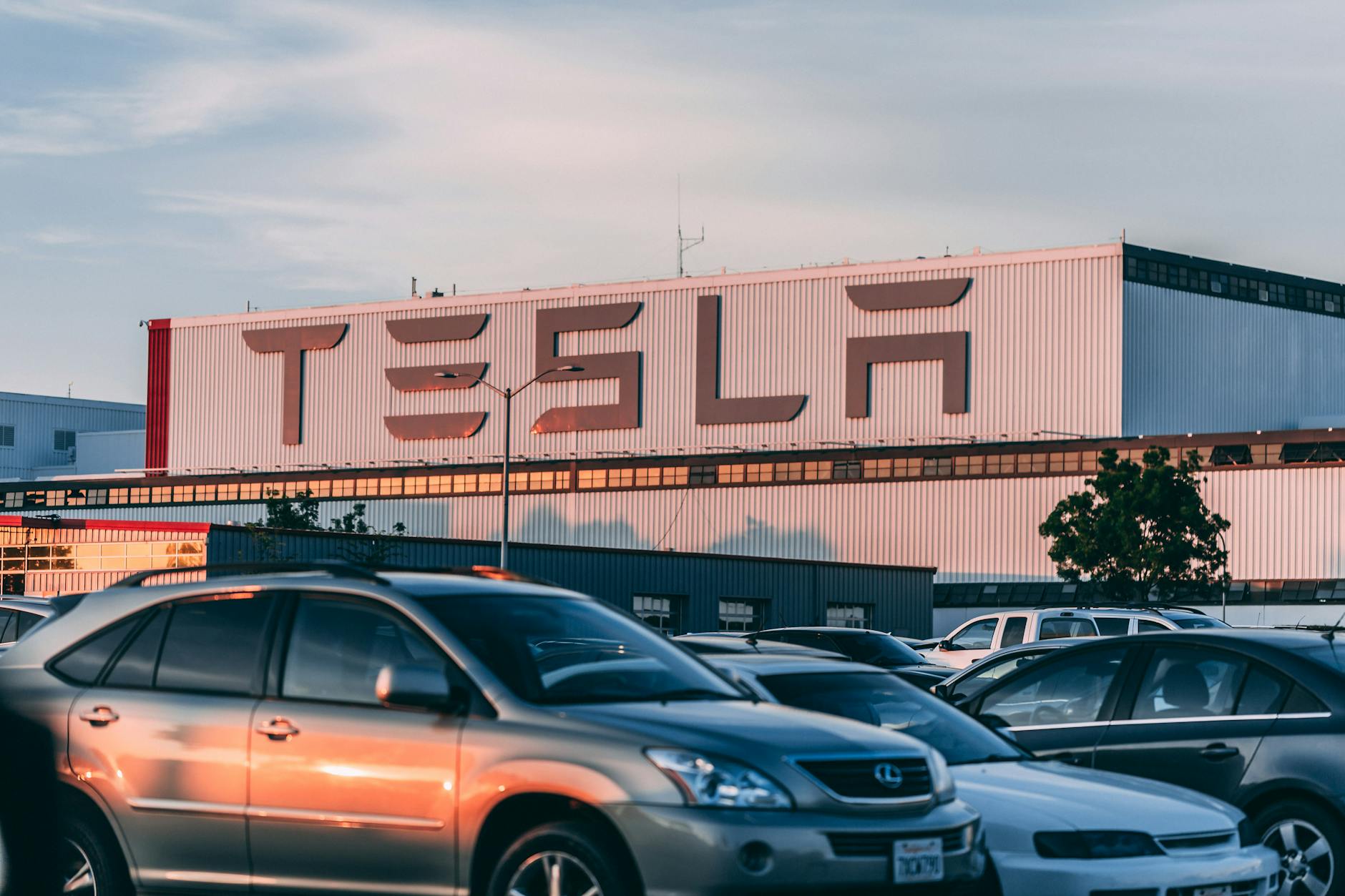
Tesla's Robotaxi project, including the dedicated Cybercab, is targeting April 2026 for initial production at Gigafactory Texas. While Elon Musk projects widespread U.S. deployment by the end of 2026, the reality points to limited, supervised pilot programs. The core tension lies between Tesla's ambitious timelines and the significant technical and regulatory hurdles required for true Level 4/5 autonomous operation.
What You Need to Know: The State of Robotaxi Tech in 2026
Robotaxi Tech Still Isn't Ready for Prime Time in 2026
True robotaxi deployment requires Level 4 or 5 autonomy—full self-driving without human oversight. That's a massive leap from Tesla's current FSD Beta, which still demands constant driver attention. The regulatory maze makes things worse: NHTSA offers guidelines, but real approval happens state-by-state, creating a patchwork of rules that slows national deployment.
Most companies, including Tesla, are still solving basic problems like snow-covered lane markers and construction zones. These "edge cases" represent the gap between impressive demos and actual commercial service.
The 'Widespread by 2026' Claim Is a Misunderstanding of Autonomy's True Challenge.
Latest Tesla Robotaxi News: What Actually Changed in 2026
Tesla's Cybercab Production Started, But Commercial Service Remains Distant
Tesla's August 2024 "We, Robot" event showcased the Cybercab—a purpose-built robotaxi with no steering wheel or pedals. Elon Musk promised production would begin at Gigafactory Texas in April 2026, targeting a sub-$30,000 price point.
As of April 2026, initial Cybercab units are indeed rolling off production lines. But manufacturing vehicles and operating commercial robotaxi service are entirely different challenges. Tesla still needs regulatory approval, fleet management systems, and most critically, autonomous driving software that works without human supervision.
Key Numbers Today: The Robotaxi Landscape at a Glance
April 2026
Tesla Cybercab Production Start
Under $30,000
Tesla Robotaxi Target Price
11+ Cities
Waymo Operational Cities (April 2026)
Elon Musk via InsideEVs, r/RealTesla, TechCrunch, CNET
Timeline: When Will Tesla's Robotaxi Actually Launch?
Tesla's Real Robotaxi Timeline: 2027 Pilots, 2029 Reality
Tesla's robotaxi promises have a track record of aggressive optimism. Musk's 2019 prediction of "1 million robotaxis by 2020" never materialized. The current reality suggests a much slower, phased rollout.
Expect supervised pilot programs in select geofenced areas by late 2026 or early 2027—with human safety drivers still required. Limited driverless service might begin in 2028, but only in controlled environments like airport shuttles or corporate campuses. Widespread commercial deployment remains years away, likely 2029-2030 at the earliest.

The True 'Winner' in Robotaxis Will Be Defined by Regulatory Trust, Not Just Technical Prowess.
How Tesla's Robotaxi Compares to Competitors
Waymo holds a substantial lead in the commercial robotaxi space, operating fully driverless services in over 11 U.S. cities as of April 2026, including San Francisco, Los Angeles, Phoenix, Austin, Atlanta, and Nashville. They are actively laying groundwork for expansion into at least five more cities.
Waymo's cautious, data-driven deployment strategy has built regulatory trust and operational experience.
In contrast, Cruise, once a prominent competitor, saw its robotaxi project canceled by General Motors due to high capital costs and an increasingly competitive market. GM is now focusing on its Super Cruise advanced driver-assistance system for personal vehicles. Other players like Baidu Apollo in China also operate robotaxi services, but their international expansion is limited.
Tesla's technology relies solely on cameras, a stark contrast to Waymo's multi-sensor suite incorporating lidar, radar, and cameras. While Tesla's FSD Beta has accumulated billions of miles, these are supervised miles, fundamentally different from the unsupervised, driverless miles required for Level 4/5 robotaxi operation.
Waymo's operational maturity in commercial service provides a significant advantage over Tesla's still-nascent driverless ambitions.
Deployment Timelines by Company: A Comparative View
Waymo, Tesla, Cruise Company Statements (April 2026)
The Business Case: Can Tesla Actually Make Money?
The unit economics of robotaxis promise significant profitability by eliminating the largest operational cost: the human driver. A robotaxi's cost per mile would primarily consist of vehicle depreciation, energy (charging), maintenance, and software licensing. Elon Musk has stated that a Cybercab ride would be cheaper than taking a bus, implying a highly competitive pricing model.
For Tesla, the potential revenue per ride, combined with high utilization rates, could lead to substantial profits per vehicle. The payback period for a robotaxi, even with its higher initial cost, could be significantly shorter than a human-driven taxi due to 24/7 operational capability.
Scaling a fleet to thousands or tens of thousands of vehicles would be necessary to achieve meaningful profitability and market penetration, requiring substantial upfront capital investment.
Robotaxi Revenue Potential by 2035: Interactive Scenarios
Explore how different market penetration rates and revenue per mile assumptions could impact Tesla's potential robotaxi revenue by 2035. This calculator illustrates the vast range of outcomes based on market adoption and operational efficiency.
$24
Total Revenue (Low Growth)
$75
Total Revenue (High Growth)
$51
Difference
Projected Fleet Growth & Revenue Scenarios (2026-2035)
Unpacked Analysis (Projected Scenarios)
Market Size Opportunity: How Big Could This Actually Get?
The total addressable market (TAM) for autonomous mobility is immense and extends far beyond traditional ride-hailing. Analysts project the global AV market to reach hundreds of billions, potentially trillions, of dollars by 2035. This transformative potential stems from applications across various sectors.
Beyond consumer ride-hailing, robotaxis can revolutionize last-mile logistics, package delivery, and even long-haul trucking. Autonomous vehicles could also serve niche applications like industrial transport within controlled environments or specialized public transit.
The efficiency gains, reduced labor costs, and potential for 24/7 operation unlock entirely new economic models, making the long-term prize substantial for any company that successfully deploys at scale.
TAM Breakdown: Where Robotaxis Will Make Their Mark
Unpacked Analysis (Projected Market Segments)
The Biggest Risks: What Could Go Wrong
Technical risks remain paramount. Unsolved 'edge cases'—unusual road conditions, unpredictable human behavior, or complex construction zones—can still challenge even the most advanced autonomous systems. Performance in adverse weather, such as heavy rain, snow, or dense fog, continues to be a significant hurdle, often requiring human intervention or limiting operational domains.
Ensuring robust sensor redundancy and preventing software glitches are ongoing engineering challenges.
Regulatory risks are equally formidable. The lack of a unified federal framework means AV companies must navigate a patchwork of state and local laws, each with unique requirements for testing and deployment. Questions of legal liability in the event of an accident, and the development of appropriate insurance frameworks, are still largely unresolved.
NHTSA's cautious approach to approvals reflects these complex safety considerations.
Competitive risks include Waymo's established lead and the potential for new entrants or rapid technological advancements from rivals. Consumer adoption also presents a risk; public trust in driverless technology is fragile, heavily influenced by safety incidents, and willingness to use driverless vehicles may vary significantly by region and demographic.
Tesla vs. Waymo vs. Cruise: Technology Readiness Matrix
| Metric | Tesla | Waymo | Cruise |
|---|---|---|---|
| Sensor Suite Completeness | 3/5 | 5/5 | 4/5 |
| Driverless Operations (Commercial) | 1/5 | 5/5 | 0/5 |
| Regulatory Approvals (Driverless) | 1/5 | 5/5 | 0/5 |
| Operational Maturity | 2/5 | 5/5 | 0/5 |
By 2028, Waymo Will Be in 20+ Cities, While Tesla Will Still Be Proving Its First Driverless Service.
What Actually Happens Next: 2026-2027 Milestones
The immediate future for robotaxis will be defined by incremental progress and critical regulatory rulings. For Tesla, the focus in late 2026 will be on initial Cybercab production scale-up and securing permits for limited, supervised pilot programs in specific geofenced areas. These pilots will likely involve human safety operators, mirroring the early stages of other AV deployments.
Waymo, conversely, will continue its aggressive expansion, aiming to launch commercial driverless services in additional U.S. cities throughout 2026 and 2027. Key milestones will include further regulatory approvals for expansion and the establishment of profitability thresholds for these early services.
The industry will also watch for any significant advancements in sensor technology or AI software that could accelerate deployment or address persistent edge cases.
Critical Launch & Regulation Milestones (April 2026 - 2028)
Tesla Cybercab Production Begins
Initial production units of the Tesla Cybercab start rolling off the assembly line at Gigafactory Texas, as announced by Elon Musk.
Tesla Limited Supervised Pilots
Tesla is expected to launch its first limited, supervised robotaxi pilot programs in select geofenced U.S. cities, likely with human safety drivers.
Waymo Expands to New Cities
Waymo continues its aggressive expansion, launching commercial driverless services in several new U.S. cities, building on its existing 11+ operational areas.
Tesla Seeks Initial Driverless Permits
Tesla begins the rigorous process of seeking initial regulatory approvals from NHTSA and state DOTs for truly driverless (unsupervised) operations.
Waymo Targets 20+ Cities
Waymo aims to operate fully driverless robotaxi services in at least 20 U.S. cities, solidifying its market leadership.
What real people think
DividedSourced from Reddit, Twitter/X, and community forums
Community sentiment regarding Tesla's robotaxi is divided. While some acknowledge the long-term potential, significant skepticism exists around Elon Musk's aggressive timelines and the gap between FSD Beta and true Level 4/5 autonomy. Investors are weighing the immense market opportunity against persistent execution risks and regulatory hurdles.
Many Reddit users point to a history of missed robotaxi deadlines from Tesla, highlighting past promises that have not materialized. There's a strong sentiment that Tesla's FSD Beta is not equivalent to a fully driverless robotaxi.
Some discussions acknowledge Tesla's progress in FSD development and the potential for a robotaxi network, but often question the feasibility of widespread deployment in the immediate future due to regulatory and technical challenges.
Investors are actively discussing the potential cost per mile and the economics of a robotaxi service, recognizing the significant profit margins if Tesla can achieve scale, but also acknowledging the substantial capital investment and regulatory clearance required.
Related discussions
What people are saying on X
Most tweets are uninformative or structural errors; of substantive commentary, skeptics cite long delays and leadership concerns while supporters argue internal capacity expansion supports the 2026 target.
Tesla's 2026 robotaxi timeline faces skepticism from critics citing years of delays, while supporters defend the ambitious schedule and note infrastructure investments underway. Waymo's operational success with 250,000+ weekly autonomous rides underscores competitive pressure. Revenue projections vary widely depending on assumed pricing and trip distance models.
I do not think that anyone outside of Tesla can say that. They are building a second cortex in TX. I do think a lot of the delay on recent releases, is Robotaxi.
Elon Musk needs to be fired as the CEO by the $TSLA BOD's immediately. Why you ask? 1. His lack of attention to Tesla and focus on politics 2. 7 years behind on robotaxi plan 3....
JavaScript is not available · We’ve detected that JavaScript is disabled in this browser. Please enable JavaScript or switch to a supported browser to continue using x.com....
JavaScript is not available · We’ve detected that JavaScript is disabled in this browser. Please enable JavaScript or switch to a supported browser to continue using x.com....
Curated from 12 recent posts using deliberate viewpoint balancing
Sources
- 1.Tesla Robotaxi - Wikipedia
- 2.r/RealTesla on Reddit: History of Tesla Robotaxi Announcements
- 3.Why 2026 Will Be the Year of the Tesla Robotaxi | The Motley Fool
- 4.Musk: Tesla's robotaxis will be widespread in the U.S. by end of 2026
- 5.Tesla Cybercab Production Will Begin In April 2026, Elon Musk Says
- 6.Why 2026 Will Be the Year of the Tesla Robotaxi | Nasdaq
- 7.April 2026 Marks the Dawn of Cybercab: Tesla's Autonomous Future Begins Now – TESMAG
- 8.Tesla Robotaxi App Update 26.3.0 Release Notes
- 9.Tesla Robotaxi Software Builds Tracked: What the Strings Reveal
- 10.Elon: Tesla Robotaxi Ahead of Schedule, First Autonomous Delivery Next Month
- 11.r/teslamotors on Reddit: Tesla robotaxi service launch set for June 22, first driverless delivery scheduled for June 28: Elon Musk
- 12.Elon Musk's big Tesla robotaxi reveal is finally almost here. It's been a long time coming
- 13.Elon Musk sets new date for Tesla's Robotaxi reveal | Mashable
- 14.Waymo opens robotaxi service in Nashville, partners with Lyft | TechCrunch
- 15.Waymo laying groundwork to bring robotaxis to 4 more cities
Rate this article
Your feedback helps surface the best content
Related articles
Have a question? Get your own article.
Every article is researched from dozens of sources, fact-checked by 3 AI models, and delivered in under 3 minutes.
Triple-Verified — 29 claims checked across 2 verification stages — 29 claims verified