
- The $15.3B enterprise value prices ADT at a full multiple, not a bargain
- ADT stockholders get $10.00 per share in cash, a premium to the pre-deal price
- The deal's success hinges on subscriber growth, not just the price paid
- Thrive Holdings wins the headline, but ADT's churn problem is now its problem
This is a fair-to-full price for a company with real cash flow problems. Thrive isn't buying a bargain — it's buying a turnaround bet dressed up as a stable recurring-revenue business.
Key Takeaways
- Thrive Holdings will acquire ADT in an all-cash deal valuing the company at approximately $7.6 billion in equity value and $15.3 billion in enterprise value
- ADT shareholders receive $10.00 per share, a premium that sent the stock up over 30% on the announcement
- ADT's Board unanimously approved the deal, and the market reaction suggests no one expects a higher bid
- Thrive Holdings, backed by Josh Kushner's Thrive Capital, already holds more than 75 companies and plans to run ADT as a long-term, AI-upgraded platform
Watch Out For
- ⚠ADT carries real debt, and leverage ratios across the subscription-services sector have been climbing, not falling
- ⚠Subscriber churn — not the headline price — is the metric that will determine whether this deal pays off
What You Need to Know
Deals like this get judged on the sticker price, and that's the wrong instinct. A $15.3 billion number sounds enormous, but enterprise value includes debt — it's not what Thrive is paying out of pocket, it's what the whole business (equity plus liabilities) is worth on paper.
The number that actually matters here is the multiple: how much Thrive is paying relative to what ADT generates in revenue and earnings. Security and home-monitoring companies trade on recurring revenue multiples, similar to how you'd value a subscription software business, because the real asset isn't the hardware installed in people's homes — it's the monthly fee that keeps coming in for years.
The mistake most people make reading these headlines is assuming a big acquisition price means the acquirer got a steal, or got fleeced. Neither is automatically true. What determines whether $15.3 billion was smart money is what happens over the next three to five years: does the subscriber base grow, does churn fall, and does Thrive extract more profit per customer than ADT's public-market management ever did.
A $15.3 billion price tag doesn't tell you if Thrive got a deal — only time and subscriber growth will.
What the Price Implies
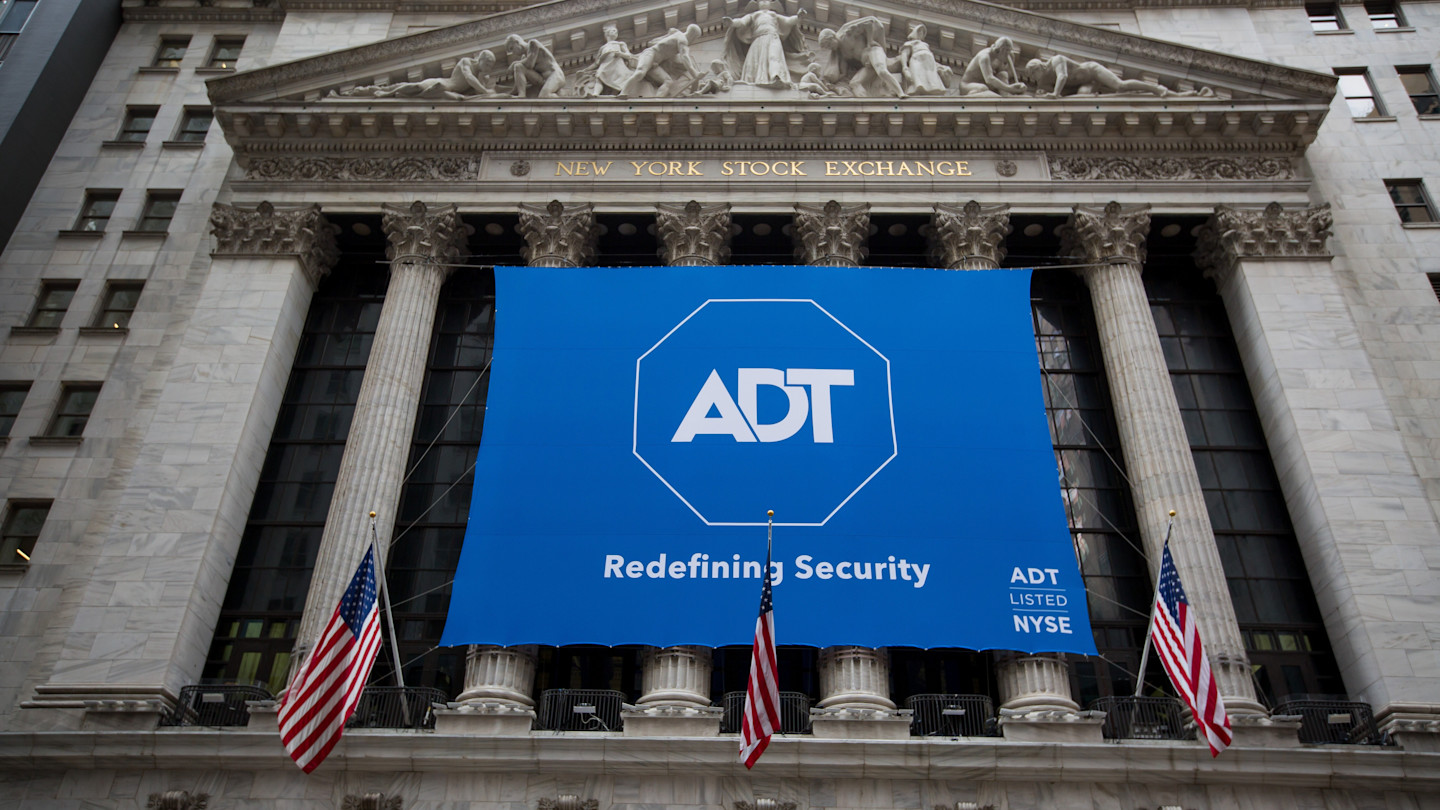
ADT's board unanimously approved a deal that values the company at approximately $7.6 billion in equity and $15.3 billion in enterprise value, with the difference made up by ADT's existing debt load. Shareholders get $10.00 per share in cash, a premium that pushed ADT stock up more than 30% the day the deal was announced — from around $7.41 to roughly $9.87.
That market reaction tells you something important: the stock is trading just under the offer price, which means investors aren't betting on a higher bid emerging. This is viewed as the deal, not an opening offer. For a company whose core business is recurring monthly security-monitoring fees, paying roughly double-digit billions for a business this size puts it firmly in line with — not below — how security and subscription-based consumer businesses have typically been valued in prior take-private transactions.
It's not a discount buyout. It's a full price for a mature, slow-growing subscriber base.
ADT's board unanimously approved a deal that values the company at approximately $7.6 billion in equity and $15.3 billion in enterprise value, with the difference made up by ADT's existing debt load.
Case For the Deal
ADT's core appeal hasn't changed in decades: millions of households pay a predictable monthly fee for monitored security, and that recurring revenue is exactly the kind of cash flow private capital loves. Thrive Holdings, which already holds more than 75 companies and is built to hold assets for the long term rather than flip them, is explicitly betting it can modernize ADT's technology stack and product capabilities with patient capital that public markets don't reward quarter to quarter.
Thrive Holdings partner Kareem Zaki framed the acquisition around ADT's institutional trust — "a company that has spent generations showing up for people when it matters most" — and said the plan is to strengthen ADT's technology and product capabilities. Translated: expect AI-driven monitoring, smart-home integration, and cost discipline once the pressure of quarterly earnings disappears.
Taken private, ADT can also cut costs and restructure without analysts and activist investors second-guessing every move, which is the standard private equity playbook for slow-growth, cash-generative businesses.
Going private buys ADT patience, but patience doesn't fix a subscriber base that keeps shrinking.
Case Against the Deal
The risk sitting underneath this deal is subscriber attrition. ADT has spent years fending off cheaper DIY alternatives — Ring, SimpliSafe, and smart-home ecosystems from Google and Amazon — that don't require a technician visit or a multi-year contract.
That competitive pressure doesn't disappear because ownership changes. Leverage is the second concern. An enterprise value of $15.3 billion against $7.6 billion in equity implies ADT already carries a meaningful debt load, and going private typically means layering on more debt to finance the buyout itself.
Across the broader subscription and telecom sector, leverage ratios have been climbing in 2026, not easing — a trend that makes debt-financed take-privates riskier than they would have been a few years ago. If churn keeps creeping upward while debt service costs climb, the cash flow that made ADT attractive in the first place gets squeezed from both directions.
That's the scenario that turns a full price into an expensive mistake.
The Deal in Numbers
$15.3B
Total enterprise value
$7.6B
Equity value
$10.00
Cash paid per ADT share
+33.2%
ADT stock price move on announcement
ADT/Thrive Holdings deal announcement; Yahoo Finance
The Verdict
On the numbers alone, $15.3 billion is a full price — not a discount, not a steal. ADT shareholders are getting paid a clear premium in cash, which is why the board approved it unanimously and why the stock jumped over 30% the day it was announced. Whether this works out for Thrive Holdings comes down to a single question: can private ownership grow ADT's subscriber base and monetize it faster than ADT managed as a public company? If Thrive's AI and product investments reduce churn and widen margins, $15.3 billion will look cheap in hindsight.
If DIY competitors keep eating into ADT's customer base while debt service pressures mount, this becomes a cautionary tale about paying full freight for a business losing its grip on growth. The deal makes sense for Thrive Holdings as a long-term bet on brand trust and recurring revenue.
It is not, on the numbers presented, an obvious bargain.
What people are saying on X
Most posts are neutral or off-topic, with scepticism limited to a single voice calling the price an overpay and no clear supporters of the deal.
The conversation around the Thrive Holdings ADT buyout is split between those focused on the deal's politically tinged backstory, given earlier disclosed presidential ADT stock purchases, and those evaluating its financial logic. One sports-media voice calls the price an overpay, while a credit-focused account highlights a potential record private loan, and several posts are off-topic or unrelated. The tweets do not offer enough substance to settle whether the $15.3B price is a good deal.
What an overpay. Don’t get me wrong, Jeffrey Simmons is a hell of a player. But to give multiple 1sts for an aging DT?
This deal has an absolutely wild backstory. Earlier this year, President Trump's financial disclosures showed purchases of ADT stock. Today, ADT announced a $15.3 BILLION buyout at a 46% premium....
UPDATE: Earlier this year, President Trump filed purchases of ADT stock. It was just announced that ADT will be acquired by Thrive Holdings, founded by Josh Kushner. $ADT is up 33% today.
🚨 ADT could go private. And private credit could set a new record. Joshua Kushner’s Thrive Capital is in talks to take ADT private, with a potential record-breaking private loan on the table....
Curated from 12 recent posts using deliberate viewpoint balancing
Rate this article
Your feedback helps surface the best content
Related articles
Have a question? Get your own article.
Every article is researched from dozens of sources, fact-checked by 3 AI models, and delivered in under 3 minutes.
Triple-Verified — checked across 3 verification stages — all claims verified