Top 10 AI Breakthroughs: The Last Two Weeks Reshaped the Future

March 31, 2026 · 8 min read
···
- Frontier models GPT-5.4, Gemini 3.1, and Grok 4.20 launched.
- NVIDIA GTC cemented agentic AI as the enterprise future.
- Apple announced a fully AI-powered Siri for 2026.
- Labor displacement became undeniable, sparking public revolt.
March 2026 saw an unprecedented convergence of advanced model releases, critical infrastructure announcements, and a stark reckoning with AI's societal implications. The industry is rapidly transitioning from foundational research to practical, autonomous agent systems, forcing enterprises and governments to adapt at breakneck speed.
Key Takeaways
- OpenAI's GPT-5.4 and Google's Gemini 3.1 Flash-Lite intensified the LLM race, with a clear focus on enterprise efficiency.
- NVIDIA's GTC redefined enterprise AI, emphasizing agentic deployments and unveiling the Rubin supercomputer platform.
- Apple's commitment to a fully AI-powered Siri signals a massive consumer-facing AI overhaul by 2026.
- The direct acknowledgment of AI-driven job displacement and subsequent public backlash (e.g., #QuitGPT) marks a critical turning point in AI's social contract.
Watch Out For
- ⚠Overhyped claims of immediate, widespread agentic AI deployment without robust safety and ethical frameworks.
- ⚠The temptation for enterprises to rush into AI integration without adequate infrastructure or talent.
- ⚠Ignoring the growing public sentiment regarding AI's impact on employment and privacy.
What You Need to Know: Navigating AI's New Frontier
Distinguishing genuine AI breakthroughs from incremental updates requires a sharp eye on fundamental shifts. A true breakthrough doesn't just improve a benchmark; it redefines how we interact with technology or solves a previously intractable problem.
The current wave of innovation is less about raw model size and more about agentic capabilities—AI systems that can reason, plan, and execute multi-step tasks autonomously.
Beginners often mistake speed or minor accuracy gains for revolutionary progress. The real indicators of change lie in the ability of AI to handle complex, real-world scenarios, integrate seamlessly into existing workflows, and demonstrate robust reasoning beyond simple pattern matching.
Pay close attention to announcements that focus on deployment, safety, and the economic implications, not just raw performance metrics.
The biggest mistake is underestimating the pace of change. What was cutting-edge six months ago is now baseline. The industry is moving from 'proof of concept' to 'production-ready agent,' and this shift demands a new level of scrutiny on standards, ethics, and the very real impact on human labor.
The biggest mistake is underestimating the pace of change.
What real people think
DividedSourced from Reddit, Twitter/X, and community forums
The AI community is experiencing a mix of excitement over new model capabilities and deep anxiety regarding job displacement and the rapid pace of agentic AI development. There's a strong undercurrent of skepticism about enterprise readiness for these advanced systems.
“A massive AI breakthrough is coming in the first half of 2026—and Morgan Stanley says most of the world isn’t ready for it.”
“OpenAI unleashed GPT-5.4 (its newest “frontier” model), Google rolled out Gemini 3.1 Flash-Lite – a faster, cheaper AI model – and NVIDIA announced its next‑gen Rubin supercomputer platform to power m”
Discussions around KANs (Knowledge-Augmented Neural Networks) and Physics-Informed Neural Networks highlight optimism for scientific discovery, particularly in chemistry and materials science, with potential real-world impacts within the year.
The #QuitGPT movement, sparked by OpenAI's DoD agreement, reveals significant public revolt and concern over AI's role in classified networks and its implications for human workers.
Many users are debating whether the recent flurry of model releases (GPT-5.4, Gemini 3.1, Grok 4.20) represents genuine breakthroughs or merely incremental improvements, with a lean towards the latter for some.
The AI Landscape in Flux
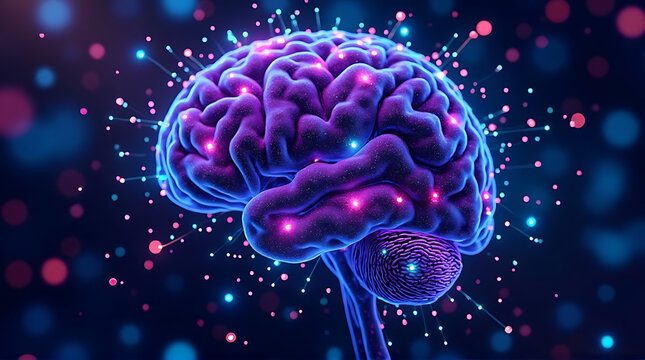
Key AI Events: March 2026
NVIDIA GTC 2026
NVIDIA's annual GTC conference redefined enterprise AI, shifting the conversation entirely towards agentic deployments and unveiling the next-gen Rubin supercomputer platform.
Morgan Stanley's AI Warning
Morgan Stanley issued a stark warning, stating that AI scaling laws are holding firm and the compute buildout will yield surprising results, for which most of the world is unprepared.
OpenAI Launches GPT-5.4
OpenAI released its newest 'frontier' model, GPT-5.4, intensifying the competitive landscape and pushing the boundaries of large language model capabilities.
Google Rolls Out Gemini 3.1 Flash-Lite
Google introduced Gemini 3.1 Flash-Lite, a faster and cheaper AI model designed for broader enterprise adoption, prioritizing efficiency alongside performance.
Grok 4.20 Enters the Fray
Grok 4.20 was released, further diversifying the competitive landscape of advanced AI models and offering another option for developers and enterprises.
The 10 Biggest Developments of the Last Two Weeks
The period from mid-March to the end of the month has been a whirlwind, solidifying trends and unleashing new capabilities that will define the rest of 2026. This isn't just about incremental gains; it's about a fundamental reorientation of the AI industry towards autonomous, real-world impact.
Here are the developments that truly matter:
1. OpenAI Unleashes GPT-5.4: The New Frontier Model
OpenAI's launch of GPT-5.4 on March 17th immediately reset expectations for frontier models. This iteration demonstrates significant advancements in reasoning, context understanding, and complex problem-solving. It solidifies OpenAI's position at the forefront of general-purpose AI development.
The model's enhanced capabilities are particularly evident in coding and multi-modal tasks. Enterprises are already evaluating its potential for advanced automation and content generation. GPT-5.4 is a clear declaration of continued leadership in the LLM race.
2. Google Rolls Out Gemini 3.1 Flash-Lite: Enterprise Efficiency Takes Center Stage
Google's Gemini 3.1 Flash-Lite, arriving March 20th, is a strategic counter-move to pure performance plays. Positioned as a faster and cheaper AI model, it targets broader enterprise adoption where cost-efficiency and speed are paramount. This model is designed for high-volume, low-latency applications.
Flash-Lite signals Google's intent to democratize advanced AI, making it accessible to a wider range of businesses. It's a pragmatic approach that acknowledges the diverse needs of the market, prioritizing utility over raw, often expensive, power. This model will accelerate AI integration in everyday business operations.
3. NVIDIA GTC Reframes Enterprise AI: The Agentic Future is Here
NVIDIA's GTC, held March 10-14, entirely reframed the enterprise AI conversation around agentic deployments. The focus shifted from isolated models to intelligent, autonomous systems capable of executing complex workflows. This is a critical pivot for the industry.
The announcement of the next-gen Rubin supercomputer platform underscores NVIDIA's commitment to powering this agentic future. Rubin will provide the computational backbone necessary for the sophisticated, multi-step reasoning required by autonomous AI. GTC made it clear: the era of AI agents is no longer theoretical.
4. Grok 4.20 Enters the Fray: Intensifying the LLM Competition
The release of Grok 4.20 on March 22nd further intensified the competitive landscape of large language models. While specific benchmarks are still emerging, its arrival signifies a continued push for innovation and differentiation in the market. This competition benefits users by driving rapid advancements.
Grok's unique positioning, often with a focus on real-time information and a distinct personality, ensures it remains a relevant player. Its latest iteration will force other developers to continue innovating. The market is now more diverse and competitive than ever before.
5. Apple Announces Reimagined AI-Powered Siri for 2026: Consumer AI Overhaul
Apple has officially announced a completely reimagined, AI-powered version of Siri set to debut in 2026. This fundamental transformation will see Siri transition into a context-aware, proactive AI assistant. This is a massive play for the consumer AI market.
This move signals Apple's long-term commitment to deeply integrated, on-device AI. It will set a new standard for personal assistants, moving beyond simple commands to genuine intelligent interaction. The ripple effects across the consumer tech landscape will be profound.
6. Morgan Stanley's AI Breakthrough Warning: The World Isn't Ready
A Morgan Stanley report, highlighted on March 13th, delivered a stark warning: AI scaling laws are holding firm, and the compute buildout underway at AI labs is about to pay off in ways that will surprise even the Street. The bank asserts that a massive AI breakthrough is coming in the first half of 2026.
This financial endorsement of AI's exponential growth underscores the urgency for businesses and governments to prepare. The report implies that the current wave of advancements is just the beginning, and the economic and societal impacts will be far greater than anticipated. Complacency is not an option.
7. NIST's AI Agent Standards Initiative Gains Traction: Building Trust
The NIST AI Agent Standards Initiative, announced on February 17, 2026, has gained significant traction in the last two weeks. Aimed at ensuring autonomous agents can be adopted 'with confidence,' this initiative is critical for widespread enterprise deployment. It addresses the urgent need for trust and reliability.
NIST's work, framed around industry-led pillars, provides a crucial framework for responsible AI development. Without clear standards, the adoption of complex agentic systems would be hampered by concerns over safety and accountability. This initiative is a necessary step towards mature AI integration.
8. OpenAI's DoD Deal Sparks #QuitGPT Revolt: Labor Displacement Becomes Undeniable
OpenAI's agreement to deploy its AI on U.S. Department of Defense classified networks triggered a massive public revolt, leading to the '#QuitGPT' movement. This event, alongside other recent announcements, marks one of the most direct public admissions yet that AI is actively replacing human workers rather than merely augmenting them.
The public backlash, attracting over 2.5 million supporters, highlights a growing societal unease. This isn't just a technical development; it's a critical ethical and social inflection point. The industry can no longer ignore the direct impact of AI on employment.
9. KANs and Physics-Informed Neural Networks Emerge: Scientific Discovery Accelerated
Community discussions and early research indicate significant breakthroughs in Knowledge-Augmented Neural Networks (KANs) and Physics-Informed Neural Networks. These advancements promise to accelerate scientific discovery in fields like chemistry, materials science, and medicine. They represent a leap beyond purely data-driven models.
These new paradigms are already leading to new formulas, new materials, and new medical discoveries with real-world impact expected within the year. This is a powerful demonstration of AI's potential to solve fundamental scientific challenges, moving beyond language and image generation.
10. AI Research Shifts to 'Real-World Stuff': Less Benchmark Chasing
A notable shift in the focus of AI research is becoming evident, particularly in the lead-up to major conferences like ICLR and AAAI 2026. There's a clear move away from purely benchmark-chasing models towards more real-world, practical applications. This indicates a maturing field.
This shift reflects a growing understanding that raw performance on synthetic datasets doesn't always translate to real-world utility. Researchers are now prioritizing robustness, interpretability, and deployability. This is a healthy development for the long-term impact and adoption of AI.
The Rapid Pace of AI Innovation
3
Major Frontier Models Launched (GPT-5.4, Gemini 3.1, Grok 4.20)
1
New Supercomputer Platform Announced (NVIDIA Rubin)
2.5M+
#QuitGPT Supporters
Unpacked Analysis, March 2026
What This Means: The Immediate Shifts
The last two weeks have solidified several critical shifts in the AI landscape. First, the race for frontier model supremacy is hotter than ever, but it's no longer just about raw power; efficiency and specialized applications (like Google's Flash-Lite) are gaining ground.
Second, the narrative has decisively moved from 'AI models' to 'AI agents' – autonomous systems that can act and reason. This is the future of enterprise AI.
Third, the ethical and societal implications of AI, particularly job displacement, are no longer abstract. OpenAI's DoD deal and the subsequent public outcry have forced a direct confrontation with these issues. Companies can no longer hide behind augmentation rhetoric; the reality of replacement is here.
Finally, the consumer AI space is gearing up for a massive transformation, with Apple's Siri announcement setting a high bar for future personal assistants.
What Happens Next: 30-60 Day Forecast
Expect to see a continued acceleration in agentic AI deployments, particularly in specialized enterprise verticals. Companies will be scrambling to integrate these new models and frameworks, driven by the competitive pressure from the latest releases. The focus will shift to practical implementation and ROI.
Regulatory bodies, spurred by initiatives like NIST's standards, will intensify their efforts to establish guardrails for autonomous AI. We'll also see more public discourse and potential policy debates around AI's impact on labor markets. The #QuitGPT movement is unlikely to fade quickly, forcing companies to address these concerns head-on.
The next 30-60 days will be about consolidation and initial real-world testing of these new capabilities.
Key Takeaways for Builders & Users
For builders and developers, the message is clear: focus on agentic architectures and robust safety protocols. The market demands systems that can operate autonomously and reliably. Specialization (e.g., faster, cheaper models) will be as important as raw performance. Invest in understanding the new standards emerging from NIST.
For users and enterprises, the time for passive observation is over. Evaluate how agentic AI can genuinely transform your operations, but do so with a critical eye towards ethical implications and workforce planning. Do not fall for hype; demand clear ROI and demonstrable safety.
Prepare for significant shifts in how work is done, and engage proactively with the societal conversation around AI.
The Future of Autonomous Systems
Further Reading
A comprehensive overview of significant AI developments in early 2026.
An in-depth look at the major shifts and announcements from March 2026.
Fortune's report on Morgan Stanley's dire warning about impending AI advancements.
Medium article exploring the most impactful AI trends and future directions.
A tracker for the newest AI model releases and their key features.
Sources
- 1.Latest AI News and AI Breakthroughs that Matter Most: 2026 | News
- 2.March 2026 AI Roundup: The Month That Changed AI Forever
- 3.Morgan Stanley warns an AI breakthrough Is coming in 2026 — and most of the world isn't ready | Fortune
- 4.AI Digest - March 13, 2026
- 5.What Is the Next Big Thing in AI as of March 2026? | by Micheal Lanham | Mar, 2026 | Medium
- 6.Artificial Intelligence Breakthroughs in March 2026 | devFlokers
- 7.AI Updates Today (March 2026) – Latest AI Model Releases
- 8.New Models From OpenAI, Anthropic, Google – All At The Same Time
- 9.What’s Next | The major AI announcements in 2025 | by Nedim Demir k. | Dec, 2025 | Medium
- 10.Comprehensive AI News Roundup: 8-14 December 2025 | Grow Fast Blog
- 11.New AI Models Coming in 2026 and What They Do | Medium
- 12.Claude vs ChatGPT 2026: We Tested Both — One Clear Winner for Coding
- 13.AI Model Benchmarks Mar 2026 | Compare GPT-5, Claude 4.5, Gemini 2.5, Grok 4 | LM Council
- 14.Claude AI 2026: Models, Features, Desktop & More
- 15.Models overview - Claude API Docs
- 16.r/MachineLearning — https://www.reddit.com/r/MachineLearning/
- 17.r/MachineLearning on Reddit: [D] ICLR 2026 decision mega thread
- 18.r/MachineLearning on Reddit: [D] aaai 2026 awards feel like a shift. less benchmark chasing, more real world stuff
- 19.Machine Learning ML & Generative AI News
- 20.r/MachineLearning on Reddit: [D] ICLR 2026 Workshop Announcements
Rate this article
Your feedback helps surface the best content
Related articles
Have a question? Get your own article.
Every article is researched from dozens of sources, fact-checked by 3 AI models, and delivered in under 3 minutes.
Triple-Verified — 4 corrections applied across 1 verification stages applied