US-China Chip War: Who's Really Losing?

April 9, 2026 · 5 min read
···
Photo by Stas Knop on Pexels
- US restrictions slow China's AI, but at a high cost.
- American chipmakers face billions in lost revenue.
- China accelerates domestic chip self-sufficiency.
- The conflict is a costly stalemate, not a clear win.
The US-China chip war presents a complex calculus of loss, with American chipmakers facing substantial revenue hits while China rapidly advances its domestic semiconductor capabilities. NVIDIA anticipated a significant impact on its China revenue due to export controls, with projections in late 2025 indicating a substantial decline in sales for subsequent fiscal quarters. Concurrently, SMIC is projected to reach 80k wspm (7nm and below) by 2027, with Huawei's Kirin 9030 already utilizing evolved SMIC technology. US export controls, while targeted, have prompted China to accelerate its self-sufficiency efforts, complicating any assessment of a clear 'winner' or 'loser' in this strategic economic conflict.
What You Need to Know: The Real State of Play
NVIDIA has acknowledged a significant impact on its China revenue due to export controls, with the company anticipating substantial declines in sales. Qualcomm has faced antitrust scrutiny in China in the past, which resulted in a significant fine in 2015. Meanwhile, China's SMIC is scaling to 80,000 advanced chip wafers per month by 2027.
The numbers tell a different story than the headlines. This isn't a decisive US victory—it's an expensive stalemate that's reshaping the global semiconductor industry in unexpected ways. The US export controls target specific advanced computing and manufacturing items, not all semiconductor products, but the ripple effects are forcing both sides to rebuild their strategies from scratch.
The US strategy of export controls is paradoxically creating a more resilient and independent Chinese semiconductor industry.
How Bad Is It for US Chipmakers?
The financial damage is mounting fast. NVIDIA's China revenue collapsed after export controls hit its H20 AI chips—the company's workaround design for the Chinese market. The licensing requirements alone are expected to cost another $8 billion in Q2.
Qualcomm faces a double hit: antitrust investigations in China plus potential market share erosion as Chinese phone makers seek domestic alternatives. The company generated approximately $18.3 billion from China in its fiscal year 2023, making this exposure critical to its business model.
Intel and AMD have smaller China exposure but aren't immune. Both companies are watching Chinese customers pivot to domestic alternatives faster than anyone expected.
US Chipmaker Revenue Impact (Q1-Q2 FY2026)
$4.5 Billion
NVIDIA Q1 FY2026 Charge
$8 Billion
NVIDIA Anticipated Q2 Revenue Loss
640 Yuan/Net Ton
China Port Fee on US Ships (April 2026)
NVIDIA Q1 FY2026 Earnings, Sherwood News
Most people believe the US chip restrictions block all chip sales to China, when in reality, they are highly targeted with significant loopholes.
Is China Actually Losing? The Counter-Narrative
Despite US export controls, China is rapidly accelerating its domestic chip development, challenging the narrative of a decisive US victory. The Chinese government has poured massive investments into chip fabs and R&D, fostering a robust local ecosystem. SMIC, China's largest foundry, is making significant strides.
SMIC is projected to reach 45k wafers per month (wspm) for 7nm and below nodes by the end of 2025, scaling to 60k wspm in 2026 and 80k wspm in 2027. Notably, SMIC reportedly achieved high-volume production of its N+3 node (a 5nm-class process) in early 2026.
Huawei's Kirin 9030 processor, found in its Mate 80 Pro Max smartphone, is already being produced using evolved SMIC technology. China is also developing native OS and software to reduce reliance on foreign ecosystems, demonstrating a comprehensive push for technological independence.

SMIC Advanced Node Capacity Projections (7nm and below)
FinancialContent, SemiWiki
SMIC's Advanced Manufacturing Facilities
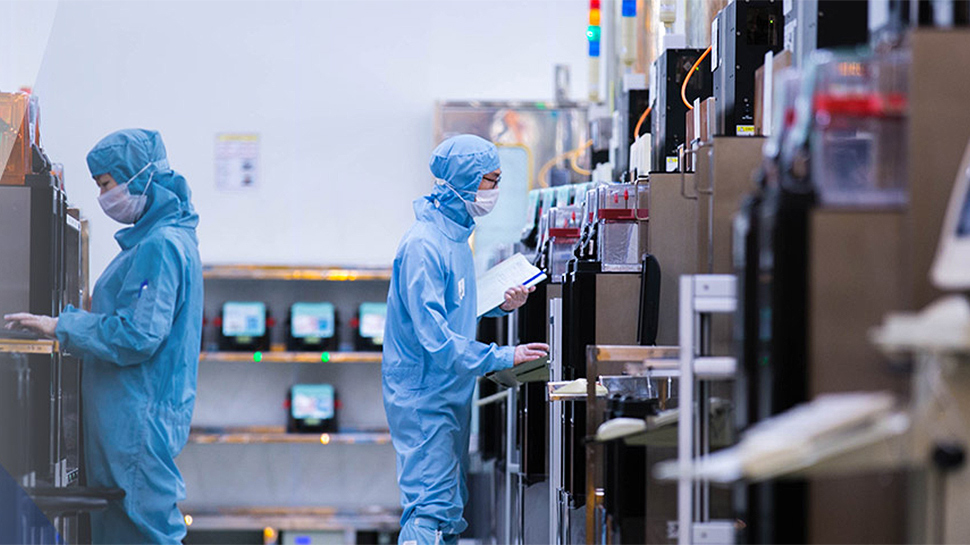
The Strategic Calculus: Why the US Made This Choice
The US export controls, despite their economic cost to American companies, are rooted in a long-term strategic objective. The primary goal is to slow China's AI advancement and preserve the US military and technological edge. Preventing China from acquiring dual-use technologies, which could enhance its military capabilities, is a core tenet of this strategy.
Washington views the short-term economic pain for US companies as a necessary trade-off for national security. However, this approach carries unintended consequences, including accelerating China's drive for self-sufficiency and contributing to global supply chain fragmentation.
As part of this broader strategy, Taiwanese companies, notably TSMC, have committed significant investments towards US semiconductor expansion, such as TSMC's multi-billion dollar fabs in Arizona, further intertwining their technological futures.
US chipmakers like NVIDIA and Qualcomm are the clear near-term losers, while China's domestic ecosystem is a long-term beneficiary through forced innovation.
Key Escalations in the US-China Chip War (2022-2026)
US Implements Sweeping Export Controls
The US Department of Commerce issues new rules restricting China's access to advanced computing chips and semiconductor manufacturing equipment, citing national security concerns.
Huawei Kirin 9030 Breakthrough
Reports emerge of Huawei's Kirin 9030 processor, produced using evolved SMIC technology, signaling China's progress in domestic chip design and manufacturing.
China Limits NVIDIA H200 Purchases
China informs tech companies that purchases of NVIDIA's H200 AI chips will only be approved under special circumstances, such as university research, tightening access.
SMIC Achieves 5nm-Class Production
SMIC reportedly achieves high-volume production of its N+3 node, a 5nm-class process, demonstrating significant domestic manufacturing advancements.
NVIDIA Reports Significant Revenue Loss
NVIDIA announces substantial financial losses and missed revenue in its first fiscal quarter due to US restrictions on sales to China.
China Escalates Port Fees
China increases retaliatory port fees on US vessels to 640 yuan per net ton, signaling continued economic counter-measures.
What Happens Next? Forecast and Escalation
The US-China chip war is unlikely to de-escalate quickly, with further moves anticipated from both sides. While the US may continue to use BIS discretion for case-by-case approvals, broader policy reversals are improbable without significant geopolitical shifts.
China will likely respond with measures beyond port fees, potentially including rare earth export controls and increased domestic subsidies for its semiconductor industry.
The impact on global chip supply chains will intensify, pushing towards further 'decoupling' and regionalized manufacturing. Taiwan's geopolitical vulnerability remains a critical factor; a maritime or aerial quarantine by 2027 is a significant risk, which would severely disrupt global semiconductor flows.
The conflict's resolution hinges on a complex interplay of economic pressures, technological advancements, and strategic national interests.
The Strait of Hormuz: A Geopolitical Chokepoint

By the end of 2027, China's SMIC and Huawei will achieve high-volume production of 5nm-class chips, significantly reducing their reliance on foreign advanced manufacturing.
What real people think
DividedSourced from Reddit, Twitter/X, and community forums
Discussions among semiconductor engineers, investors, and China-watchers on platforms like Reddit and X reveal a divided consensus. Many express skepticism about the long-term effectiveness of US export controls, citing China's rapid domestic advancements. There's also frustration over NVIDIA's design-around strategies, which create a 'cat-and-mouse' dynamic. The prevailing sentiment is that neither side is achieving an outright victory, but rather both are incurring significant costs and adapting to new realities.
“If you redesign a chip around a particular cut line that enables them to do AI, I’m going to control it. Jensen says Nvidia’s China AI GPU market share has plummeted from 95% to zero.”
Reddit user
Skepticism about export control effectiveness given China's rapid domestic alternatives.
Frustration over NVIDIA's design-around strategies creating cat-and-mouse dynamics.
Related discussions
US targets Chinese chipmaking with proposed export restrictions on ASML and others
r/technewsU.S. tech execs smuggled Nvidia chips to China, prosecutors say
r/technologyChinese chip firms hit record high revenue driven by the AI boom and U.S. curbs
r/technologyNvidia market share in China falls to less than 60% — Chinese chip makers deliver 1.65 million AI GPUs as the government pushes data centers to use domestic chips
r/technologyWhat people are saying on X
The debate centers on whether US sanctions are effectively containing China or backfiring strategically. Proponents argue sanctions are working—TSMC suspending orders and Huawei's chip output capped at 200,000 units annually—but skeptics contend the restrictions are merely accelerating China's self-sufficiency in semiconductors while damaging US vendors' long-term market share. A striking counterpoint: NVIDIA still generated $12 billion in China sales in 2024 despite export controls, suggesting sanctions have significant enforcement gaps. The broader tension is whether decoupling helps Washington maintain competitive advantage or whether it simply forces Beijing to build independent supply chains that permanently lock out Western companies.
US-China tech war: supercomputer sanctions on China begin to bite as Taiwan’s TSMC said to suspend chip orders
US semiconductor equipment companies have been seriously damaged by the Biden chip war....
What this means is that China's only strategic option here is to accelerate tech and financial decoupling from the U.S. so that these sanctions have no bite anymore....
It’s a tale of two chip empires. On one side, the U.S.—grasping for relevance with subsidies and sanctions....
Curated from 8 recent posts
Further Reading
An in-depth analysis of the effectiveness and limitations of US export controls on China's semiconductor industry.
Examines China's domestic advancements and strategies to circumvent US restrictions.
A comprehensive report from the Library of Congress on the policy and implications of US semiconductor export controls.
Explores Taiwan's strategic role and vulnerabilities in the global semiconductor supply chain amidst geopolitical tensions.
Sources
- 1.Nvidia Revenue Loss Due to China Chip Restrictions | The Ai Perspective
- 2.China steps up customs crackdown on Nvidia chips, launches antitrust investigation into Qualcomm, and plans special port fees on US ships - Sherwood News
- 3.Nvidia expects to lose billions in revenue due to H20 chip licensing requirements | TechCrunch
- 4.China limits Nvidia chip purchases to special circumstances, Information reports | Reuters
- 5.U.S. Export Controls and China: Advanced Semiconductors | Congress.gov | Library of Congress
- 6.China’s Huawei and SMIC Make Progress With Chips, Report Finds - Bloomberg
- 7.Silicon Sovereignty: How Huawei and SMIC are Neutralizing US Export Controls in 2026 | FinancialContent
- 8.Huawei, the leader in Chinese semiconductor development… ‘Life or death’ for SMIC 5nm mass production next year | SemiWiki
Rate this article
Your feedback helps surface the best content
Related articles
Have a question? Get your own article.
Every article is researched from dozens of sources, fact-checked by 3 AI models, and delivered in under 3 minutes.
Triple-Verified — 10 corrections applied across 3 verification stages applied