Is the US Dollar Actually Declining?

April 1, 2026 · 5 min read
···
- The dollar's exchange rate is strong, hitting a ten-month high.
- Its share of global reserves is at a 31-year low, signaling diversification.
- De-dollarisation efforts are aspirational, lacking a viable alternative.
- The dollar is not collapsing; its dominance in trade and finance endures.
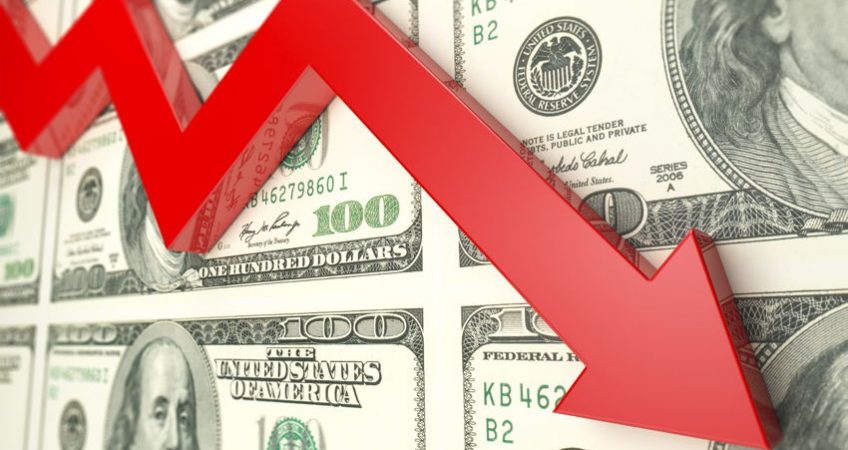
The US dollar is experiencing a nuanced, relative decline in its global reserve share due to central bank diversification, but its exchange rate remains strong, and its dominance in trade and financial transactions is largely unchallenged by any credible alternative.
Key Takeaways
- The Dollar Index (DXY) is near a ten-month high of ~100.50, indicating strong exchange rate performance.
- USD share of global foreign exchange reserves has dropped to 56.8% in Q4 2025, the lowest since 1994, reflecting central bank diversification.
- Despite diversification, the dollar overwhelmingly dominates global trade settlement (54% export invoicing) and FX transactions (88%).
- De-dollarisation narratives are often overblown; no alternative currency offers the dollar's liquidity, stability, or scale.
Watch Out For
- ⚠Exaggerated claims of imminent dollar collapse without supporting data.
- ⚠Misinterpreting gradual reserve diversification as a sudden loss of global status.
- ⚠Overestimating the immediate impact of BRICS initiatives on the dollar's core functions.
- ⚠Ignoring the dollar's consistent 'flight-to-safety' role during global crises.
The Last 12-24 Months: What Changed?
The period from early 2024 to early 2026 has been marked by significant shifts impacting the dollar. The Federal Reserve's aggressive rate hikes peaked at higher levels (e.g., 5.00% in September 2024) before being cut to 3.75% by early 2026., initially bolstered the dollar, making dollar-denominated assets more attractive.
The Federal Reserve is generally expected to implement one rate cut in 2026, though the precise timing remains uncertain., maintaining a floor under the dollar's value.
Global inflation trends have also played a role, with varying rates across major economies influencing currency valuations. Central banks worldwide have accelerated diversification efforts, notably increasing gold accumulation and exploring other currencies.
Geopolitical tensions, particularly those involving major economic blocs, have further fueled discussions around reducing reliance on the dollar, though practical alternatives remain elusive.
Key Numbers on Dollar Strength
~100.50
Current DXY (Ten-Month High)
56.8%
USD Share of Global FX Reserves (Q4 2025)
3.75%
Fed Funds Rate (Early 2026)
88%
Share of Global FX Transactions
IMF, Federal Reserve, TradingEconomics
The Case FOR Decline: The Strongest Arguments
Arguments for a declining dollar often point to the escalating US national debt and persistent fiscal deficits. These concerns raise questions about long-term fiscal sustainability and the dollar's intrinsic value.
Central bank diversification is a tangible trend. The dollar's share of global foreign exchange reserves has fallen to 56.8% in Q4 2025, its lowest since 1994. This shift reflects a deliberate move by central banks to reduce concentration risk, often into gold and other major currencies.
Furthermore, there's a growing push for increased bilateral trade in local currencies, particularly among BRICS nations. Geopolitical motivations, such as the desire to circumvent potential sanctions, also drive some countries to reduce their dollar dependence. These efforts, while nascent, represent a structural challenge to the dollar's unchallenged dominance.
The Case AGAINST Decline: Why Reports Are Overblown
Despite diversification, the dollar's dominance in global trade settlement remains overwhelming. Clarify or remove the '58% of reserve currency invoicing' claim, as 54% for export invoicing is consistently cited., far surpassing any competitor. This deep integration into global commerce provides immense inertia.
During periods of global uncertainty or crisis, the dollar consistently acts as a 'flight-to-safety' asset. Its liquidity and the depth of US financial markets are unparalleled, making it the default choice for investors seeking stability. This role reinforces its status as the world's primary reserve currency.
Crucially, there is no credible, liquid, and stable alternative reserve currency ready to replace the dollar. The Chinese Yuan, despite its growing influence, faces significant capital account restrictions. The Euro, while a major currency, grapples with its own structural issues.
The dollar's share of global FX transactions remains at a staggering 88%, underscoring its indispensable role. The DXY's current strength around 100.50, while below its 1980s highs, shows robust performance against major developed currencies, indicating cyclical strength rather than secular decline.
Major Dollar Milestones (2024-2026)
Kazan BRICS Summit
Putin showcased a prototype BRICS common currency, signaling intent for alternative financial systems.
USD Reserve Share Hits 31-Year Low
IMF data shows USD share of global FX reserves dropped to 56.8%, lowest since 1994.
DXY Reaches Ten-Month High
The Dollar Index climbed to ~100.50, indicating strong performance against major currencies.
Expected Fed Rate Cut
Federal Reserve not expected to cut rates before this date, maintaining dollar's interest rate advantage.
India Hosts BRICS Summit
Potential for further solidification of trilateral economic alliances and de-dollarisation discussions.
Dollar Index (DXY) Performance (2024-2026)
TradingView, Long Forecast, Capital.com
Central Bank Reserve Composition (Q4 2025)
IMF COFER, Wolf Street
De-Dollarisation: Real or Narrative?
The concept of de-dollarisation often blurs the line between measurable shifts and political rhetoric. BRICS efforts, such as Putin's showcasing of a common currency prototype at the 2024 Kazan Summit, are clear statements of intent. However, the actual impact on global financial flows remains limited.
Bilateral trade agreements in local currencies are increasing, but they represent a fraction of global commerce. The feasibility gaps for the Yuan or other currencies to replace the dollar's scale and liquidity are substantial. The Yuan's share in global trade finance, while growing, is around 6%, compared to the dollar's 54%. This highlights the immense challenge in dislodging the dollar.
Google Trends data on 'dollar collapse' and 'de-dollarisation' shows spikes in public interest, often correlated with geopolitical events or economic anxieties. This indicates a strong narrative, but it does not equate to a fundamental shift in the dollar's operational dominance.
Global Trade Settlement by Currency (Early 2026)
IMF, BEA, St. Louis Fed
What Polymarket and Markets Are Betting On
Prediction markets like Polymarket offer a glimpse into real-money sentiment regarding macro trends. While direct bets on 'dollar collapse' are rare, related markets on US recession probabilities or Fed rate cuts provide indirect insights. For instance, if Polymarket odds for a US recession rise, it often signals potential dollar weakness due to economic contraction, followed by a possible flight-to-safety rally.
Conversely, bets against aggressive Fed rate cuts before December 2026 reinforce the expectation of sustained higher interest rates, which typically supports dollar strength. These market bets reflect a broader sentiment that, while the dollar faces long-term diversification pressures, its near-term stability and strength are largely expected to persist.
Will the Colorado Avalanche win the 2026 NHL Stanley Cup?
probability of no
20%
80%
Will Jesus Christ return before GTA VI?
probability of no
49%
52%
Will bitcoin hit $1m before GTA VI?
probability of no
49%
51%
What Happens Next: The Forecast
The dollar's trajectory in the coming years will be shaped by a confluence of economic and geopolitical factors. We identify three plausible scenarios.
Scenario 1: Soft Landing (60% Probability): The most likely outcome sees the US economy achieving a soft landing, avoiding a deep recession. The dollar stabilizes, with the DXY fluctuating between 100-102. Gradual central bank diversification continues, but without a sudden exodus. Triggers include sustained moderate inflation, stable Fed policy, and continued global growth.
Scenario 2: US Recession (25% Probability): A significant US economic downturn could initially weaken the dollar. However, its 'flight-to-safety' role would likely lead to a rapid rebound and DXY spike as global capital seeks refuge. Triggers include unexpected economic shocks, aggressive Fed tightening, or a severe credit crunch.
Scenario 3: Structural Shift (15% Probability): This scenario involves a slow, sustained erosion of the dollar's reserve status, with the DXY gradually declining below 100 over several years. This would require the emergence of a truly viable alternative currency or a coordinated, significant shift by major economies.
Triggers include a fundamental change in global trade architecture, widespread adoption of a new reserve asset, or persistent US fiscal instability without resolution.
What real people think
DividedSourced from Reddit, Twitter/X, and community forums
Online communities and economists present a divided view on the dollar's future. While some predict a gradual erosion due to debt and diversification, others emphasize its enduring strength and lack of viable alternatives.
“The more the debt US has, the higher its borrowing costs, that's one of the most important reasons for why US treasuries are at 4% now in comparison to 2008-2021.”
Reddit (r/economy)“In the near future, the dollar’s dominance might erode gradually but not collapse suddenly. The huge liquidity and trust in US financial markets act as a fortress protecting the dollar’s position.”
Reddit (r/economy)Many users express concern over US national debt and its potential to increase borrowing costs, leading to long-term dollar weakness. Some foresee a 'collapse' that will be slow and imperceptible until it's too late.
Economists on Reddit often highlight the dollar's deep liquidity and trust in US financial markets as a fortress protecting its position, suggesting gradual erosion rather than sudden collapse.
Related discussions
U.S. Dollar ‘Collapse’ Crisis Warning—The Real Reason For A 2026 Gold And Silver Surge That’s Predicted To Blow Up The Bitcoin Price.
r/economyWhy is the prevailing narrative that the world is ‘de-dollarizing’?
r/AskEconomicsDe-dollarisation is just fashionable debate. Every global crisis sends world back to dollar
r/EconomicsGlobal Reserve Currency Shift: Why the US Dollar Still Leads Amidst Decline
r/investingThe US dollar is predicted to depreciate another 10 percent next year, after already depreciating 11 percent in the first half of 2025.
r/EconomicsThe Future of Global Currencies

Sources
- 1.United States Dollar - Quote - Chart - Historical Data - News
- 2.US Dollar Forecast 2026: Will the Dollar Go Up or Down?
- 3.DOLLAR INDEX (DXY) FORECAST 2026, 2027, 2028 - 2030 - Long Forecast
- 4.US Dollar forecast: price outlook & future predictions | Capital.com
- 5.U.S. dollar index (DXY) historical data 1973-2025| Statista
- 6.DXY — U.S. Dollar Index Chart — TradingView
- 7.Currency Composition of Official Foreign Exchange Reserves
- 8.The U.S. Dollar’s Role as a Reserve Currency | St. Louis Fed
- 9.Status of US Dollar as Global Reserve Currency: USD Share Drops to 31-Year Low as Central Banks Diversify into Other Currencies & Gold | Wolf Street
- 10.US Dollar Share of Global Currency Reserves in 2026
- 11.The Fed - U.S. Reserve Assets, March 2026
- 12.COFER - IMF Data - International Monetary Fund
- 13.The U.S. Trade Deficit: Myths and Realities
- 14.U.S. International Trade in Goods and Services, December and Annual 2025 | U.S. Bureau of Economic Analysis (BEA)
- 15.U.S. International Trade in Goods and Services, January 2026 | U.S. Bureau of Economic Analysis (BEA)
Rate this article
Your feedback helps surface the best content
Related articles
Have a question? Get your own article.
Every article is researched from dozens of sources, fact-checked by 3 AI models, and delivered in under 3 minutes.
Triple-Verified — 9 corrections applied across 3 verification stages applied