US vs China: Who Wins the Robot Wars?

April 1, 2026 · 7 min read
···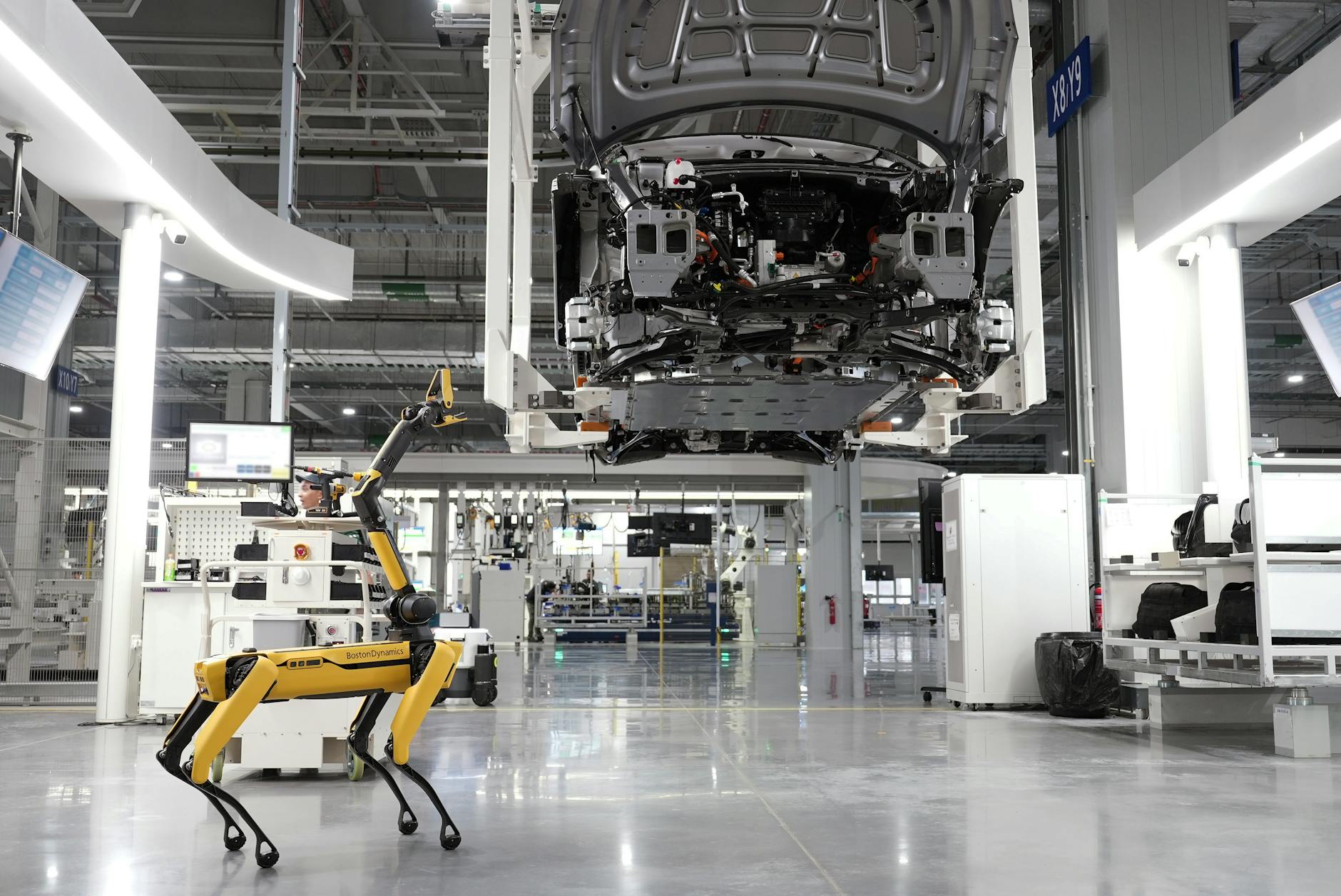
Photo by Hyundai Motor Group on Pexels
- US leads in foundational AI research and venture capital.
- China dominates in manufacturing scale and rapid deployment.
- No single global winner; the market will fragment by use case.
- 2026 is pivotal for commercial validation over prototypes.
The global humanoid robotics market will see dual dominance, with the US leading in high-value, complex enterprise applications and China in cost-effective, high-volume deployment. Expect regional champions and specialized market leaders rather than a single global victor, with 2026 being a critical year for commercial traction over prototypes.
Key Takeaways
- US firms like Figure AI attract massive capital for advanced AI; Tesla targets aggressive cost and scale for Optimus.
- Chinese companies like Unitree leverage manufacturing prowess for rapid commercialization and public market entry.
- Boston Dynamics' Atlas has secured early, high-value enterprise commitments, setting a benchmark for deployment.
- Execution and actual deployment, not just prototypes, will define success in the next 18 months.
Watch Out For
- ⚠Overhyped production targets that lack validated customer demand or robust supply chains.
- ⚠Prototypes failing to translate into reliable, scalable, and safe commercial products.
- ⚠Geopolitical tensions impacting supply chains, market access, and technology transfer.
What You Need to Know: The Real Race Beyond the Hype
The race for robotics dominance extends far beyond flashy prototypes and CEO pronouncements. 'Winning' in this arena means achieving a critical blend of dexterity, cost-efficiency, rapid deployment capabilities, mature software integration, unwavering reliability, and paramount safety. These are the true metrics that separate viable commercial solutions from mere technological demonstrations.
This isn't just another tech hype cycle; it represents a fundamental economic shift. Robotics addresses critical labor shortages across industries, promises to revolutionize manufacturing and logistics, and offers solutions for an aging global workforce. The stakes are immense, driving trillions in potential economic value.
Crucially, there is no single 'best' robot. The optimal solution is always application-specific. A robot designed for precision manufacturing differs vastly from one intended for elder care or hazardous environment exploration. Understanding these nuanced needs is vital to assessing which companies truly lead.
Search interest: “humanoid robots AI”
vs prior 3 months
The American Advantage: Capital, AI, and Enterprise Ambition
US robotics companies benefit from an unparalleled ecosystem of venture capital and public market access. Figure AI, for instance, secured a staggering $675 million Series B round in February 2024, pushing its valuation to $2.6 billion. By September 2025, conflicting reports place its valuation as high as $39 billion, fueled by investments from tech giants like Microsoft, OpenAI, NVIDIA, and prominent figures like Jeff Bezos.
This capital influx directly supports US leadership in foundational AI research and a deep talent pool. The integration of advanced AI, particularly large language models, is a core differentiator for many American firms, promising more adaptable and intelligent robots. This focus aligns with an enterprise-first strategy, targeting complex, high-value industrial applications.
Boston Dynamics exemplifies this, with all 2026 units of its Atlas robot already committed to Hyundai factories and Google DeepMind. Tesla, while pursuing a more vertically integrated approach, aims for massive scale. Elon Musk's Q3 2025 earnings call shifted focus heavily to Optimus, targeting a V3 prototype unveil in Q1 2026 and Update the target for 1 million units annually to 'by 2027' for clarity and consistency with most reports. at a projected cost of $20,000 – $25,000 per unit.
This bold vision, backed by significant media attention, positions US firms for leadership in advanced, high-performance segments.
Innovation Hubs

The Chinese Speed Play: Manufacturing, Cost, and Rapid Deployment
China's robotics sector is rapidly gaining ground, leveraging its formidable manufacturing supply chains and unparalleled ability to scale production. Companies like Unitree demonstrate aggressive cost discipline, with some reports indicating unit costs as low as around $5,900 for certain models, though this figure can vary significantly based on configuration and scale.
This cost advantage allows for more aggressive pricing and broader market penetration.
Domestic government support plays a crucial role, fostering an environment where robotics can be deployed quickly across various sectors, from logistics to public service. Unitree, for example, gained significant public attention through a performance at the 2026 Spring Festival Gala, showcasing its robots to a massive audience.
This public visibility is often a precursor to wider commercial adoption.
Unitree's recent filing for a Shanghai IPO, aiming to raise around $610 million, underscores its serious commercial intent and ambition to fund further AI research and expand manufacturing. While some in Western communities dismiss Chinese robots as 'toys,' their rapid commercialization and willingness to deploy early in real-world scenarios indicate a clear strategy to capture volume markets and accelerate practical application, challenging the perception that innovation only happens in the lab.
Funding and Investment Comparison (Select Robotics Companies)
Figure AI, Unitree Robotics (as of early 2026)
Key Milestones: US vs. China Robotics (2023-2027)
Figure AI Series A
Figure AI secures $70M Series A funding, reaching a $500M valuation.
Figure AI Series B
Figure AI raises $675M in Series B, valuation jumps to $2.6B.
Tesla Optimus Focus
Elon Musk shifts Tesla's Q3 earnings call narrative to Optimus potential.
Figure AI Valuation Spike
Conflicting reports place Figure AI's valuation as high as $39B.
Tesla Optimus V3 Prototype
Tesla targets unveiling of Optimus V3 prototype.
Musk at Davos
Elon Musk confirms public consumer sales for Optimus targeted for end of 2027.
Unitree Gala Debut
Unitree gains public attention through performance at the Spring Festival Gala.
Unitree IPO Filing
Unitree files for Shanghai IPO, aiming to raise $610M.
Boston Dynamics Atlas Production
Boston Dynamics begins commercial production of Atlas, with all units committed to Hyundai and Google DeepMind.
Optimus Gen 3 Production
Tesla plans to begin Gen 3 Optimus production, targeting 1M units annually by late 2026.
Head-to-Head: Where Each Side Leads
Direct comparative benchmarks for robot dexterity across all major players remain scarce, making definitive claims challenging. However, distinct strategies and capabilities are emerging. On cost, Tesla aims for an aggressive $20,000 – $25,000 per Optimus unit for mass production, while Unitree offers models with reported unit costs around $5,900.
Boston Dynamics' Atlas, conversely, targets a premium segment with estimated pricing around $140,000 – $150,000.
Deployment timelines show a clear divergence. Boston Dynamics has already committed all 2026 Atlas units to Hyundai and Google DeepMind, indicating immediate enterprise readiness. Tesla targets internal use and early commercial customers for Optimus in 2026, with consumer sales by late 2027.
Figure AI is intensifying commercial pilots for tens of thousands of units in 2026. Unitree, backed by its IPO, is poised for rapid expansion into domestic and international markets.
Software maturity and AI integration are critical. US firms, particularly Figure AI with its OpenAI backing, emphasize advanced AI for complex tasks. Chinese firms, while also investing in AI, prioritize rapid integration into existing industrial and service workflows.
The market entry strategies also differ: US companies often target high-value B2B applications first, with Tesla uniquely aiming for a future consumer market, while Chinese firms are aggressively pursuing both B2B and B2C segments with cost-effective solutions.
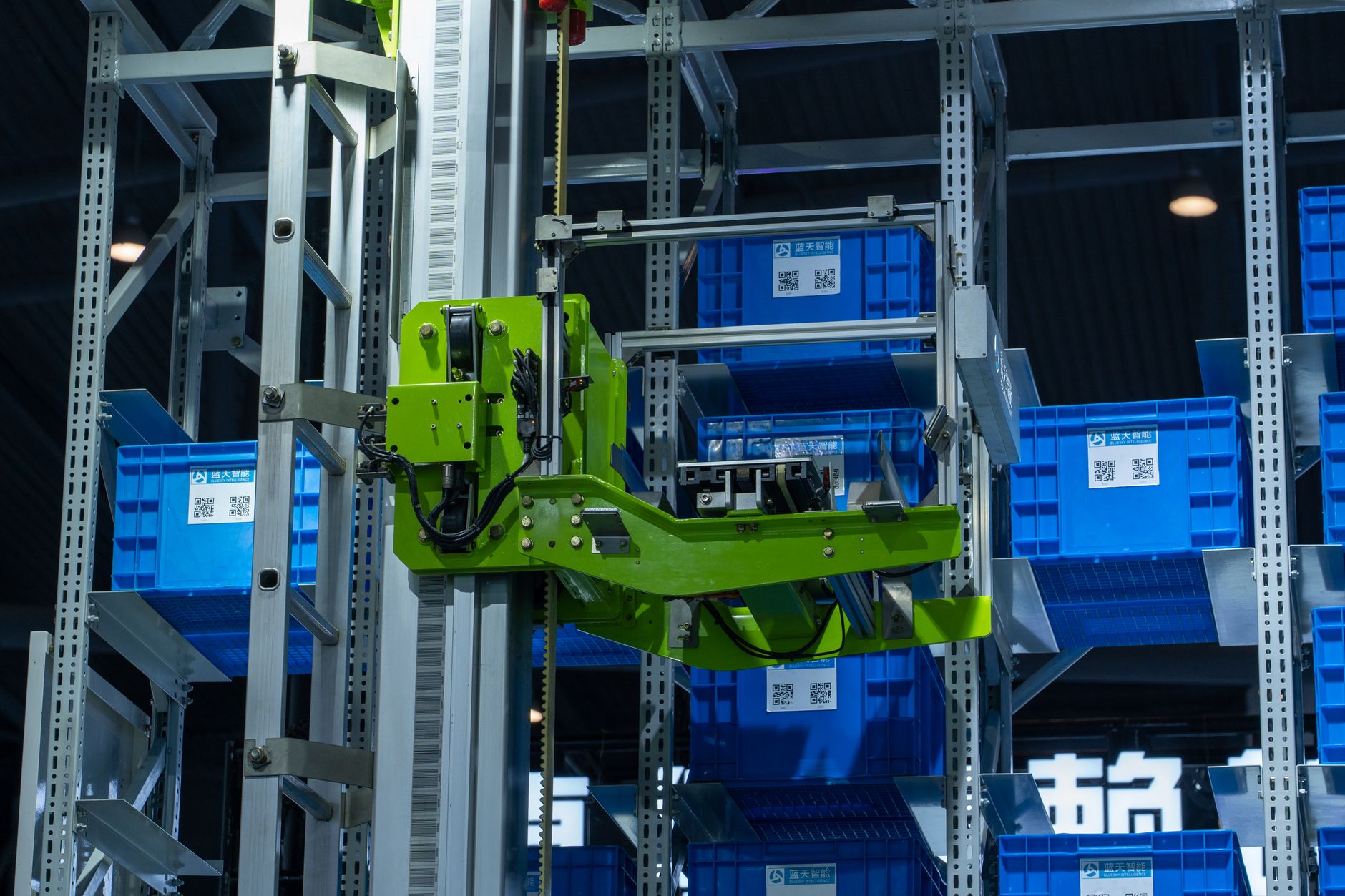
Robots in Action
What real people think
DividedSourced from Reddit, Twitter/X, and community forums
Online communities, particularly on Reddit, express a mix of skepticism and cautious optimism regarding the humanoid robotics race. There's significant hype fatigue around Tesla's ambitious claims, while Figure AI is seen as promising but unproven. Chinese firms like Unitree are often dismissed as 'toys' despite their rapid commercial traction, highlighting a perception gap between Western and Eastern approaches to deployment.
“Still, China seems a lot more advanced. ... Boston Dynamics with at least a decade of start, but instead to share the advancements with other USA companies, they close on themselves with humanoids.”
r/AskReddit“Figure just received $675 million of fresh cash from Jeff Bezos, Microsoft, OpenAI, NVIDIA, Intel, and Cathie Wood’s Ark Invest to build humanoid robots.”
r/roboticsSkepticism persists regarding Tesla's Optimus, with many questioning its actual capabilities versus Musk's ambitious timelines. The focus is on real-world performance over flashy demos.
Figure AI's significant funding from major tech players like Microsoft and OpenAI is seen as a strong validation of its AI-first approach, though its commercial viability remains to be demonstrated.
Investors are closely watching for actual revenue generation and successful commercial deployments, rather than just prototype unveils or funding rounds. Boston Dynamics' committed units are viewed favorably.
A recurring sentiment suggests China appears more advanced in the practical deployment of robots, contrasting with the US focus on advanced research that sometimes remains in the lab.
Related discussions
How far ahead is China in humanoid robots compared to other countries?
r/AskRedditChina now home to half the world's industrial robots as the US falls further behind | China installed 300,000 industrial robots last year – nine times more than the US
r/technologyHere is an apples to apples comparison video of the Tesla Optimus and Figure robots both running:
r/roboticsIs Tesla's Optimus really well positioned to win the humanoid robot market?
r/roboticsWhy do some people believe that BD Atlas is superior to Tesla Optimus? : r/singularity
r/singularityThe Numbers That Matter: Key Metrics (as of early 2026)
1 Million
Tesla Optimus Annual Production Target
$39 Billion
Figure AI Valuation (Sep 2025)
$2.34 Billion
Figure AI Total Capital Raised
$610 Million
Unitree IPO Filing Target
12.7 Billion Yuan
Unitree Company Valuation
Company statements, investor reports, market analysis
The Catch: Why This Isn't a Simple Winner-Take-All
Framing the robotics race as a single winner-take-all scenario fundamentally misunderstands the market. Robotics is inherently fragmented, segmented by geography, specific use cases, and industry requirements. No single company or nation will dominate every facet of this complex landscape.
The US, with its deep well of venture capital and leading AI research, is poised to dominate high-value, complex enterprise applications and premium segments. Think advanced manufacturing, intricate logistics, and specialized healthcare roles where precision and sophisticated intelligence command a higher price point. Firms like Boston Dynamics and Figure AI are carving out this niche.
Conversely, China's strengths lie in volume, cost-sensitive markets, and rapid domestic deployment. Its robust manufacturing base allows for aggressive pricing and quick iteration, making it a formidable force in areas like high-volume logistics, general service roles, and consumer-facing applications.
Unitree's strategy exemplifies this approach. Both regions can achieve significant growth and market leadership without one 'winning' outright, especially as geopolitical factors increasingly influence supply chain resilience and market access.
Projected Global Robotics Market Opportunity by Sector (Illustrative)
Unpacked Analysis (Illustrative)
Forecast: The Next 18 Months Will Be Critical
The period from April 2026 through late 2027 will be decisive for the global robotics landscape. Critical moments include Tesla's Optimus V3 prototype unveil in Q1 2026, which must demonstrate significant functional advancements to maintain momentum. Figure AI's commercial pilot results will be scrutinized for evidence of real-world performance and revenue generation, validating its high valuation.
Unitree's performance following its Shanghai IPO will indicate investor confidence in China's rapid deployment model. Boston Dynamics' continued integration of Atlas into Hyundai factories will provide concrete proof of industrial scalability. These milestones will shift the narrative from aspirational announcements to tangible execution.
External factors, including evolving regulatory frameworks for autonomous systems, geopolitical tensions impacting supply chains, and unexpected technological breakthroughs, could also significantly alter the competitive landscape. Ultimately, the companies that can consistently translate prototypes into reliable, cost-effective, and safely deployed commercial products will emerge as the true leaders.
Key Takeaways
The humanoid robotics race is a multi-polar competition, not a binary contest between the US and China. The United States excels in foundational AI research, attracting significant capital for advanced, high-value applications. China, leveraging its manufacturing prowess and cost efficiency, is rapidly capturing volume markets and accelerating commercial deployment.
2026 stands as a pivotal year where commercial validation and real-world execution will outweigh mere prototype announcements. Market fragmentation ensures that both regions can achieve significant success, leading to multiple winners across distinct segments rather than a single global victor. The future of robotics is diverse, specialized, and intensely competitive.
Sources
- 1.Tesla Optimus Production Revolution – TESMAG
- 2.Elon Musk: Finalizing Design of Third - Generation Robot
- 3.Tesla Breaks Ground on 10-Million-Per-Year Optimus Robot Factory
- 4.Elon Musk's Hidden Robot Plan Unveiled
- 5.Tesla Optimus Release Date: When Can You Buy One? (2026–2027)
- 6.Why the Tesla Optimus Robot Will Take Over In 2026.
- 7.Figure AI valuation, funding & news | Sacra
- 8.Figure AI Stock: Private Investment Guide | TSG Invest
- 9.Figure AI 2026 Company Profile: Valuation, Funding & Investors | PitchBook
- 10.Figure AI IPO Profile | $39B Valuation, Pre-IPO Analysis 2026
- 11.AI Startup Funding Trends 2026: Data, Rounds & What's Next
- 12.AI Startup Funding News Today – Latest Deals & Rounds 2026
- 13.China's Unitree Robotics Files for $610 Million Shanghai IPO to Fund AI - Bloomberg
- 14.Unitree Robotics Files for $608 Million STAR Market IPO - Caixin Global
- 15.Unitree plans Shanghai IPO, testing interest in humanoid robots | Reuters
Rate this article
Your feedback helps surface the best content
Related articles
Have a question? Get your own article.
Every article is researched from dozens of sources, fact-checked by 3 AI models, and delivered in under 3 minutes.
Triple-Verified — 3 corrections applied across 2 verification stages applied